
Dairy Fleet Management Software for Milk Collection Routes
Fleet Scanner is dairy fleet management software for Indian cooperatives, private dairies and milk transport contractors. See which village societies a round actually reached this shift, measure how long the first can waited before it got cold, and check a hired vehicle bill against your own record.
Collection vans and road milk tankers on one screen, with chilling centre timings and vehicle papers. Cloud or self hosted on your own server.
What Is Dairy Fleet Management Software?
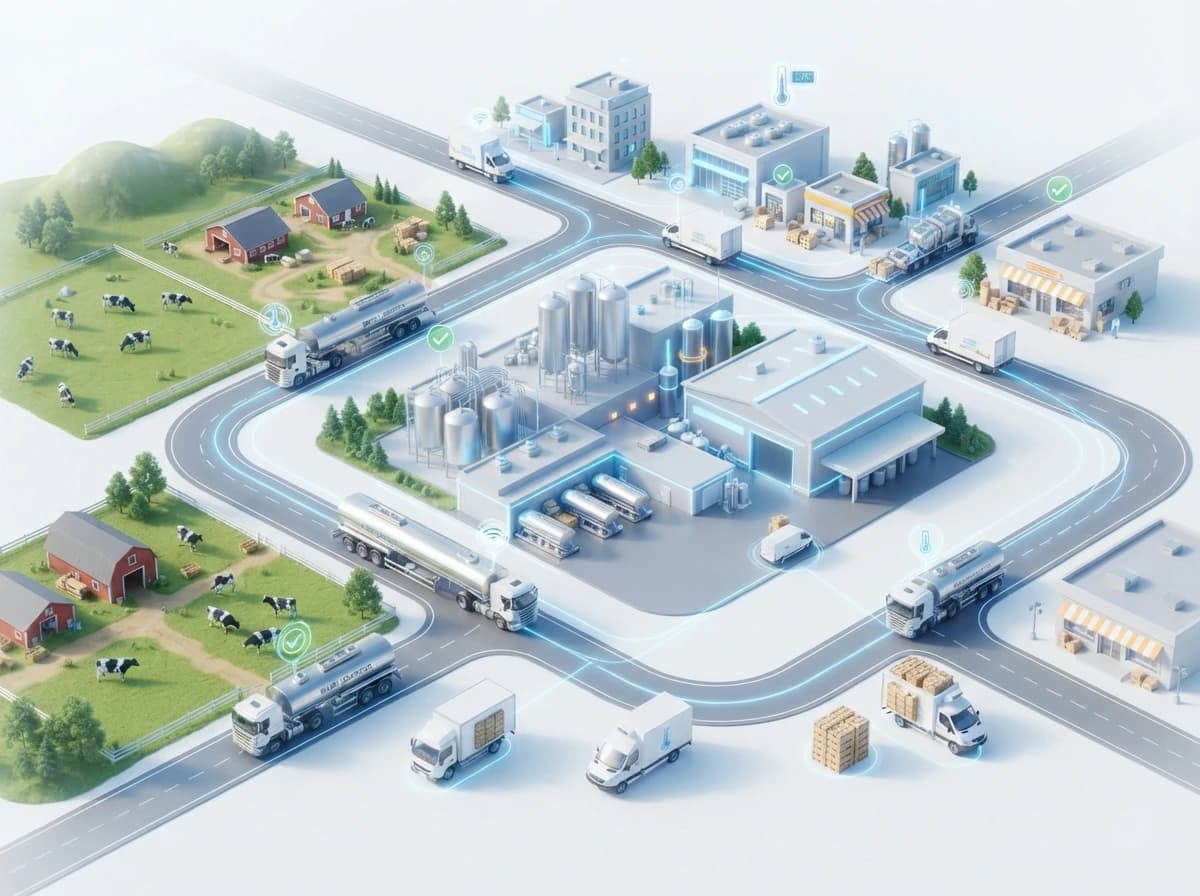
Dairy fleet management software is a system that tracks the vehicles on a milk collection round. It records which village societies a route actually reached on each shift, how long the milk took to get from the first can to the chilling centre, and where the tankers went afterwards.
Milk is the most time sensitive cargo most Indian fleets ever carry. It leaves a village warm, in a hot country, and every extra minute before it reaches a chiller is quality lost that no amount of processing gets back. The round happens twice a day, every day, on roads that are often not on any map, and the vehicles are usually hired rather than owned. Fleet Scanner keeps the route, the stop coverage, the shift timings and the tanker movement on one record, so a procurement head can see the collection round instead of hearing about it afterwards.
- Round
- RT-09 AM
- Route
- Kheda North
- Vehicle
- MV-118 · hired
- Societies
- 14 of 17
- First can
- 05:40
- Elapsed
- 1h 52m
- Chilling centre
- 18 MIN AWAY
- Round progress
- 14 of 17 stops
Where a Milk Round Goes Wrong
A dairy fleet fails quietly and expensively. The milk does not go missing, it just arrives a little late and a little warmer than it should have. By the time that shows up in a quality reading, the round is already over. Dairy fleet management software is how you see it earlier.
The round runs late and the milk warms
A van starts twenty minutes behind and picks up more delay at each society. The first cans on board have then been sitting the longest, in the hottest part of the morning. Nobody sees the drift while it happens, because the only signal is a quality reading hours later.
A society gets skipped
A driver running late drops the two smallest societies and plans to explain it afterwards. Those farmers are the ones who complain. They are also the ones most likely to sell to somebody else next month.
Hired vehicle bills cannot be checked
Most collection vehicles are hired. The bill arrives with trips and kilometres on it. Without your own record of which vehicle ran which route on which shift, it simply gets paid. Checking it would take longer than the money is worth.
Tanker runs have unexplained stops
A road milk tanker halts for thirty five minutes somewhere with no reason to stop. It might be nothing. Without a halt record tied to the trip, it stays a rumour instead of a question anybody can ask properly.
What Runs Inside Dairy Fleet Management Software
Dairy fleet management software has to work on two very different legs. One is the small vehicle crawling between villages. The other is the tanker running a long road to the plant. Each item below is a working module in Fleet Scanner, not a paid add on.
Live Tracking of Vans and Tankers
Follow the small collection vehicles and the road milk tankers on one map with speed, halts and route playback. Both legs of the chain sit on the same screen, instead of in two different systems.
GPS tracking →Society Stop Coverage by Shift
Build each route once with its village societies in order, for the morning and the evening round. Stops reached and stops missed are then compared against that plan while the round is still running.
Route planning →Collection to Chilling Timings
The first pickup and the arrival at the chilling centre are both stamped. The time the milk spent unchilled becomes a measured number. Routes that consistently run long stand out within a week.
Trip operations →Chilling Centre and Plant Zones
Geofence every collection point, chilling centre and plant. Arrival, waiting and departure at each are captured on their own. That also shows where tankers queue longest.
Geofencing →Hired Vehicle Trip Records
Trips, distance and running hours are counted per vehicle and per vendor in your own system. A monthly bill can then be checked against a record instead of accepted on trust.
Billing →Maintenance and Vehicle Papers
Vans, tankers and their cooling equipment sit in one asset list with service schedules, alongside fitness, permit, insurance and PUC dates with reminders.
Compliance →How a Collection Shift Is Recorded
This is one morning collection round. The stops are village societies. The amber stretch is where the round ran behind and the milk stayed unchilled longer than planned, which is the stretch dairy fleet management software is built to expose.
The clock starts with the first can
The vehicle reaches the first village society and the round opens. Every minute after this is time the earliest milk on board has been waiting.
Coverage runs against the plan
Each society on the route is compared with the ones the vehicle actually reached. Stops still pending are visible while the round can still be finished properly.
The delay becomes visible
When the round drifts past its usual timing, it shows on the same screen as the route, so a supervisor can send help or reorder the remaining stops.
The round closes with a time
Arrival at the chilling centre ends the round. Total time from first can to chiller, stops covered and distance are saved against the route, the vehicle and the shift.
Food Safety Starts With the Vehicle
Milk is a food, so the vehicle side sits under food safety expectations rather than a transport permit. What matters in practice is showing three things: that the milk moved when it should have, that the tanker was cleaned, and that the records were not written up afterwards. Dairy fleet management software keeps the first and third of those.
The vehicle side of it
Milk transport sits under food safety expectations, and an audit wants to see that vehicles moved on time and were maintained. Fleet Scanner holds the movement and maintenance records. It does not test milk, certify a vehicle or make your operation compliant.
Recorded, not verified
Cleaning and sanitisation of a road milk tanker is a physical task with its own schedule. The schedule and the completion record can be held against the vehicle so nothing is missed. The work itself and its verification stay with your team.
Where a sensor is fitted
Insulated and refrigerated tankers can carry a temperature sensor, and where one is fitted its readings can sit with the trip. Many collection vans have nothing of the kind, so the useful measure there is time rather than temperature.
Proof the round happened
Route playback, stop timings and shift records stay available and export to Excel or PDF, which is what a procurement review or a cooperative audit usually asks for.
Fitness, permit and insurance
Registration, fitness, permit, insurance, PUC and road tax dates sit against each vehicle with reminders, including for hired vehicles you do not own.
Licences and allocation
Licence class, expiry and daily route allocation are held together, so it is always clear who ran which round on which shift.
Please note: Fleet Scanner records and organises the vehicle side of milk collection. It is not milk procurement software. It does not test milk, read fat or SNF, connect to milk analysers, calculate farmer rates, run farmer payments, manage society accounts, or make your operation food safety compliant. Those jobs belong to a dairy procurement or ERP system, and sharing data between that and Fleet Scanner would need an integration. Temperature capture depends on sensors fitted to the vehicle. Food safety rules differ and change over time, so confirm what applies to your operation with FSSAI guidance and your own quality team before relying on anything here.
Dairy Collection Terms, Explained
Dairy procurement has a vocabulary of its own, and most of it is abbreviations. Here is what each one means on this page.
- VLC
- Village Level Centre. The village collection point where farmers bring milk twice a day. Also called a village society or VDCS in cooperative areas.
- MCC
- Milk Collection Centre. A larger point where milk from several villages is pooled, usually with chilling equipment, before it goes to the plant.
- BMC
- Bulk Milk Cooler. The tank at a village or society that chills milk quickly so it holds quality until a tanker collects it.
- Chilling centre
- The facility that brings raw milk down to storage temperature and holds it before it is sent on to a processing plant.
- Shift
- One collection round. Indian dairy collection runs twice daily, a morning shift and an evening shift, every day of the year.
- Road milk tanker
- The insulated tanker that carries chilled milk in bulk from a chilling centre to a processing plant.
- Fat and SNF
- The two quality readings milk is tested and paid on. Fat is butterfat and SNF is solids not fat. Both are measured at the collection point.
- Milk route
- The fixed sequence of village societies one vehicle covers in a shift. Routes rarely change, which is what makes measuring them useful.
Who Uses Dairy Fleet Management Software
If your product spoils while it waits, this page is about you. Dairy fleet management software suits any operation collecting a perishable from many small suppliers on a fixed daily round. The size of the fleet matters far less than the size of the route.
- Dairy cooperatives and unions District and state level unions running collection across hundreds of village societies, usually with a mix of owned and hired vehicles.
- Private dairy processors Companies procuring directly from farmers and village centres, where route reliability decides how much milk they actually get.
- Chilling centre operators Businesses running one or more chilling points and feeding tankers to a plant, who need arrival records that match what drivers claim.
- Milk transport contractors Operators supplying vans and tankers to dairies, who need their own trip records to defend a monthly bill.
- Bulk milk tanker fleets Long haul tankers moving chilled milk between chilling centres, plants and other buyers.
- Other daily collection models Egg, poultry and fresh produce aggregators running the same shape of route, from many small suppliers on a fixed daily round.
Registers, Tracking App, or Fleet Scanner
A tracking app tells you where the van is. On a milk route that is not the question. The real questions are different. Was every society on the round reached? And how long did the first can wait before it got cold? That is what dairy fleet management software answers.
| Requirement | Register and phone | Basic tracking app | Fleet Scanner |
|---|---|---|---|
| Where a vehicle is now | Call the driver | Yes, on a map | Yes, with speed, halts and playback |
| Societies reached this shift | Told afterwards | Not shown | Compared against the route plan |
| Societies missed | Found from complaints | Not captured | Flagged during the round |
| Time from first can to chiller | Not measured | Not included | Stamped at both ends |
| Tanker halts on the plant run | Driver’s word | Stop shown, no context | Halt records with time and place |
| Hired vehicle trip check | Accepted on trust | Basic trip list | Counted per vehicle and vendor |
| Cleaning and service schedules | A diary | Not included | Per vehicle with reminders |
| Everything in one login | No | Tracking only | 18 plus modules on one platform |
Numbers Your Procurement Head Asks For
Procurement meetings run on route level numbers. Sixty plus reports come ready to run. Pick a route, a chilling centre or a date range, then export to Excel or PDF. You can also have one arrive every Monday morning.
Dairy Fleet Questions, Answered
Short answers to what dairy procurement and transport teams ask us most often.
What is dairy fleet management software?
Dairy fleet management software is a system that tracks the vehicles used to collect and move milk. It records which village societies a collection round reached on each shift, how long the milk took to reach the chilling centre, and where the road milk tankers went afterwards. In Fleet Scanner it sits alongside maintenance, compliance and reporting. The whole collection fleet then works from one set of data.
Is this the same as milk procurement software?
No, and the difference matters. Milk procurement software handles fat and SNF testing, rate charts, farmer accounts and payments. Dairy fleet management software does none of that. It covers the vehicle side instead: routes, stop coverage, shift timings, tanker movement and vehicle records. Most dairies run both, and sharing data between the two would need an integration.
Can it show which societies a route missed?
Yes, where the route is built with its societies in order. The stops the vehicle actually reached are compared against that plan, and anything missed is flagged with its location. A supervisor can then act during the shift. Hearing about it from a farmer the following day is usually too late to fix.
Does it measure how long milk stays unchilled?
It measures the time, which is the part you can act on. The first pickup and the arrival at the chilling centre are both stamped, so the gap between them is a real number per route and per shift. Fleet Scanner does not measure milk temperature unless a sensor is fitted, and it does not assess quality. That stays with your testing.
Can it track temperature in a milk tanker?
Yes, where a compatible sensor is fitted to that vehicle. Its readings can sit with the trip alongside the route and the timings. Many small collection vans have no sensor at all, and for those the useful control is elapsed time rather than temperature. It is worth confirming what your vehicles actually carry before planning around it.
Does it work for hired vehicles we do not own?
Yes, and this is where most dairies see the value first. Hired vans and tankers sit in the same vehicle list with the same routes, trips and documents. Trips and distance counted in your own system let a contractor bill be checked rather than accepted. That tends to help honest contractors as much as it helps the dairy.
Can it handle both the collection round and the plant run?
Yes. The small vehicle crawling between villages and the road milk tanker running a long highway leg are very different jobs, but both sit in the same system with the same tracking, trips and reports. Filtering by vehicle type or by chilling centre keeps the two legs comparable without mixing them up.
Can we run it on our own server?
Yes. Fleet Scanner is available as a cloud plan and, on the Enterprise tier, as a self hosted or white label setup on your own server. Cooperatives and larger dairy groups often choose self hosting. Route, society and movement data then stays inside their own network, under their own rules.
See the round while it is still running
Book a free walkthrough of the dairy fleet management software using one of your own collection routes as the example. We will show society coverage by shift, first can to chiller timing and a hired vehicle trip check in about twenty minutes.