
Car Carrier Tracking Software for Finished Vehicle Logistics
Fleet Scanner is car carrier tracking software for Indian vehicle logistics operators. Follow a car across every leg from plant to dealer, stamp each handover automatically, and keep condition records tied to the leg they were raised on, so a damage claim can be traced instead of argued.
Slot use per carrier, stockyard dwell time and damage patterns by lane, all in one platform. Cloud or self hosted on your own server.
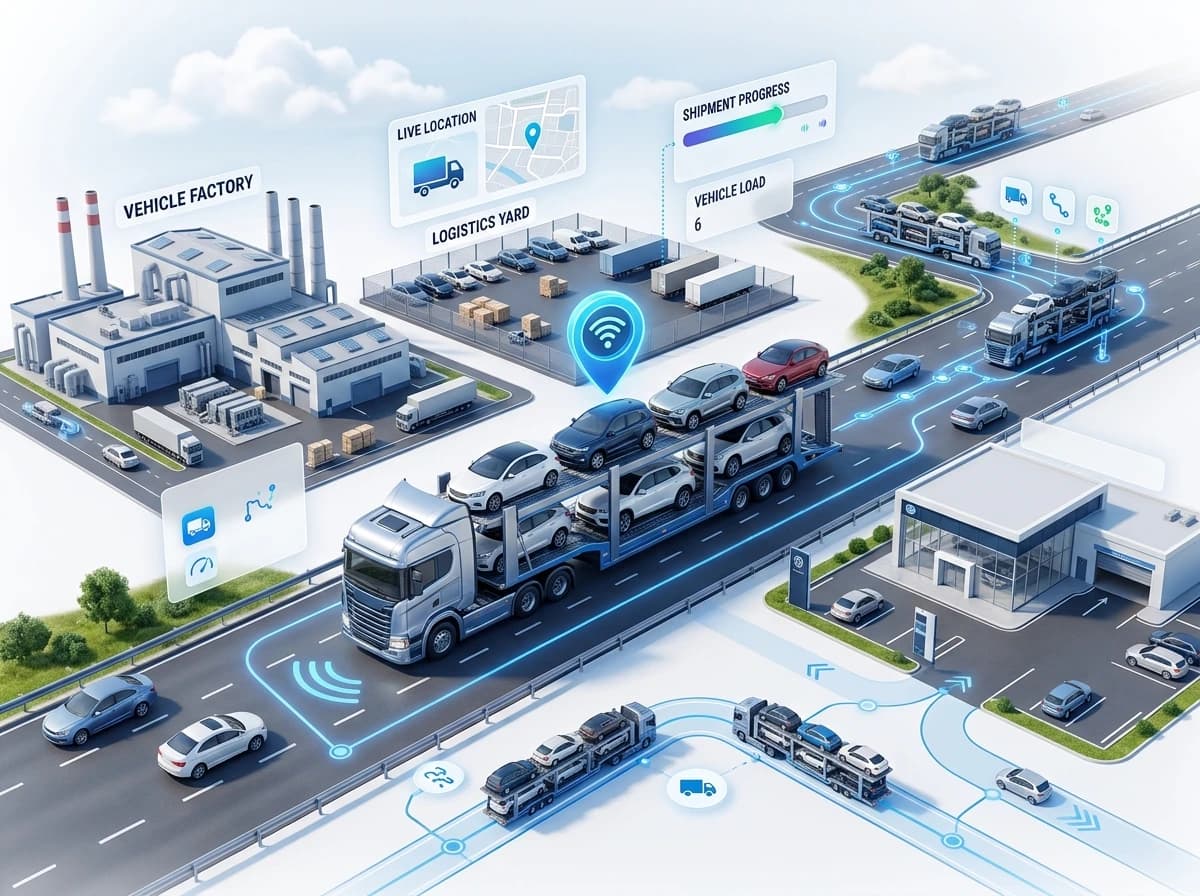
What Is Car Carrier Tracking Software?
Car carrier tracking software is a system that follows finished vehicles from the plant to the dealer. It records which carrier each vehicle travelled on, where it was handed over, when it arrived, and what condition it was in at every stage, so a damage claim can be traced to a leg instead of argued about.
Moving new cars is not like moving freight. The cargo is the product, it is worth lakhs, and a single scratch turns a delivery into a claim. Most of a car carrier operation is handovers: plant to carrier, carrier to stockyard, stockyard to another carrier, carrier to dealer. Damage almost always happens in a gap between two of those, and the gap is where nobody was recording. Fleet Scanner keeps the route, the handover timings and the condition record on one trip, so the question of which leg a dent belongs to has an answer. For orders, load planning, lorry receipts, delivery proof and freight billing, see our car carrier transport management software.
- Journey
- JN-5061
- Carrier
- CC-22 · 9 slot
- Lane
- Plant to dealer
- Slots used
- 8 of 9
- Legs
- 2 linked
- Handovers
- 3 stamped
- Condition
- NO CLAIM RAISED
- Journey complete
- 3 of 4 gates
Where Vehicle Logistics Loses Money
Automotive logistics loses money in two places nobody watches closely. The claim you cannot defend, and the empty slot you cannot see. Car carrier tracking software is aimed at both.
Damage cannot be traced to a leg
A car reaches a dealer with a scratch. It passed through a plant yard, two carriers and a stockyard. Without a condition record at each handover, the claim lands on whoever is easiest to bill. That is usually the last carrier in the chain.
Carrier decks run part empty
A nine slot carrier leaves with six vehicles because the loading plan was built on a phone call. The trip costs the same either way. Across a month, unused slots become the quietest loss in the business.
Dealer delivery windows get missed
A dealer has a slot for unloading and staff to receive. Arriving outside it means waiting, or coming back tomorrow. Without arrival records, nobody can tell whether the carrier was late or the dealer was not ready.
Vehicles sit in stockyards unseen
A car reaches a stockyard and stops being anybody’s problem. Days pass. Nobody notices until a dealer chases it. By then the delay is already in the customer’s delivery date.
What Runs Inside Car Carrier Tracking Software
Car carrier tracking software has to follow the vehicle, not just the truck carrying it. That is a harder job than it sounds. Each item below is a working module in Fleet Scanner, not a paid add on.
Live Carrier Tracking
Follow every carrier on one map with speed, halts and route playback. A long stop on a highway leg shows up while something can still be done. So does a carrier sitting outside a yard overnight.
GPS tracking →Plant, Stockyard and Dealer Zones
Geofence every plant gate, stockyard and dealer location. Arrival, waiting and departure at each are captured on their own. The chain of custody then becomes a set of timestamps rather than a set of claims.
Geofencing →Multi Leg Trips and Handovers
A vehicle moving plant to stockyard to dealer is recorded as connected legs, not three unrelated trips. When a question comes up, the whole journey sits in one place with the handover points marked.
Trip operations →Condition and Damage Records
Condition notes and reported damage sit against the leg they were raised on, with a date and a location. Over months, the pattern shows which lanes, which carriers and which handover points keep producing claims.
Reports hub →Slot Use and Cost Per Vehicle
Record how many slots each carrier ran with, then work cost per vehicle from your own trip data. A lane that looks profitable at truck level often looks different once empty slots are counted.
Billing →Carrier Fleet Maintenance
Trailers, hydraulic decks, ramps and tie down equipment sit in one asset list with service schedules and breakdown history. A carrier stuck mid lane strands the vehicles on it too.
Maintenance →How a Handover Chain Is Recorded
This is one car moving from plant to dealer. The gates are the handovers. The amber one is where a condition check first recorded the damage, and pinning it to that gate is what car carrier tracking software is for.
Loading closes with a record
The carrier loads at the plant and leaves. Departure time, the slots used and the condition noted at loading all go onto the trip together.
The highway leg is tracked
Route, speed and halts run in the background. A long unplanned stop on a lane between two states is visible the same day rather than at the end of the week.
The handover is stamped
Arrival and departure at the stockyard are captured. If a vehicle changes carrier here, the two legs stay linked so the journey does not break in half.
Delivery closes the chain
Arrival, unloading and departure at the dealer are recorded. Any damage raised at this point sits against the last leg, with everything before it still on record.
Long Vehicles, Valuable Cargo
A loaded car carrier is one of the longest vehicles on an Indian highway, and its dimensions, permits and insurance all get checked. The cargo carries its own paperwork as well. A new vehicle moving from a plant to a dealer needs the right documents travelling with it, and car carrier tracking software is where those references should sit.
Long vehicles get checked
Loaded car carriers are among the longest vehicles on the road and their dimensions are regulated. Trailer specifications, length and axle details sit on the asset record. Rules differ by state and change, so confirm what applies with your regional transport office.
Interstate movement
Car carriers usually run across state lines, which means national or all India permits alongside fitness and insurance. Permit type, number and validity are held against each vehicle with reminders.
The cargo is the value
The vehicles on a carrier are worth far more than the carrier. Policy references and expiry dates sit with the asset. Fleet Scanner does not verify that a policy covers a specific cargo value or claim.
Paper that travels with the load
Vehicle movement above the notified value needs an e-Way Bill carrying the consignment and vehicle details. Those references can be held with the trip so the document and the movement match.
Licences and allocation
Licence class, expiry and daily carrier allocation are held together, so it is always clear who was driving which carrier on which leg.
Fitness, permit and tax
Fitness, permit, insurance, PUC and road tax dates all sit in the compliance module with reminders well before they lapse.
Please note: Fleet Scanner records and organises the movement side of finished vehicle logistics. It does not inspect vehicles, photograph or scan them, detect damage automatically, decide who is liable for a claim, settle or pay a claim, plan carrier loading, or connect to an OEM dispatch portal or dealer management system on its own. Condition information has to be entered by your own staff at each handover, and any integration with an OEM or dealer system would be a separate piece of work. Dimension, permit and insurance rules differ by state and change over time. Confirm what applies to your carriers with your regional transport office and your insurer before relying on anything here.
Vehicle Logistics Terms, Explained
Finished vehicle logistics uses terms that mean nothing outside the industry. Here is what each one means on this page.
- Finished vehicle logistics
- Moving completed vehicles from the factory to the customer end of the chain. Also written as FVL. It covers plant, stockyard, dealer and port movement.
- Car carrier
- The long trailer built to carry several vehicles on two decks. Open carriers are the common type, and enclosed ones are used for premium and high value vehicles.
- Stockyard
- A holding yard where finished vehicles wait between legs, usually near a plant or a regional hub, before going out to dealers.
- Plant to dealer
- A direct movement from the factory to a dealership, without a stockyard leg in between. Faster, and used when volumes and timing allow it.
- Condition report
- The record of a vehicle’s condition taken at a handover point. It is what a damage claim is checked against later.
- Damage in transit
- Any damage found on a vehicle that was not on the record at the previous handover. Tie down marks, scratches and dents are the usual ones.
- RORO
- Roll on roll off. Vehicles driven on and off a ship under their own power, used for export and coastal movement.
- Slot
- One vehicle space on a carrier deck. Carrier economics are counted in slots used, not in trips run.
Who Uses Car Carrier Tracking Software
If the cargo on your trailer is worth more than the trailer, this page is about you. Car carrier tracking software suits anyone answerable for a vehicle between two gates. Fleet size matters less than the value on the deck.
- Car carrier operators Fleets running open and enclosed carriers on OEM contracts, where damage claims and slot use decide the margin.
- Automotive outbound logistics teams The people inside a manufacturer answerable for vehicles between the plant gate and the dealer.
- Stockyard and hub operators Yards holding finished vehicles between legs, who need arrival and dispatch records that match what carriers claim.
- Dealer group transport Larger dealer networks moving vehicles between branches and to customers, often with a small carrier fleet of their own.
- Two wheeler and tractor carriers The same handover and damage problems, on different bodywork and usually higher unit counts per load.
- Used car and auction logistics Movement between auction yards, refurbishment centres and buyers, where condition at handover matters even more.
Handover Slips, Tracking App, or Fleet Scanner
A tracking app tells you where the carrier is. That is one useful fact. It does not tell you three other things. Which car is on which deck. When the vehicle changed hands. Which leg the damage happened on. That is what car carrier tracking software adds.
| Requirement | Paper handover slips | Basic tracking app | Fleet Scanner |
|---|---|---|---|
| Where a carrier is now | Call the driver | Yes, on a map | Yes, with speed, halts and playback |
| Which leg a vehicle was on | Traced by hand | Not included | Legs linked into one journey |
| Handover timings at each point | Written on a slip | Not captured | Stamped from plant, yard and dealer zones |
| Condition record per handover | Loose paperwork | Not included | Held against the leg with date and place |
| Damage pattern by lane or carrier | Nobody tracks it | Not included | Reportable across months |
| Slots used per carrier | Counted at month end | Not included | Recorded per trip |
| Time a vehicle sat in a stockyard | Discovered when chased | Not captured | From yard arrival and departure |
| Everything in one login | No | Tracking only | 18 plus modules on one platform |
Numbers Your Logistics Head Asks For
Automotive contracts are reviewed hard, and claims are settled on evidence. Sixty plus reports come ready to run. Pick a lane, a carrier or a date range, then export to Excel or PDF. You can also have one arrive every Monday morning.
Car Carrier Questions, Answered
Short answers to what carrier operators and automotive logistics teams ask us most often.
What is car carrier tracking software?
Car carrier tracking software is a system that follows finished vehicles from the plant to the dealer. It tracks the carrier, records handover timings at plants, stockyards and dealers, links multi leg journeys together, and holds condition and damage records against the leg they were raised on. In Fleet Scanner it sits alongside maintenance, compliance and reporting. The whole carrier fleet then works from one set of data.
How is this different from ordinary GPS tracking?
Ordinary tracking follows the truck. Finished vehicle logistics needs to follow the cargo, because the cargo is the product. Car carrier tracking software links legs into one journey, stamps every handover, and keeps condition records tied to a specific leg. A tracking app shows a route. It cannot tell you which handover a dent belongs to.
Does it inspect vehicles or detect damage automatically?
No. Fleet Scanner does not photograph, scan or inspect vehicles, and it does not detect damage on its own. Condition information is entered by your own staff at each handover. What car carrier tracking software does is attach that record to the right leg, the right carrier and the right time. It can then be used later, instead of being lost in loose paperwork.
Can it help settle a damage claim?
It gives you the evidence to argue from. Handover timings, route history and the condition recorded at each stage sit on one journey, so a claim can be traced to a leg rather than landing on whoever is easiest to bill. Fleet Scanner does not decide liability or settle claims. Those stay with your team and your insurer.
Does it connect to OEM dispatch or dealer management systems?
Not on its own. Fleet Scanner is a fleet platform, so a link to an OEM dispatch portal or a dealer management system would be a separate integration. Many operators run it alongside those systems rather than instead of them, using it for the vehicle movement and compliance side that OEM portals usually do not cover.
Can it show how many slots a carrier ran with?
Yes, where the slot count is recorded against the trip. Carrier economics work in slots rather than trips, so a nine slot carrier running with six vehicles is a real loss even though the trip looks complete. Reporting slots used per carrier and per lane is what makes that visible over a month.
Does it work for two wheeler and tractor carriers?
Yes. The bodywork changes but the problem does not. Handovers, condition records, multi leg journeys, permits and maintenance all work the same way whether the deck is carrying cars, motorcycles or tractors. Reports can be filtered by carrier type or by lane so the different parts of a mixed fleet stay comparable.
Can we run it on our own server?
Yes. Fleet Scanner is available as a cloud plan and, on the Enterprise tier, as a self hosted or white label setup on your own server. Operators working under OEM contracts often choose self hosting. Movement, handover and claim data then stays inside their own network, under their own retention rules.
Know which leg the damage happened on
Book a free walkthrough of the car carrier tracking software using one of your own plant to dealer lanes as the example. We will show linked legs, handover timings and a damage by lane report in about twenty minutes.