
GPS Tracking Business Startup Cost: 2026 Pricing Guide
A GPS tracking company in 2026 can come in a variety of sizes and amounts, from a small reseller operation that costs little to a larger hardware-based operation that costs a lot. There isn't a single figure for your investment – it depends on the size of your fleet, the GPS device, the software...
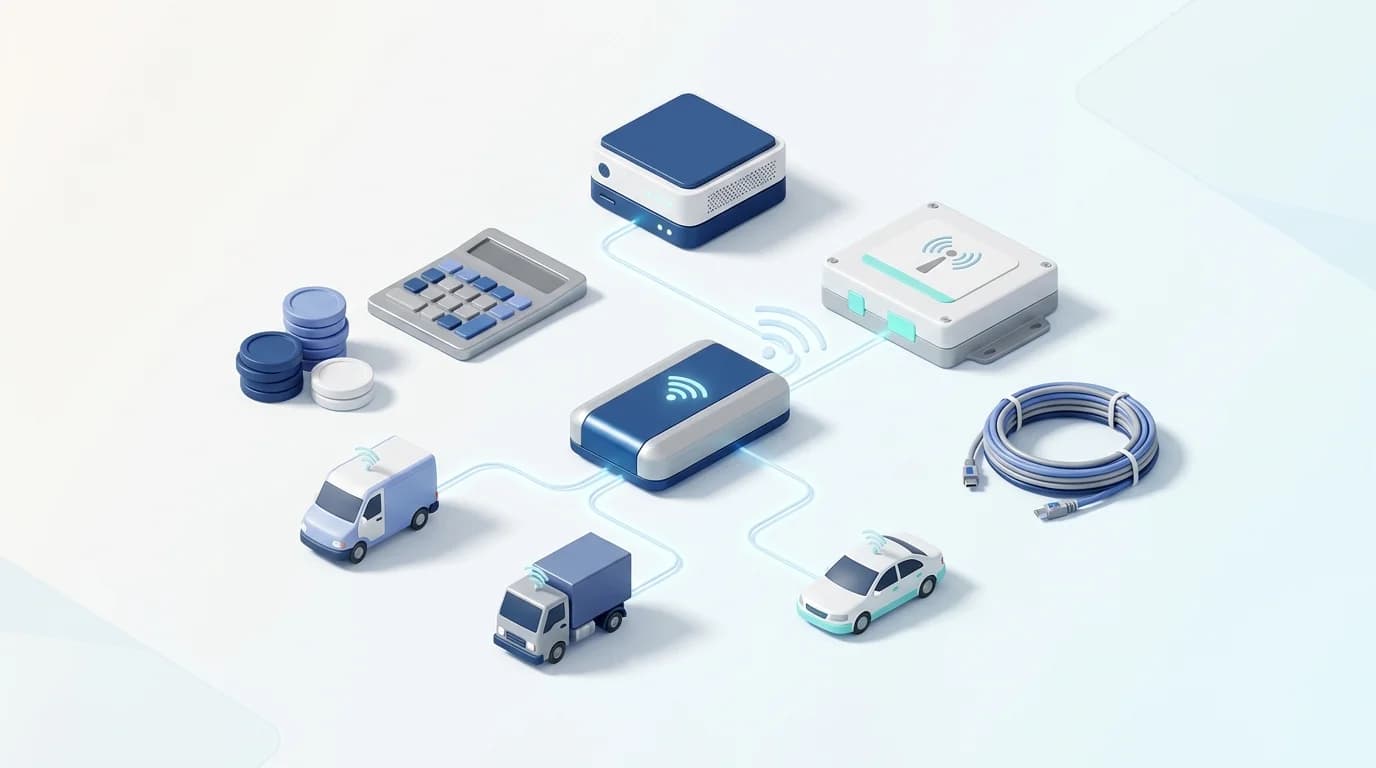
A GPS tracking company in 2026 can come in a variety of sizes and amounts, from a small reseller operation that costs little to a larger hardware-based operation that costs a lot. There isn't a single figure for your investment – it depends on the size of your fleet, the GPS device, the software model, the SIM/data, the installation, the marketing, the support and your working-capital reserve. It is sizing based on modelling the cost per vehicle, and taking into account one-time costs (hardware, installation, branding) and recurring costs (software, SIM/data, support). The most significant long-term levers are the software deployment model—hosted reduces upfront cost; and, self-hosted reduces software cost as fleet size increases.
This guide provides the cost breakdown, 2026 market ranges, a worked example of 100 vehicles, comparison with hosted vs self-hosted, break-even math, and a calculator to run the numbers on your own numbers. It is designed for GPS tracking business owners, resellers, white label providers, fleet companies and dealers who are adding telematics.
Key Takeaways
- The startup cost is influenced by fleet size, hardware, software model, installation and marketing — model on an individual vehicle basis, not as one number.
- Break down costs such as one-time (hardware, installation, branding) and recurring (software, SIM/data, support).
- The most common variable cost is typically hardware and can require a lot of working capital if purchased in advance of customer payments.
- The hosted and self-hosted option primarily affects the nature of software costs (recurring per vehicle versus fixed base/licensing).
- Calculate the total cost for a variety of fleet sizes; the break-even point is not universal, it depends on your price and per-vehicle cost.
2026 Market Cost Ranges (Sourced)
The ranges below are market estimates published by a third party and triangulated from various market and comparison sites for 2026. They're not Fleet Scanner pricing or quotes, but references to help you budget.
| Cost input | 2026 market range |
| GPS hardware (per vehicle, one-time) | ~$50–$300 (OBD to hardwired); $300–$499 AI dashcam |
| Software (retail, per vehicle/month) | ~$10–$50 standard; $45–$80+ enterprise |
| SIM / data (per device/month) | ~$1–$3 |
| Installation (per vehicle, one-time) | $0 OBD self-install; ~$50–$150 hardwired; ~$300 complex |
| Activation (one-time) | ~$25–$100, often waived |
The Main Costs, in One View
There are 8 cost areas of a GPS tracking business – one-time spend and recurring spend. So, per-vehicle costs (pay for hardware, SIM, install, per-device software) depend on fleet size, but fixed costs (branding, staff, hosting) do not. So the trick to getting a budget realistic is to distinguish between the two costs.
| Cost | One-time / recurring | Main driver |
| GPS software | Either (per-vehicle or fixed licence) | Deployment model |
| GPS hardware | One-time per vehicle | Device type / quantity |
| SIM / data | Recurring per vehicle | Active vehicles |
| Installation | One-time per vehicle | Vehicle / install complexity |
| Website & branding | Mostly one-time | Business requirements |
| Marketing | Recurring | Acquisition strategy |
| Support & operations | Recurring | Customer / fleet size |
| Working capital | Reserve held | Payment cycle |
Hardware is typically the biggest variable cost, and purchasing inventory before paying for it becomes a working-capital cost — so determine early on whether to charge upfront, bundle or finance the hardware.
Software is the most impactful decision since it influences your cost curve: hosted will be charged at a per-vehicle rate that increases as the fleet grows; self-hosted will be charged at a fixed/licensed base rate, which will decrease as the fleet increases (see white-label vs self-hosted comparison).
SIM/data may not seem like a big deal per device, but it's a huge deal when you have a large fleet.
Support Your installed base grows the support, and it is the cost most often ignored — a GPS tracking business is a recurring-service business, and the lack of support leads to churn that quietly kills the business.
Working capital is important because you are paying for the hardware, the SIMs, installation, and the marketing before the months of subscription revenue comes in, so keep a month(s) of runway × fixed monthly cost in hand, instead of spending all of the money on the hardware.
GPS Tracking Business Cost by Fleet Size
The cost will react considerably differently at the 25 vehicles than at 5,000 vehicles. The table assumes the following midpoints for markets reference prices: Platform cost of $5/vehicle, Support cost of $3/vehicle, Fixed of $3,000/month, Hardware cost of $150 and SIM cost of $2 (all above sourced from ranges)
| Metric | 25 | 100 | 500 | 1,000 | 5,000 |
| Hardware = veh × $150 | $3,750 | $15,000 | $75,000 | $150,000 | $750,000 |
| Installation = veh × $75 | $1,875 | $7,500 | $37,500 | $75,000 | $375,000 |
| Monthly op = veh × $10 + $3,000 | $3,250 | $4,000 | $8,000 | $13,000 | $53,000 |
| MRR = veh × $25 | $625 | $2,500 | $12,500 | $25,000 | $125,000 |
| Monthly profit = veh × $15 − $3,000 | −$2,625 | −$1,500 | $4,500 | $12,000 | $72,000 |
The pattern is the point: At 25-100 vehicles the business loses money because the fixed costs outweigh the revenue; it reaches a break-even of around 200 vehicles ( $3000 ÷ $15 contribution) and then scales quite well.
Example: Starting With 100 Vehicles
This is done using the sourced market midpoints provided above (hardware, install, SIM, retail price) and the platform, support and fixed costs as operating inputs. Market figures are 2026 prices, not Fleet Scanner pricing. All USD.
| Initial investment | Monthly economics | ||
| Hardware (100 × $150) | $15,000 | Revenue (100 × $25) | $2,500 |
| Installation (100 × $75) | $7,500 | Variable/veh ($2+$5+$3) | $10 |
| SIM activation (100 × $50) | $5,000 | Contribution/veh | $15 |
| Website & branding | $2,000 | Total contribution | $1,500 |
| Initial marketing | $2,000 | Fixed monthly | $3,000 |
| Working-capital reserve (3 × $3,000) | $9,000 | Monthly profit | −$1,500 |
| Total initial investment | $40,500 | Break-even | 200 vehicles |
This represents a realistic and educational result — a $1,500 monthly loss — because the fleet size is less than 200 vehicles which is the break-even point. If it is raised, it makes it positive; if it is lowered, per-vehicle cost is lowered; if it is increased, it grows past 200.
Hosted vs Self-Hosted: Which Costs Less?
It is not necessarily the cheaper of the two options; depends on the number of vehicles, technical capability, growth and desired infrastructure control.
| Factor | Hosted | Self-hosted |
| Initial infrastructure | Lower | Higher |
| Software cost | Often recurring per-vehicle | Fixed / licensed |
| Scaling economics | Rises per vehicle | Flat (infrastructure-based) |
| Server management | Provider | You (often vendor-assisted) |
| Data ownership | Vendor typically holds it | You hold it |
| Best fit | Fast launch, smaller/early-stage | Scale, data ownership |
Calculate total cost of ownership for various fleet sizes to determine your crossover point — the size of your fleet when you realize that a fixed/self-hosted base is more cost effective than paying per vehicle hosted fees. Below it, usually hosted wins, above it, usually self-hosted wins. Hosted is usually a better choice for a new business with a proven demand or a reseller looking for a large vehicle base, but a reseller with a smaller vehicle base should do long-term calculations.
Calculate total cost of ownership for various fleet sizes to determine your crossover point — the size of your fleet when you realize that a fixed/self-hosted base is more cost effective than paying per vehicle hosted fees. Below it, usually hosted wins, above it, usually self-hosted wins. Hosted is usually a better choice for a new business with a proven demand or a reseller looking for a large vehicle base, but a reseller with a smaller vehicle base should do long-term calculations. The full decision is in the white-label vs self-hosted comparison.
How Break-Even Works (With Sensitivity)
Break-even is your fixed monthly cost divided by your contribution margin per vehicle:
Break-even vehicles = fixed monthly cost/(price − variable cost per vehicle)
It is a case where small changes in its prices result in large changes in its break-even point (if $10 is the variable cost, and $3,000 is the fixed cost from the above example):
| Monthly price / vehicle | Contribution margin | Break-even |
| $18 | $8 | 375 vehicles |
| $25 (market-standard) | $15 | 200 vehicles |
| $35 | $25 | 120 vehicles |
A higher price or a lower cost per vehicle will reduce break-even even more quickly than seeking volume (assuming both go on the same margin). If the contribution margin is zero or negative, there is no break-even at any size of fleet (adjust pricing or variable costs first).
How GPS Tracking Businesses Make Money
The recurring subscription revenue is the main, followed by hardware margin, install fees, premium tiers, enterprise/API services and paid support. Recurring revenue is more important than a single hardware sale because the recurring revenue continues to add up as they stay: a hardware sale earns once, a subscription earns each month. It's not a device sale number: it's a number of active subscriptions retained.
GPS Tracking Business Startup Cost Calculator
Use the interactive calculator to perform the calculations below with your own numbers. It will calculate your return on investment (ROI), monthly cost, monthly recurring revenue (MRR), contribution margin, break-even fleet size, and payback period, without any built-in prices, and it will do it for your fleet size, your hardware, software, SIM/data, price of installation, subscription price, your marketing, staff, hosting, and support costs! It takes your actual input and is the most accurate way to answer the question, “How much will my business cost?” There is a one-click option for “load 2026 market-reference figures” which also pre-fills the sourced midpoints, as a starting point.
How to Reduce Startup Costs
- Start with a focused niche don't make huge orders until there is a need..
- Use white-label software —Make use of white label software and don't build a platform from scratch; refer to the white-label GPS tracking guide.
- Outsource installation Install outsource as early as possible and purchase hardware as needed.
- Compare total cost of ownership Don't just look at the price of the software – total cost of ownership applies and software that costs less upfront may cost more over the years
There's no need to make their own trackers—just procure a similar tracker from a known source and get it working with compatible software. It supports broad device compatibility which provides flexibility in sourcing devices rather than tying the device to one vendor.
Common Cost Mistakes
Purchasing too much hardware; Ignoring SIM/data at scale; Under estimating install/support, Payment processing fees, Underpricing (Price will cover software, connectivity, install, support, margin, any churn and any initial pricing versus recurring revenue); Ignoring churn; Initial price only software; Spending all capital before recurring revenue arrives. The majority come back to one mistake: pricing according to the price of the software and not the total model.
FAQs About GPS Tracking Business Startup Cost
How much does it cost to start a GPS tracking business?
There's no single figure, it's dependent upon fleet size, hardware, software model, connectivity, installation, marketing and support. Estimate up-front investment (hardware, install, branding) and ongoing investment (software, SIM/data, support) per vehicle. The market estimates for 2026 are: $50 – $300 hardware per vehicle; $10 – $50 Software per Vehicle/Month; $1 – $3 SIM per device/month.
What is the biggest cost in a GPS tracking business?
Typically the biggest variable cost is hardware, as all vehicles require a piece of hardware, and purchase of inventory in advance of orders also depletes working capital. As the business expands, the software, connectivity, installation, and customer acquisition all become a whole new ballgame.
Is self-hosted GPS tracking cheaper?
For many vehicles, especially if hosted pricing were to go up with every vehicle, it can be. Self-hosted includes infrastructure, backup and security costs, and compare total cost of ownership at your scale and when your traditional, fixed base cost is cheaper than a per-vehicle fee.
How many vehicles do I need to break even?
Break-even vehicles = fixed monthly cost/contribution margin per vehicle. It is not universal, it decreases as price increases and decreases per vehicle and increases as fixed costs increase. For the worked example (reward $3,000, cost $15), the break even number of vehicles is 200.
How do GPS tracking businesses make money?
Break-even vehicles = fixed monthly cost/contribution margin per vehicle. It is not universal, it decreases as price increases and decreases per vehicle and increases as fixed costs increase. For the worked example (reward $3,000, cost $15), the break even number of vehicles is 200.
Do I need to manufacture GPS trackers?
No, you'll find compatible trackers from trusted suppliers and connect with compatible software, without the need to design and manufacture hardware. One stipulation is that the platform on which you purchase supports the devices.
How much working capital should I keep?
The obvious rule: Enough to pay for hardware, SIMs, installation, marketing, staffing and software, and then months of subscription payments come in — just a simple reserve is months of runway × fixed monthly payment. Do not use all the money for equipment.Maintain a stock of spares, not all the money for equipment.
Conclusion
The starting cost for a GPS tracking business is actually less because of the software price than because of the total package including hardware, connectivity, installation, branding, marketing, support, and working capital (one-time and recurring), based on 25 to 5,000 vehicles. Before you go "live": estimate costs across different fleet sizes, perform a TCO analysis between a hosted and self-hosted solution, and price your solution to ensure you have a margin and a realistic per-vehicle cost.
Next steps: plug your plan into the calculator, if you're developing a reseller brand,
see white-label GPS tracking software; if you expect scale, compare self-hosted GPS tracking software and book a walkthrough and quote.
Keep reading
GPS Tracking Hardware: How to Choose the Right Trackers
When selecting GPS tracking hardware, consider the type that is compatible with your tracking business and your customers' needs, determine if the trackers are compatible with the protocols of your platform (which helps prevent vendor lock-in), assess network capabilities for the areas you serve...
How to Price GPS Tracking Services: Formula & Pricing Tips
Track the price of a GPS system on a per-vehicle, per-month basis, and add your own per-vehicle cost (platform + SIM/data + support) plus your desired margin, and then select pricing model (flat, tiered, or hardware-bundled) based on the market you're operating in . There is no set price; the...
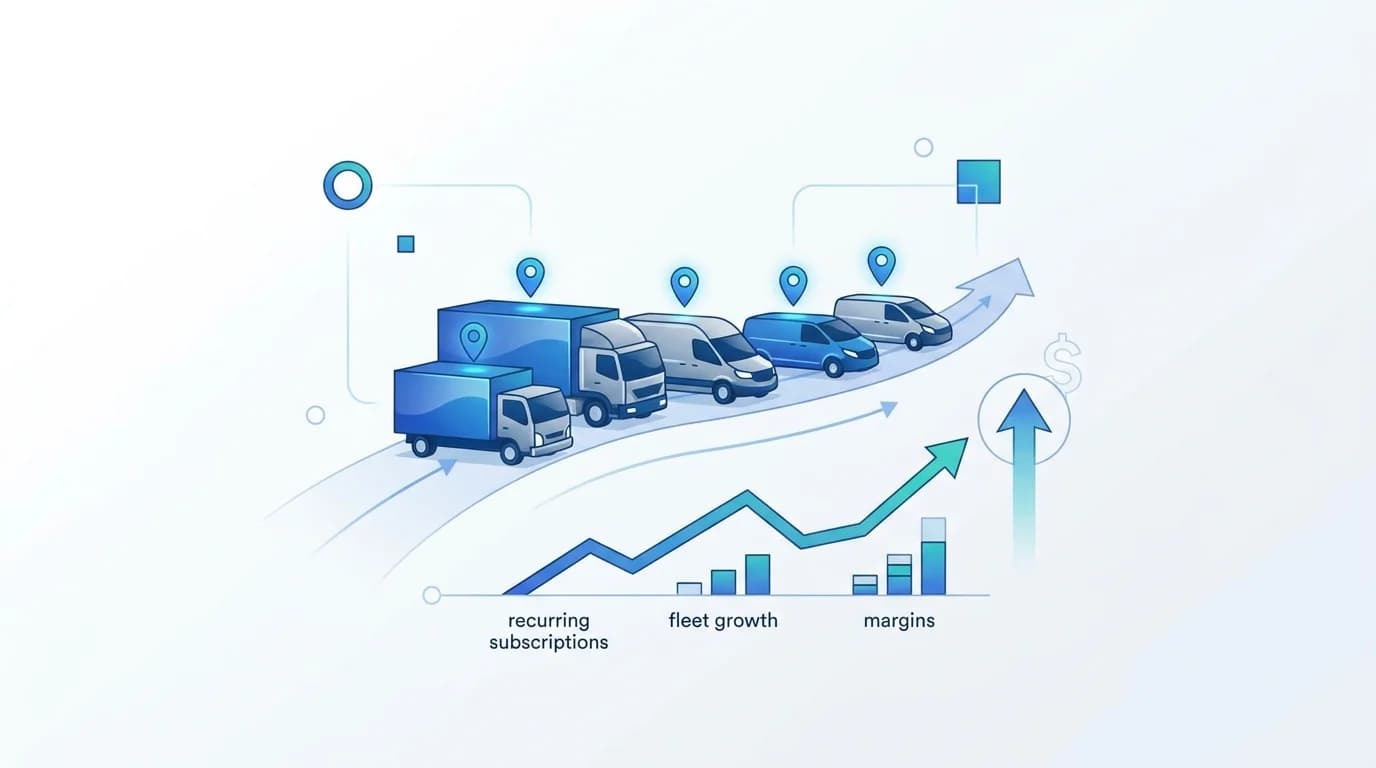
GPS Tracking Business Profitability: How Much Can You Make?
Yes, you can make money with a GPS tracking company, but only if it is profitable. The model works because the model has recurring revenue —you have a number of base vehicles that your customers pay you monthly for to track, and the more base vehicles you have and the more you get paid per month...