
How to Start a GPS Tracking Business: 2026 Startup Guide
To get started in GPS tracking, you need to license a GPS tracking software platform that you can brand as your own, source compatible GPS hardware and SIM/data connectivity, set a recurrent per-vehicle subscription fee, and target a targeted customer base. The business has recurring monthly...

To get started in GPS tracking, you need to license a GPS tracking software platform that you can brand as your own, source compatible GPS hardware and SIM/data connectivity, set a recurrent per-vehicle subscription fee, and target a targeted customer base. The business has recurring monthly revenue: customers pay for having their vehicles tracked, using your branded platform, and you take care of the devices, onboarding, and support. First time gamblers will typically pay for a white label website instead of developing their own, meaning that their funds are put towards the hardware, customers and not software development.
Whether or not to build or buy the software, the seven steps to launch, what you need, what it costs, how to price it and, finally, how to select the right platform partner are all covered in this guide!
Key Takeaways
- A GPS tracking company offers a branded tracking service, and their business model is based on a subscription per vehicle basis.
- The overwhelming majority of startups use a white-label platform instead of developing one of their own because it takes years to create a reliable tracking platform.
- The costs of starting up are software, GPS hardware, connectivity, installation, branding, support and marketing, NOT software development.
- As you scale, costs and margins will vary based on your delivery model (cloud vs self-hosted).
- It's easier to win and support a clear customer segment than to serve all vehicles in all places.
- The platform is not a guarantee of profitability, as it relies on several other factors, including pricing, the cost of the hardware, churn, and the load of support.
What Does a GPS Tracking Business Actually Sell?
A GPS tracking business has an ongoing service, not a single product: customers are paying a subscription for the continuous GPS tracking and management of their vehicles or assets through a specific platform, usually branded as part of the business. The customer pays a monthly rental fee, and you provide the GPS device, software access, and support – the device is either included as part of the subscription or is rented separately.
It's the service model we're all after. A subscription-based tracking system allows for predictable and compounding monthly recurring revenue as customers increase. It's also why platform choice is so critical: We're sales, onboarding and support, and the platform needs to reliably deliver on the tech -- and do it in our name, not the platform vendor's.
Do You Need to Build the Software or Buy It?
There is no need to develop, and most new players purchase it, re-marketing it as their own white label. Creating a production tracking system involves consuming data from a host of GPS hardware protocols, running it at scale, storing and handling massive amounts of location history, and managing dashboards, alerts and mobile applications. It is a long-term engineering effort that is not a business effort and usually does not make sense for a business that lives and breathes on the sale and support of a service.
A white-label GPS tracking platform allows you to get it up and running under your own brand in weeks, while the vendor handles the underlying technology. Your money is then invested in hardware and acquiring customers. The actual question is not “build versus buy” but rather which platform and which delivery model to buy, addresses in the steps below.
How to Start a GPS Tracking Business: 7 Steps
The process of building a brand new GPS tracking service is repeatable. The steps assume that you've made sure there's demand in the segment you are targeting.
1. Choose Your Niche and Customer Segment
First of all, you need to know who you're serving, as it will influence all future decisions. Typical applications are logistics and delivery vehicles, construction and heavy-duty machinery, passenger or school buses and personal and asset monitoring. You can customize the features, pricing, and marketing towards a specific audience with a focused segment, rather than trying to win over multiple audiences, and it makes the sales pitch much easier to understand for the customer.
2. Choose a Platform and Delivery Model
Select the platform that will be sold and the deployment. Check the depth of the branding, device compatibility, reliability, API access, and support of white-label platforms and choose between a cloud (hosted) and a self-hosted deployment. This one decision affects your cost structure and your margin for the life of your business and is worth the time - the cloud versus self-hosted trade-offs are outlined in their own section below.
3. Confirm GPS Hardware Compatibility and Suppliers
Test that the platform is compatible with the trackers you are going to sell, and get hardware vendors lined up. Support for a wide range of protocols is more than it sounds: It allows you to purchase devices that aren't tied to a single vendor because of their price or availability. Before purchasing any hardware, please verify the supported devicesby the platform, as well as if new device protocols are available on request.
4. Set Up Connectivity
Each tracker should have a SIM and a data plan (or other type of IoT connectivity) to send data. Do this in cooperation with a telecom or IoT-SIM provider. It's a reoccurring cost on a per-device basis, and you pass it on in your subscription price. If your customers' work involves travelling from one region to another, you may need to think about multi-network or roaming SIMs as coverage gaps directly impact the service you can sell.
5. Brand the Platform and Prepare Onboarding
Customize your branding (logo, colors, custom domain, and apps) and configure a separate portal for each client, which will show only their vehicles to them. Equally as significant, determine the setup of devices, customer training and support procedures. The quality of your on-boarding and support is the critical element that determines whether your small operators will make friends or enemies of their customers, so don't wait until after the sale to think about it.
6. Build Your Pricing Model
Charge a monthly subscription fee per vehicle for your platform and hardware, your connectivity, your support and margin. Determine if you will include the tracker as part of the subscription fee or sell it separately, and if so, will there be levels (e.g., basic vs. advanced tracking).
7. Launch and Market to Your Segment
Create a simple but believable website, put up sales information geared towards your intended target market, and engage customers in the ways that they prefer — local, referrals from industry, internet search, or partnerships. View your initial customers as a learning curve: test and tweak your pricing, packaging, and support, based on customer feedback, before investing larger sums in acquisition.
What Do You Need to Start a GPS Tracking Business?
You have to have five things to begin: a brandable GPS tracking software platform, GPS hardware compatible with the software, SIM/data connection for each GPS, a means of installing and supporting the GPS, and a targeted customer base to sell to. No need for manufacturing of hardware or software, both come from suppliers and platform vendors.
In practical terms, the essentials break down as:
- A GPS tracking software platform A branded GPS tracking software platform that has per-client portals and preferably has an API.
- GPS hardware (trackers) from one or more supplier compatible with the platform.
- Connectivity - SIM and data plan for each device (IoT connectivity).
- An installation and support method —A method of installation and support (in-house, via partners, or shipping with installation and support process).
- A go-to-market plan — a clear target segment, web page, pricing and customer outreach. In addition to the essentials, two things are strongly recommended, not strictly required: a clear brand identity, and basic business administration which is suitable to your country (registration, tax, any business licensing that applies locally — check with a local authority because it varies from country to country and is not a legal matter).
How Much Does It Cost to Start a GPS Tracking Business?
The upfront cost is for the software platform, GPS technology, connectivity, installation, branding, and support, and is most commonly hardware, which is the highest per-vehicle expense. The major cost savings of the white-label solution is that you don't have to pay six figures to develop the platform. The below is a description of cost categories, and prices differ depending on region and supplier – please check the actual costs.
| Cost category | What it covers | Cost shape |
| Software platform | White-label license or subscription | One-time license, or recurring |
| GPS hardware | The trackers themselves | Per-vehicle capital cost |
| SIM / data | Connectivity per device | Small recurring per-device cost |
| Installation | Fitting devices and configuration | Per-vehicle, one-time |
| Branding & website | Domain, logo, marketing site | Mostly one-time |
| Support & operations | Your time, staff, or a support plan | Ongoing |
| Marketing / acquisition | Reaching and converting customers | Ongoing, variable |
The most powerful tool on your economy is the pricing model in the platform. With a per-device subscription, you have lower up-front costs, but the cost increases per device, while a one-time license (typical of self-hosted GPS tracking software ) has higher up-front, and better margins as you grow.
Cloud vs Self-Hosted GPS Tracking: Which Is Better for a New Business?
Cloud (hosted) is typically the more straightforward one to get going with, requiring little upfront investment and also no servers to get a handle on, whereas self-hosted is better for operators that desire data ownership and also a cost structure that is not as reliant on the amount of vehicles in their fleet. There is no one that is “better” – it is a matter of capital, growth goals and whether data ownership is important to customers.
| Factor | Cloud (hosted) | Self-hosted |
| Upfront cost | Low | Higher (license + setup) |
| Recurring economics | Per-vehicle fees that grow with the fleet | Hosting + support; no per-vehicle software fee |
| Data ownership | Vendor typically holds the data | You hold the data on your infrastructure |
| Infrastructure responsibility | Vendor | You (often with vendor help) |
| Customization | Within vendor limits | Deeper control |
| Scalability | Immediate, vendor-managed | Scales on your infrastructure |
| Best suited to | Fast launch; smaller or early-stage | Data ownership; resellers with many vehicles |
If it's a new company testing out the market, hosted is generally the least challenging way to get started. Per-device fees will add up across all of the client's vehicles, making self-hosted a more economical solution early on for a reseller anticipating to support numerous cars for his clients. Our guide to white-label vs self-hosted GPS tracking software.offers a full comparison, including the cost crossover point.
How Do You Price a GPS Tracking Service?
Pricing it as a monthly per-vehicle charge, higher than the difference between your per-vehicle expenses (platform, connectivity, hardware amortization, and support) to help ensure that it generates margin for every active vehicle. Most operators require monthly fees per device, with some also requiring an up-front fee for the device or installation, and provide tiers that differentiate between basic tracking and advanced features like fuel monitoring or driver-behavior monitoring.
There are two practical aspects that determine the viability of the pricing. First, look at the cost curve: When you are costs per device, the margin per vehicle remains unchanged as you scale, but with a one-time-license model, margins can improve as vehicles are added. Second, make your hardware model purposeful: If the tracker is included in the subscription, your customer needs less to purchase, but you have to invest your capital; if you charge for the subscription first, you recover the cost right away and your customer has to spend more to sign up. Coordinate the choice with your cash and the expectations of your segment.
What Features Should Your Platform Offer?
The platform should provide at a very basic level, a reliable core tracking system, and the reseller features that enable you to operate a reseller business. The essentials are:
- Real-time tracking, route history, and geofencing — the daily-use features customers expect, including entry, exit, and dwell alerts.
- Configurable alerts and exportable reports — for events like over speeding and unauthorized movement, and for utilization.
- Full branding and per-client portals — your logo, domain, apps, and a separate branded view for each customer.
- Broad device compatibility — support for many tracker protocols so you are not tied to one supplier.
- An API and webhooks — to connect tracking to your billing or CRM as you grow.
Rather, if customers to your fleet are customers, not individuals, operational depth is a selling point: a platform also offers fleet management – you can sell more than a live map. But remember, your segment is what it needs and features you can't support are a hindrance, not a help.
Frequently Asked Questions About How to Start a GPS Tracking Business
How do I start a GPS tracking business?
License a white-label GPS tracking platform, determine the type of delivery model, source compatible GPS hardware and SIM connectivity, brand it as your own, establish a per-vehicle subscription price to your costs and margin, and market to your target segment. Most of the new players tend to license a platform, not build it, and therefore they invest in hardware and customers.
Is a GPS tracking business profitable?
It can be, because it generates recurring per-vehicle subscription revenue which compounds as you add customers. Your profitability is related to your pricing, hardware cost, churn, support load and whether your platform cost is based on a per vehicle basis or not. This guide outlines the model and is not guaranteed to provide a certain amount of profit – profit depends on the operator.
Do I need to build my own GPS tracking software?
No, The development of a tracking platform is a multi-year project, while a white label approach enables you to get it up and running in weeks, all while the vendor takes care of the technology and you take care of the customers and support.
How much does it cost to start a GPS tracking business?
Principal expenses will be the software platform (one-time license or subscription), GPS equipment per unit, SIM/data connectivity, installation, branding, support, and marketing. The bulk of the per-vehicle expense is typically the hardware. You don't have to spend a lot of money on software development by licensing the platform.
Should I choose cloud or self-hosted GPS tracking software?
Self-hosted is typically easier to deploy quickly, and has low initial investment, but may not be the right fit for customers who want to have control over their data or have a cost structure that does not scale along with each vehicle they purchase, potentially benefiting resellers with multiple vehicles on each customer. It will depend on the amount of capital, the potential for growth and data ownership requirements.
How do GPS tracking businesses make money?
The majority of these services are based on a per-vehicle subscription, with an optional hardware or installation cost. Monthly margin for all active devices, thus revenue grows as the customer base grows.
What equipment do I need to start a GPS tracking business?
Access to GPS tracking devices that can be used on your platform, SIM cards with data plans for each device, and the tracking software. You don't build hardware, you buy trackers from other vendors that make hardware which your platform can support.
What is a white-label GPS tracking business?
It's a GPS tracking company that's built and maintained by another company, but marketed and sold under your brand name. Your customers will see your brand, not the vendor's — and it's the vendor who's taking care of the technology so you can provide customers with tracking without having to develop the software.
How do I get customers for a GPS tracking business?
Target one segment and access it via the channels that it uses—in industry networks, partnerships, local outreach, online search, and through targeted content. You have a clear niche, which means that your message is specific, and that means it converts better than marketing your “track anything” service to anyone.
How many vehicles do I need to start a GPS tracking business?
The number of customers and vehicle types doesn't have to begin at a minimum either — start with one and a few and expand from there. Your cost structure, not the initial count, is what's important—how does your platform, hardware and support costs change as numbers of vehicles increase? This is important for your business to stay profitable to scale.
Conclusion
But it's not about developing the technology from scratch — it's about putting together the following elements: a reliable branded platform, a compatible hardware, connectivity, and a targeted customer base. Those who operate successfully select a reliable platform, charge a price to meet the true cost of the car and offer a clearly defined niche and customer service that is adequate to retain customers.
The two most significant early choices are the platform to license and the delivery model of the platform. For a quick start with minimal initial investment, the easiest option is a hosted white label platform; for more growth potential in terms of data ownership and cost base that does not increase with every vehicle, a self-hosted platformis a good consideration. Match your platform and model with your capital, your segment, and your growth plan, and develop the capacity to maintain your customers.
Keep reading
GPS Tracking Hardware: How to Choose the Right Trackers
When selecting GPS tracking hardware, consider the type that is compatible with your tracking business and your customers' needs, determine if the trackers are compatible with the protocols of your platform (which helps prevent vendor lock-in), assess network capabilities for the areas you serve...
How to Price GPS Tracking Services: Formula & Pricing Tips
Track the price of a GPS system on a per-vehicle, per-month basis, and add your own per-vehicle cost (platform + SIM/data + support) plus your desired margin, and then select pricing model (flat, tiered, or hardware-bundled) based on the market you're operating in . There is no set price; the...
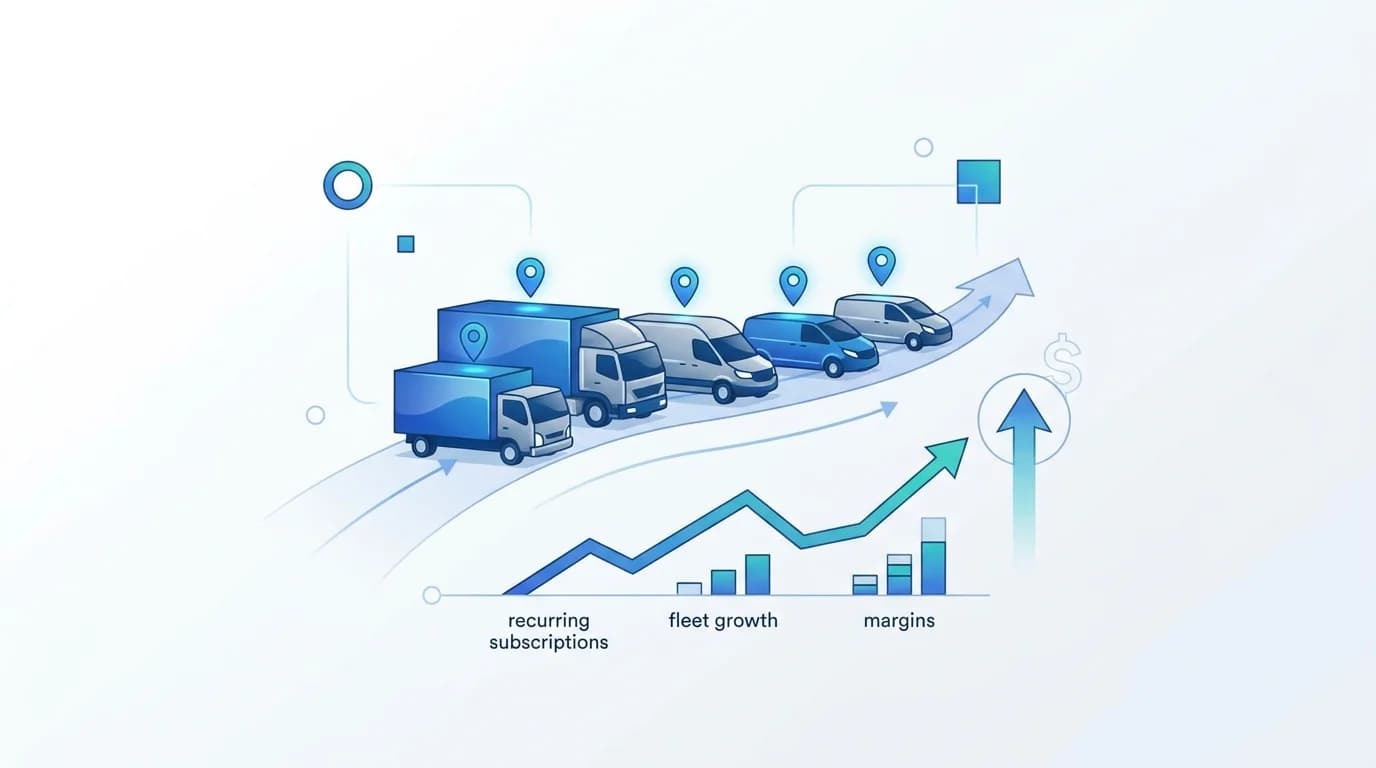
GPS Tracking Business Profitability: How Much Can You Make?
Yes, you can make money with a GPS tracking company, but only if it is profitable. The model works because the model has recurring revenue —you have a number of base vehicles that your customers pay you monthly for to track, and the more base vehicles you have and the more you get paid per month...