Steel Logistics Software for Plants and Transporters
Fleet Scanner is steel logistics software for Indian plants, mills and transporters. Measure how long a truck really spends inside your gate, hold loaded and empty weights against every trip, and check a freight bill against your own records instead of taking it on trust.
Gate, weighbridge and loading bay timings, dispatch and receipt weight comparison, ODC and multi axle trailer records. Cloud or self hosted on your own server.
What Is Steel Logistics Software?
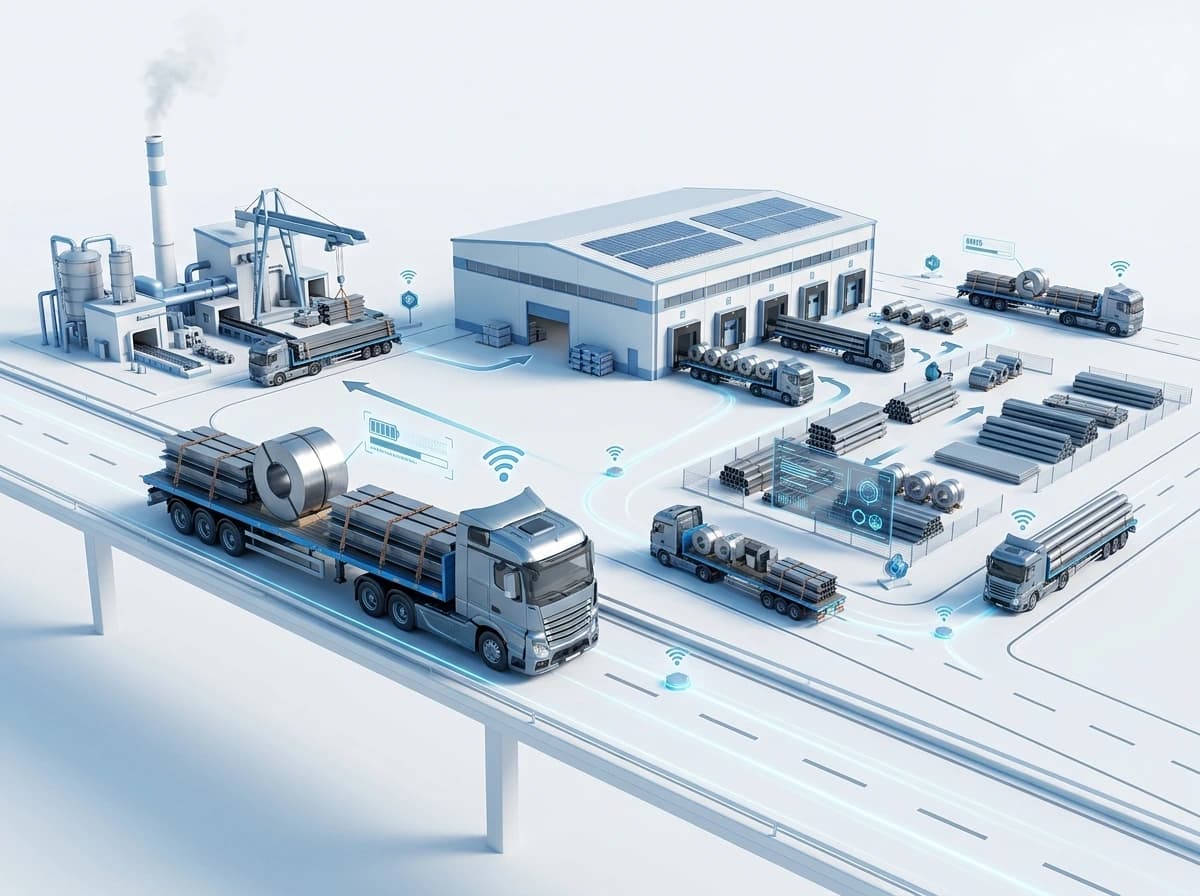
Steel logistics software runs the movement of steel from the plant gate to the customer. It records when a truck arrived, how long it waited, what it weighed loaded and empty, where it went, and what it weighed when it got there. When those numbers do not match, it shows you while the trail is still warm.
Steel is heavy, valuable and sold by weight, which makes it a different problem from ordinary freight. A parcel fleet worries about delivery time. A steel plant worries about a truck sitting eight hours in a weighbridge queue, a load that arrives lighter than it left, and a bill from a transporter that nobody can check. Fleet Scanner keeps the yard and the road on one record, so gate timings, weighbridge readings, trip history and freight all point back to the same vehicle and the same dispatch.
- Dispatch
- DP-2214
- Vehicle
- TRK-2214
- Gate in
- 06:10
- Weighbridge
- 07:44
- Gate out
- 08:25
- Net load
- 24.6 t
- Turnaround
- 2H 15M
- Bay wait
- 41 of 135 min
Where Steel Dispatch Loses Money
Steel rarely loses money on the highway. It loses money standing still in your own yard, and in the gap between two weighbridge readings that nobody compares until month end. Steel logistics software is aimed at both of those.
Trucks wait for hours inside your gate
A vehicle reaches the plant early and still leaves late. It waits for a weighbridge slot, then a loading bay, then paperwork. Nobody owns the wait because nobody measures it in stages. Timed gate and bay records show which stage is actually holding everything up.
Weight at the other end does not match
The load left your weighbridge at one figure and reached the customer at another. If the two are only compared at month end, the trail is cold and the argument is unwinnable. Comparing them per trip turns a monthly write off into a same week question.
Transporter bills cannot be checked
A freight invoice arrives with trips, tonnage and detention on it. Without your own record of when each vehicle arrived, waited and delivered, the bill gets paid because checking it would take longer than the money is worth.
Heavy loads move without a plan on record
An oversized coil or a long structural load needs the right trailer, the right route and the right permit. When that planning lives in one person’s phone, a route change or a fine has nothing behind it to explain what was agreed.
What Runs Inside Steel Logistics Software
Steel logistics software has to cover the yard and the road, because the expensive problems start inside your gate. Each item below is a working module in Fleet Scanner, not a paid add on.
Gate and Yard Timings
Geofence the gate, the weighbridge and the loading bays. Arrival, waiting time at each stage and departure are captured on their own, so turnaround is a measured number rather than an argument.
Geofencing →Weighbridge and Tonnage Records
Hold the loaded and empty weight against each trip, along with the reading at the delivery point where you receive it. Any difference between the two ends sits on the trip record instead of in somebody’s memory.
Trip operations →Live Tracking to the Delivery Point
Follow every trailer and truck on one map with speed, halts and route playback. A long unplanned stop between the plant and the customer is visible while the vehicle is still on the road.
GPS tracking →Heavy Haul and ODC Records
Keep trailer type, axle configuration, permitted dimensions and route notes against each vehicle, so a low bed or multi axle unit is matched to a load on record rather than by phone.
Asset management →Freight, Cost Per Tonne and Billing
Work out cost per trip and per tonne from your own trip records, then check a transporter invoice against them. Detention and waiting time are already measured, so they can be discussed with evidence.
Freight billing →Documents and e-Way Bill Details
Consignment and e-Way Bill references sit with the trip, alongside vehicle fitness, permit, insurance and PUC dates with reminders before they lapse.
e-Way Bill →Where the Hours Actually Go
This is one truck on one dispatch. The bar shows where its hours went between gate in and gate out. The amber block is the part nobody planned for, and it is the sort of thing steel logistics software is meant to surface.
The clock starts at your gate
The vehicle crosses the gate geofence and the dispatch clock begins. Everything after this point is measured against that first stamp.
Empty weight goes on record
The tare reading is captured against the trip. Time spent waiting for the weighbridge is recorded separately from time spent on it.
Waiting time becomes visible
Bay entry and exit are stamped, so a long wait for a crane or a bay shows as its own block rather than disappearing into total turnaround.
Turnaround closes with a number
Loaded weight, dispatch reference and gate out time are saved. Total turnaround is now made of stages you can point at rather than one figure.
Paperwork That Travels With the Load
Steel moves under the same road rules as any other goods vehicle, plus a few of its own once a load is oversized or overweight. The paperwork is heavier because the cargo is. Steel logistics software keeps it with the trip instead of in a folder.
Travelling with the right paper
Goods movement above the notified value needs an e-Way Bill carrying the consignment and vehicle details. Fleet Scanner holds those references with the trip so the document and the movement match. It does not calculate your tax position.
Oversized loads need permission
A load past the legal size or weight limits needs special permission before it moves, and the conditions differ by state and route. Fleet Scanner records the plan and the permit reference. Applying for it stays with you or your agent.
Weight spread across the vehicle
Overloading is judged per axle, not just by total weight, which is why trailer configuration matters. Vehicle and trailer specifications are stored so the right unit is matched to a load.
Two readings, one record
Dispatch and receipt weights sit on the same trip, which is what makes a difference visible. Where a weighbridge can share data directly, that depends on the equipment and may need an integration.
One record per vehicle
Registration, chassis, body and trailer details, owner and permit information all sit against the vehicle, so nothing is being hunted for during a check.
Papers that chase you
Fitness, permit, insurance, PUC, road tax and driver licence dates sit in the compliance module with reminders well before they expire.
Please note: Fleet Scanner records and organises your steel movement information. It does not apply for ODC or state permits, decide whether a load is legal, calculate your tax position, operate weighbridge equipment, or settle a dispute on your behalf. Weighbridge data capture depends on your equipment and may need an integration. Size, weight and permit rules differ by state and route and they change. Confirm what applies to your loads with your regional transport office and your own compliance team before relying on anything here.
Steel Logistics Terms, Explained
Steel logistics software comes with its own vocabulary, and the same word can mean different things at different plants. Here is what each one means on this page.
- Turnaround time
- The full time a vehicle spends inside the plant, from gate in to gate out. Useful only when it is broken into stages.
- Detention
- The charge a transporter raises when a vehicle waits longer than the agreed free time. Easier to dispute when you have your own timings.
- Tare and gross weight
- Tare is the empty vehicle. Gross is the vehicle plus the load. The difference is what you dispatched.
- Short weight
- When the weight received is less than the weight dispatched. Usually found by comparing two weighbridge readings.
- ODC
- Over dimensional cargo. A load that goes past the normal legal size or weight for a vehicle and needs special permission to move.
- Low bed and multi axle
- Trailer types used for heavy or oversized loads. More axles spread the weight so the load stays within legal limits per axle.
- Rake and siding
- A rake is a full train of wagons. A siding is the rail line at a plant or yard where it is loaded or unloaded.
- Cost per tonne
- Freight cost divided by tonnes moved. The number that makes two transporters or two routes comparable.
Who Uses Steel Logistics Software
If your product is sold by weight and moved by road, this page is about you. Steel logistics software suits anyone whose freight bill is large enough to be worth checking line by line.
- Integrated steel plants Inbound raw material and outbound finished steel through the same gates, where yard turnaround decides how much moves in a shift.
- Rolling mills and re rollers Smaller plants running billets in and bars or sections out, usually with hired trucks rather than an owned fleet.
- Steel transporters and fleet owners Companies carrying for plants and traders, who need their own timing records to defend a freight bill.
- Traders, stockists and service centres Businesses moving coil, plate and structural stock between yards and customers, where short weight is the recurring argument.
- Heavy haul and ODC operators Fleets running low bed and multi axle trailers for oversized loads, girders and long structural sections.
- Scrap and sponge iron movement Inbound feed to furnaces, where weight at both ends and route deviation matter more than delivery speed.
Registers, Tracking App, or Fleet Scanner
A tracking app tells you where a truck is once it has left. That is the easy half. The hard half is what happened before it left, and whether the weight at the other end agrees with the weight at yours. That gap is where steel logistics software earns its place.
| Requirement | Registers and phone calls | Basic tracking app | Fleet Scanner |
|---|---|---|---|
| Where a truck is now | Call the driver | Yes, on a map | Yes, with speed, halts and playback |
| Time waiting inside the plant | Gate register | Not captured | Measured by stage from gate zones |
| Weighbridge readings on the trip | Slips in a file | Not included | Loaded and empty held per trip |
| Weight gap between both ends | Found at month end | Not included | Compared per trip, not per month |
| Detention you can defend | Transporter’s word | Not included | Your own timestamps |
| Cost per tonne by route | Worked out by hand | Not included | From trip records, per route |
| ODC trailer and permit records | One person’s phone | Not included | Held against the vehicle |
| Everything in one login | No | Tracking only | 18 plus modules on one platform |
Numbers Your Dispatch Head Asks For
Steel disputes are settled with records, which is most of what steel logistics software is for. Sixty plus reports come ready to run, so pick a plant, a transporter or a date range and export to Excel or PDF, or have one arrive every Monday morning.
Steel Logistics Questions, Answered
Short answers to what dispatch heads and logistics managers ask us most often.
What is steel logistics software?
Steel logistics software records the movement of steel from the plant gate to the customer. It captures gate in and gate out times, waiting at the weighbridge and loading bays, loaded and empty weights, the route taken, and the weight received at the other end. In Fleet Scanner it sits on the same platform as tracking, maintenance, freight billing and compliance, so the yard and the road share one record.
How is this different from ordinary GPS tracking?
Ordinary tracking starts when the truck leaves. In steel, most of the cost is built up before that, while the vehicle is still waiting inside your own gate. Steel logistics software measures the yard as well as the road. It breaks turnaround into stages, holds loaded and empty weight against the trip, and keeps the delivery weight beside them. A tracking app does none of that, because it was built to answer a different question.
Can it show where trucks are waiting inside the plant?
Yes. The gate, the weighbridge and each loading bay can be marked as zones. Entry and exit at each one is stamped automatically, so total turnaround breaks into stages instead of arriving as a single figure. That tells you whether the delay is the weighbridge queue, the bay, or the paperwork at the gate. It also lets you compare one shift against another, or one plant against another, using the same measurement.
Does it capture weighbridge readings?
Loaded and empty weights are held against each trip along with the weight recorded at delivery, so a difference between the two ends is visible per trip. Whether readings arrive automatically depends on your weighbridge equipment and may need an integration. Where that is not possible, they can be entered against the trip.
Can it help check a transporter’s bill?
Yes. Your own system holds arrival, waiting, departure and delivery times for every trip, so a freight invoice can be checked against your records rather than accepted on trust. Detention is the clearest example. Instead of arguing about how long a vehicle really waited, both sides are looking at the same timestamps. Trips and tonnage on the bill can be matched the same way, line by line.
Does it handle ODC and heavy haul vehicles?
Yes. Trailer type, axle configuration, permitted dimensions and route notes are held against each vehicle, so an oversized load is matched to a suitable unit on record. Fleet Scanner does not apply for ODC permits or decide whether a load is legal. That stays with you or your permit agent.
What is short weight and can software prevent it?
Short weight is when the load received weighs less than the load dispatched. Software cannot prevent it, but it makes it findable. Holding both readings on the same trip, along with route playback and halt history, turns a monthly write off into a question you can ask the same week.
Can we run it on our own server?
Yes. Fleet Scanner is available as a cloud plan and, on the Enterprise tier, as a self hosted or white label setup on your own server. Larger plants often choose self hosting so dispatch, weight and freight data stays inside their own network and under their own retention rules. The features are the same either way. What changes is where the data sits and who administers it.
Find the hours your yard is losing
Book a free walkthrough of the steel logistics software using one of your own dispatch lanes as the example. We will show gate to gate turnaround, weighbridge records and cost per tonne in about twenty minutes.