
How to Start a GPS Tracking Reseller Business in 2026
Starting a GPS tracking reseller business involves selecting a white-label GPS tracking platform, branding it as your own, sourcing GPS trackers from suppliers that are compatible with the platform, determining a per-vehicle subscription fee, and targetting a niche clientele. The model is largely...
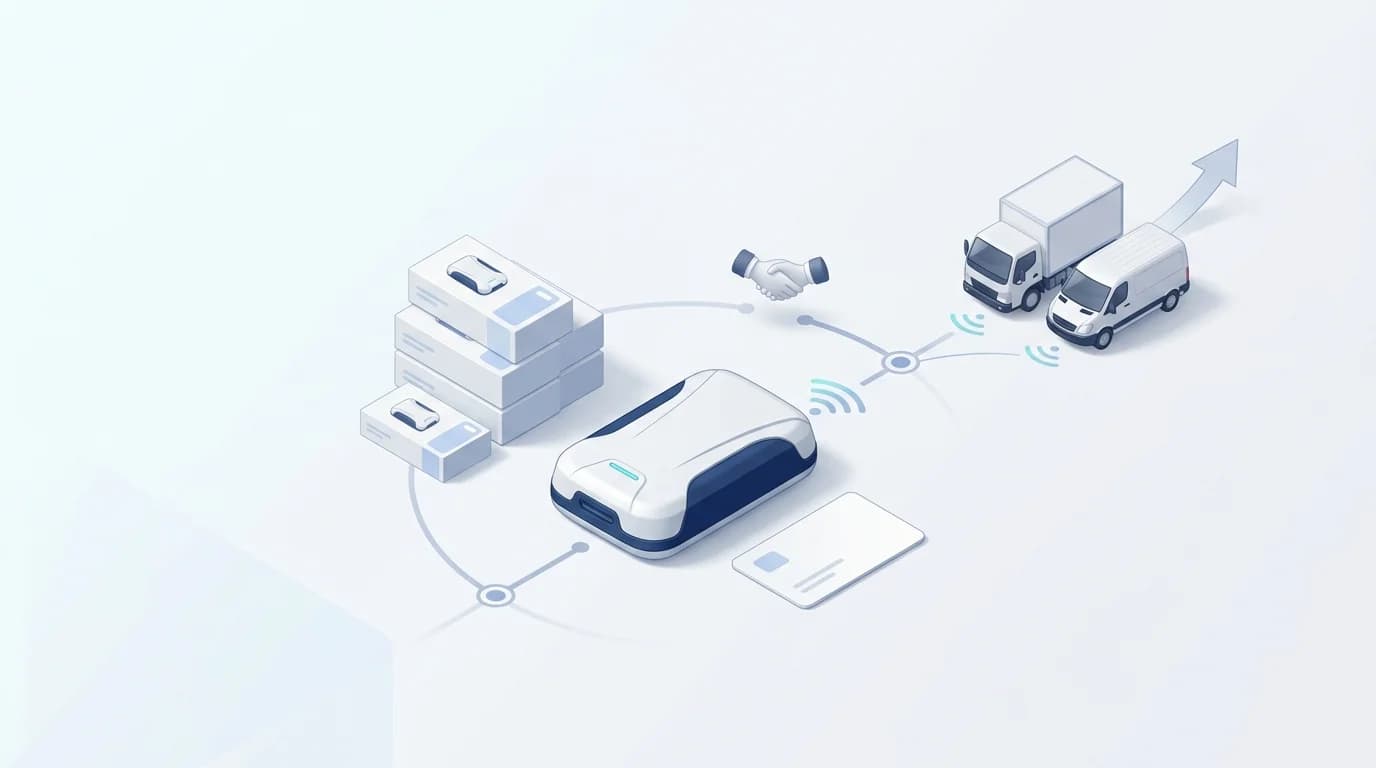
Starting a GPS tracking reseller business involves selecting a white-label GPS tracking platform, branding it as your own, sourcing GPS trackers from suppliers that are compatible with the platform, determining a per-vehicle subscription fee, and targetting a niche clientele. The model is largely based on white-label software, which allows you to provide tracking services on your own brand and domain without having to develop the software or manufacture the devices. A GPS reseller sells tracking hardware, software access and support to the end customer on a platform from a recognized provider, and has consistent monthly revenue per tracked vehicle - your brand, your customers, your margin, the provider's technology.
The guide explains the reseller model in detail: what a reseller is, how the white-label model works, how a reseller makes money, the margin and the lock-in problems that determine the profitability of a reseller business, and how to select a platform. If you're looking for a general launch of the end-to-end process, you can refer to the white-label GPS tracking software.or the process of how to start a GPS tracking business.
Key Takeaways
- A GPS tracking reseller is a party who resells a GPS tracking service without having to develop software and software products or manufacture hardware.
- It is a white-label model – your brand, your domain and your apps on the provider's technology.
- Resellers make most of their income from subscription fees per vehicle, hardware margin and installation fees.
- There are two factors that determine the reseller's profitability: the margin (the price minus your platform, SIM and support cost) and to not be locked-in where you lose the margin.
- Over time, the features that will ensure a reseller's margin and independence are broad device-protocol support and data ownership.
- Select a platform based on depth, device support, per-client management and cost — not the lowest initial cost.
What Is a GPS Tracking Reseller?
A GPS tracking reseller is an organization that resells GPS tracking to end customers through a platform provided by the established and existing GPS tracking software/hardware providers instead of developing the software and manufacturing the hardware. The reseller has the relationship with the customer, the brand, the pricing and the support, and the technology provider supplies and maintains the tracking platform behind the scenes.
The reseller in practice puts four things together in one product: hardware (from a device supplier), the tracking platform (from a white label provider), sales and marketing (the reseller's own) and customer service. It's that combination, customized for a particular market, that the customer purchases. This is why the model is not too complicated to get into: because the reseller does not need to build tracking software, or create GPS hardware.
How the White-Label Reseller Model Works
The white-label is what makes “reselling GPS” a branded business you own. With a white-label GPS platform, the reseller can display the service with its own domain, logo, dashboards, and — depending on the provider — dashboards and mobile applications. It's completely the reseller's product for the end customer.
The industry is evenly split with respect to the division of labor:
- The technology provider is responsible for providing the tracking software and infrastructure, and for maintaining it in a timely, secure and operational fashion.
- The reseller promotes and sells the solution, prices the devices and subscriptions, and even manages customers, either using a partner or an admin portal where it can create an account for each customer using a brand name.
The key difference between selling another brand's product and white label is that your customers will know your brand, not the other brands, and you will have control over your own pricing. If you're interested in branding and its pros and cons, read our guide to white-label GPS tracking software.
How Do GPS Tracking Resellers Make Money?
Resellers make the majority of their money from per-vehicle subscription fees and hardware margin with additional fees for installation. Revenue sources in rough order of importance:
- Monthly subscriptions — fee per vehicle for platform usage. This is the core, as it accumulates as the number of customers increases.
- Hardware margin — selling GPS trackers above cost (a one-time margin per device).
- Installation fees — a fee to install and set-up equipment.
- Premium tiers and services — a higher price point, API integrations, custom reports or paid support for larger customers.
The value of recurring revenue is self-explanatory; a subscription nets the company a month's worth of revenue for every month the customer remains, while a piece of hardware nets the company one purchase. The reason that it's all about active subscriptions retained and not devices sold is that subscription revenue compounds as vehicles become active, whereas one-off devices never do.
Reseller Margins: What Actually Determines Profit
A reseller's profit per vehicle is the subscription price less the reseller's per vehicle costs, including the platform fee paid to the provider, SIM/data, and attributable support. It is not the headline price that makes or breaks the business, this is the margin, and this is where there are two forces working against it.
Your platform cost structure. If the provider bills on a per-vehicle basis, then as you grow, your margin decreases. If the platform is a fixed or licensed fee, then the margin can be better the larger you get. It is the single most important lever in the economics of resellers on a long-term basis and should be modelled before you commit — it's illustrated in the book and calculator in the economics section how the per-vehicle versus fixed decision affects the numbers.
Cost inputs vary widely. Third-party published market reference pricing (not quotes): GPS hardware $50 - $300 per vehicle SIM/data $1 - $3 per device per month End-customer software generally $10 - $50 per vehicle per month. Your margin is the amount left over after subtracting your platform and operating costs from your charge — do not make an assumption about the percentage, use actual figures instead.
Avoiding Lock-In: The Reseller's Biggest Long-Term Risk
Lock-in is the primary danger to a reseller's independence and margin – with any one hardware vendor, or with a platform that stores your data. Both diminish your choice and your negotiating power over time and both can be avoided by making a decision for them.
Hardware lock-in occurs when your platform only works with a few devices and you have to pay prices from one supplier. The cure is broad device-protocol support: this allows you to purchase trackers on price and availability from many suppliers. This is a tangible strength to examine: a platform that provides wide and multi-protocol device support, like Fleet Scanner makes it easy to keep hardware sourcing competitive, rather than captive. Check in advance that you'll have the models you need to stock.
Platform and data lock-in occurs when the platform owner is holding the data of your customers and its difficult to get them to leave. Ensure that you verify the data ownership and data export before committing and also know what will happen to your accounts and history if you do not pay anymore. This is mitigated by a platform that provides you with data ownership; or a self-hosted deployment, the pros and cons of which are explored in white-label vs self-hosted GPS tracking software.
How to Start: The Reseller Path
The reseller launch sequence assumes that you have confirmed that you are bringing the product to the segment you know and have created demand for it. The steps are deliberately the reseller-specific version of the general launch process:
- Choose your niche. Choose one vertical – logistics; construction; passenger transportation; asset tracking – and your product and marketing answer only one group of people, rather than two or three.
- Choose a white-label platform. Check the providers against the following points: white label depth, device compatibility, per client management, data ownership, and cost structure.
- Confirm hardware compatibility and suppliers. Check to see if the platform is compatible with the trackers you wish to stock and have more than one supplier lined up to ensure that you have the best price.
- Set up your brand and client portals. Set up domain, logo and apps, and create a branded portal for each client.
- Build your reseller pricing. Put your per-vehicle subscription upfront, over your platform, SIM and support costs, with margin; decide whether to include hardware and how much to charge up-front, and whether to include sub-reseller or dealer commissions.
- Launch, support, and scale. Start selling in your niche, provide excellent onboarding and support (which is the key for retaining customers), and then add device support and customer accounts.
How to Choose a White-Label Platform (Reseller Checklist)
Choose the platform on the factors that protect a reseller's brand, margin, and independence — not the lowest headline price. Confirm:
- White-label depth - your domain, branded apps, and a different branded portal for each client — or just a logo change?
- Per-client / multi-tenant management - Do you need to manage multiple client accounts, permission and branding from one place?
- Device compatibility — how many protocols are available & can they be included if needed, to avoid hardware lock-in?
- Cost structure — per-vehicle vs fixed/licensed and the impact of margin as you scale.
- Data ownership and exit - who owns the data, can you export it, what happens if you leave?
- Reliability and support -uptime expectations, onboarding and partner support.
- Room to grow - Sub-reseller / Dealer support, API and integrations for bigger clients.
Once you're ready to compare a platform to your own plan you can book a walkthrough and get a quote.
Common Reseller Mistakes
- Choosing a platform on price alone- Reliability, white-label depth and support are more important than the lowest price for a platform.
- Ignoring the margin curve - There is a per-vehicle platform cost and ignoring the margin curve may hurt margins at scale; model it before committing.
- Accepting hardware lock-in - if it's too specific, you'll lose your pricing power; demand wide variety of protocol support.
- Overlooking data ownership — know who owns the data, what does it cost you to leave it.
- Underpricing — Price includes platform, SIM, Hardware, install, support and margin.
- Under-resourcing support - lack of onboarding and support leads to churn and a loss of recurring revenue.
Frequently Asked Questions About GPS Tracking Reseller Business
What is a GPS tracking reseller business?
It is a business that sells GPS tracking products to end-users with a platform from a known vendor (and typically a hardware device) instead of developing the platform or manufacturing the hardware. The reseller is the "owner" of the brand, customers, pricing, and customer support; the technology provider is the "owner" of the tracking platform in the background.
How do GPS tracking resellers make money?
Recurring per-vehicle subscription, hardware margin, hardware installation fees, premium tiers and paid services. If there are recurring subscriptions, then it will be more about their multiplication in the case of retaining customers because it will be the one that matters the most in establishing a healthy reseller business rather than a one-time device sale.
Do I need to build software or make hardware to be a reseller?
No, this is the purpose of the model. You implement a white-label platform, connect with a provider, and use compatible trackers from trackers' suppliers. You invest in branding and in customer support and not software development and manufacture.
What is white-label GPS tracking?
It's a platform another company has built and maintains that you rebrand and sell on — your logo and apps on their technology. It appears as your product to your customers and lets them track without you developing the system.
What determines a GPS reseller's profit?
Your money margin per vehicle (subscription price minus your platform fee, SIM/data, and support cost) and the power to avoid lock-in that diminishes it. The single most important factor on scaling is whether it is a per-vehicle or fixed cost platform, and model it, do not assume a margin percentage.
How do I avoid being locked to one hardware vendor?
Select a platform that supports a wide range of device protocols to purchase trackers from a variety of suppliers based on price and availability. Narrow device support means that you must buy from a single vendor at their cost and over time will lose margin and independence.
How much does it cost to start?
This is based on fleet size, hardware, connectivity, and marketing. As the platform is licensed instead of developed, you won't have to pay for software-development cost. The sole expenses you will be paying are hardware stocks, setup of the platform, and marketing. Look at the startup cost guide and calculator to make up your own numbers.
Conclusion
A GPS tracking reseller program allows you to resell a branded, recurring-revenue tracking solution without having to build the platform, manufacture the hardware—the provider does that, and you get the brand, the customers and the margin. Profitability will depend on two factors: the margin you can keep (the price minus your platform, SIM, and support cost), and how well you can prevent the hardware and data lock-in that will slowly eat away at your margin.
Don't pick a white-label platform based on the lowest headline price, but choose it because of depth of branding, per-client management, wide device support, data ownership and a cost model without capped margins as you grow. Next steps: get an in-depth understanding of the platform model in white-label GPS tracking software create your numbers using the startup cost calculator, and book a walkthrough when it's time to test a platform.
Keep reading

Construction Equipment GPS Tracking: Theft and Utilization
Construction Equipment GPS Tracking helps prevent theft, reduce idle time, improve utilization, and schedule maintenance using real-time asset data.

School Bus GPS Tracking: Features, AIS-140 & Buying Guide
Learn how school bus GPS tracking works, AIS-140 requirements, safety features, parent alerts, and how to choose the right tracking system for schools.
GPS Tracking Hardware: How to Choose the Right Trackers
When selecting GPS tracking hardware, consider the type that is compatible with your tracking business and your customers' needs, determine if the trackers are compatible with the protocols of your platform (which helps prevent vendor lock-in), assess network capabilities for the areas you serve...