
How Can Fleet Management Security Protect Your Vehicles?
Fleet management security protects your vehicles by combining physical protection (GPS tracking, geofencing, immobilisation and theft alerts) with data security (encryption, access controls and secure infrastructure) into one system. These two halves have been joined in 2026 and the digital theft...
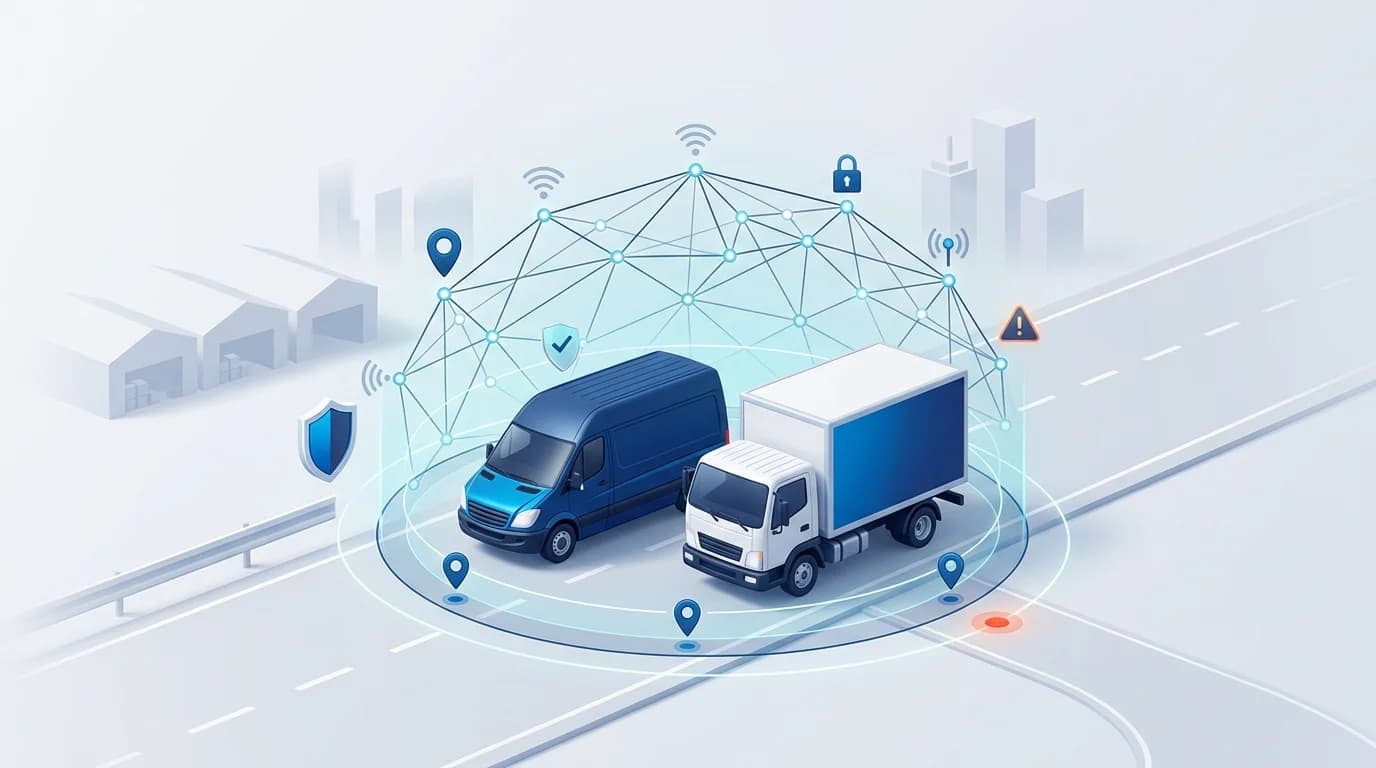
Fleet management security protects your vehicles by combining physical protection (GPS tracking, geofencing, immobilisation and theft alerts) with data security (encryption, access controls and secure infrastructure) into one system. These two halves have been joined in 2026 and the digital theft of vehicles and their equipment has become a regular occurrence. Cybersecurity incidents among fleets have jumped since 2020 (according to industry analyses, it has increased by 340%) and the greatest threat to your fleet is no longer a broken window, it's a compromised login.
Key takeaways
- Fleet management security is split in two — physical and data — and in 2026, it's just the same problem.
- Physical theft has now been made easier through digital compromise – GPS spoofing, dispatch instructions and tracking credentials are stolen.
- The statistics are sobering: 340% increase in fleet cyber incidents since 2020, 67% of those attacks are conducted against telematics or cloud systems, and breakout time for attacks is down to 18 minutes.
- Both physical protection (real-time GPS, geofencing, immobilization) and data protection (encryption, access control, secure hosting) are important – neither is sufficient.
- It's a matter of security: self-hosted ensures that fleet data remains on your network, rather than a shared vendor cloud.
Fleet management security at a glance
| Element | Summary |
| Definition | Combined physical + data protection for a fleet's vehicles, cargo and information |
| Physical layer | GPS tracking, geofencing, theft alerts, remote immobilisation, driver ID |
| Data layer | Encryption, access control, MFA, firmware updates, secure APIs, data location |
| Top 2026 risk | Digital compromise (GPS spoofing, stolen credentials) enabling physical theft |
| Key decision | Where data is stored — shared cloud vs self-hosted on your own network |
What is fleet management security?
Fleet management security is the umbrella of technologies and practices that are used to prevent theft, misuse and cyber-attack of the fleet's vehicles, cargo and data. It covers two areas that were previously done separately:
- Physical security — Genuine time and place tracking, geofencing, remote immobilisation, tamper and theft alerts: physical security – protection of the vehicle and load.
- Data security — how the data that the fleet operates on is protected, including encryption, access controls, secure APIs and data storage location.
For years, it was two separate discussions: one for the yard manager, and one for IT. Secure fleet management in 2026 sees them as one, as attackers now traverse from one to the other. It's been that change that makes this question so much more relevant than ever.
How fleet management security protects your vehicles
Physically, a fleet management system provides five layers of vehicle security which complement each other:
1. Real-time GPS tracking
Continuous location visibility ensures that a stolen vehicle is located and recovered quickly and that any deviation from the normal driving pattern can be detected in real time. GPS tracking is the basis of which everything else rests.
2. Geofencing and zone alerts
Depot, route and approved area virtual boundaries. Geofencing provides an immediate notification when a vehicle is driven outside of an authorised area, or at any time outside of the authorised time, which is typically the first indication of theft.
3. Theft and tamper alerts
Exception-based fleet alerts for unauthorised movement, or ignition-on outside of shift hours, or if someone is tampering with the device — alerted instantly, acted within minutes, not found out at shift change.
4. Remoteimmobilisation
On supported vehicles, the ability to disable the vehicle to stop it from moving or starting after the theft is confirmed, moving a tracking signal to a stop.
5. Driver identification and access control
Linking vehicle usage to staff authorised to use them via driver management, to ensure that unauthorised usage is detected and all trips are traced to a person.
The physical layer in one line
Real-time tracking finds the vehicle, geofencing and alerts tell you the instant something's wrong, and immobilisation lets you stop it — visibility, warning, and control, in that order.
Fleet management data security risks in 2026
Here's what changed. A modern telematics device is an endpoint on a network; it sends data, it receives commands, and it connects to the internet, and therefore has all the same cyber vulnerability as any other internet-connected device in your business. The top fleet management data security threats for 2026 are:
| Risk | How it works | Business impact |
| GPS spoofing | Fake location signals mask a vehicle's real position | Defeats theft tracking; hides stolen loads |
| Stolen credentials | Phishing or leaked API keys grant platform access | Full fleet visibility loss; data theft |
| Ransomware | Malware locks the fleet platform and backups | Dispatch shutdown; $150k–$500k demands |
| Telematics exploits | Out-of-date firmware, exposed ports on devices | Entry point into the wider network |
| Driver PII exposure | Weak access controls leak personal data | Regulatory fines; privacy liability |
The scale of the shift
- Upstream 2026 Global Automotive Cybersecurity Report revealed 494 automotive incidents in 2025, with 44% of them being ransomware attacks, 92% remote attacks, and 67% aimed at telematics or cloud systems.
- Industry studies show that the number of fleet cybersecurity incidents has increased by about 340% since 2020, and the average time for a hacker to break into the system is approximately 18 minutes.
- According to the NMFTA 2026 report, Digital crime is now a frequent occurrence, leading to the loss of loads, the theft of carrier identities, and the issuance of false dispatch instructions.
How the digital and physical threats connect
This is the one big change and why vehicle security and data security cannot continue to be independent budgets. The digital compromise is now an actual means to theft.
What the industry refers to as an “unmistakable” pattern is a sequence of steps that includes tracking credentials being stolen, or GPS signals being spoofed, dispatch instructions being manipulated, or even the identity of a carrier being stolen, all of which can be accomplished with digital access and used to reroute or steal the physical load. A GPS spoofing scheme and stolen tracking logins are on the rise as means of cargo theft, with CargoNet reporting $111.88 million in claims just for Q3 2025 alone. The truck is not broken into, it is rerouted.
The real world implications: The vehicle can't be secured if the data that controls it isn't secured. While a fleet’s security is definitely found in its locks and cameras, the security of its platforms is equally important, or else the modern thief has struck right where the fleet lacks security.
Secure fleet management solutions: a checklist
Secure fleet management solutions provide protection for both layers. It's the practical checklist – what to have deployed on vehicles, data and people:
Protect the vehicle
- Real-time GPS tracking and instant movement alerts.
- Geofencing – depot areas, routes and permit areas.
- Immobilization on theft confirmation - remote.
- Driver ID to ensure accountability of each trip
Protect the data
- All data in transit and at rest is encrypted (AES-256)
- Role based access control (RBAC) — access to the dashboard is restricted by a person's job role, therefore, what they see depends on what their role requires
- Multi-factor authentication for all platforms logins.
- This is the risk that can be most easily avoided: regular telematics device firmware updates.
- Secure, up-to-date APIs — leaked and legacy API keys are used at scale
Security is also a layer built upon the rest of your operation: It's the same connected data that's used for fuel monitoring and real-time GPS tracking – it's also the data that a secure platform has to safeguard, making security and platform choice one decision, not two.
Protect the operation
- Network segmentation to separate vehicle systems from corporate IT systems
- Provide security training for dispatchers and billing staff to who Phishing is aimed.
- Think about the location of data – it can be stored on your own network in a self-hosted solution
What to look for in a secure fleet platform
Security should be a deciding factor when you are choosing a provider - not an afterthought. There are three things that are most important:
- Recognised security standards. Check for vendor certifications such as ISO 27001 (information security management) and SOC 2 (security is built not promised).
- Encryption and access control by default. Encryption from end to end and access control on a per-user basis should not be an add-on feature.
- Where your data lives. Your fleet data is stored on a cloud platform, and 67% of attacks are against telematics and cloud systems. By not using shared clouds, the attack surface is reduced to zero with a self-hosted platform, which keeps your data on your own network under your own control.
Where Fleet Scanner fits
Fleet Scanner is designed to ensure that both levels of fleet management security are under your control. From the car side, it integrates GPS tracking, geofencing, theft and tamper alerts and driver management all into one solution. Data-wise, it's self-hosted fleet management software– your GPS, driver and operational data are not on a shared vendor cloud, you have access controls, segmentation and audit trail. Secure and don't rent the truck or data it's running on.
Frequently Asked Questions About Fleet Management Security
How does fleet management security protect vehicles?
It includes real-time GPS tracking (for vehicle location and recovery), geofencing and theft alerts (for instant detection of unauthorised vehicle movement), remote immobilisation (to stop a confirmed theft) and driver ID (to keep every trip accountable) with data security (to prevent the tracking from being hacked).
What are the main fleet management data security risks?
The most significant threats for 2026 include the potential for GPS spoofing (faking vehicle location), driver PII exposure from weak access controls, telematics device exploits due to outdated firmware, and ransomware attacks on the fleet platform, and stolen credentials through phishing or leaked API keys. Two thirds of attacks are directed at cloud or telematics systems.
What is secure fleet management?
Secure fleet management is the process of securing all the elements of a fleet: the vehicles, the data and the cargo; both physically (tracking, geofencing, immobilisation) and data (encryption, access control, secure hosting). In 2026, the two are considered a single problem as digital theft now offers a route to physical theft.
How are cyberattacks linked to vehicle theft?
Attackers acquire tracking information and/or falsify GPS data and use dispatch or impersonate carrier information to reroute and rob loads. Digital compromise has become a standard practice to precede cargo theft — during one quarter of 2025, CargoNet received $111.88 million in cargo theft claims.
What makes a fleet management platform secure?
Recognized security standards (ISO 27001, SOC 2), end-to-end encryption in transit and at rest, role-based access control, multi-factor authentication, regular firmware updates and consideration of where data is stored (a self-hosted platform keeps fleet data on your network, not a shared one).
Is self-hosted fleet management more secure?
Yes, it can be, as your data remains on your owned infrastructure and not a vendor's shared cloud, eliminating a whole class of shared-cloud risk — especially since 67% of fleet attacks hit cloud and telematics systems. Access controls, segmentation and audit are all set by you and it is your responsibility to maintain.
Why self-hosting is a security posture, not just a preference
If your fleet data resides in a vendor's cloud, then the security depends on the vendor and it's their attack surface; a breach of their attack surface exposes all customers at once. Self-hosting means you put the data where you want it, access it the way you want, and partition & audit it the way you want — eliminating an entire class of shared-cloud risks. Where the platform is operating can be one of the most impactful decisions fleets can make when data security is a concern.
Want fleet security where your vehicle data stays on your own infrastructure? Book a free demo →
Keep reading

How Can Fleet Maintenance Software Cut Costs And Downtime?
Fleet maintenance software is a digital system for fleet maintenance management that centralizes preventive maintenance schedules, work orders, inspections, parts inventory and service history in one place and tracks and schedules them. By reducing downtime and the cost of repairs, it eliminates...
Self-Hosted vs Cloud Fleet Management: Which Is Best?
Cloud fleet management software is hosted by the vendor, and you access it via the internet while self-hosted (on-premise) fleet management software runs on your own servers and your data is on your own network. Cloud is best for fleets, who wish for low upfront cost, automatic updates, and no IT...
Fleet Automation in 2026: What You Can Actually Automate
Fleet automation in 2026 is software that performs routine operational tasks end-to-end – not only digitizing a form but eliminating the manual coordination around it. What is automated today are dispatch and routing, maintenance work order, compliance logging, and alerts and reporting. But what a...