Self-Hosted vs Cloud Fleet Management: Which Is Best?
Cloud fleet management software is hosted by the vendor, and you access it via the internet while self-hosted (on-premise) fleet management software runs on your own servers and your data is on your own network. Cloud is best for fleets, who wish for low upfront cost, automatic updates, and no IT...
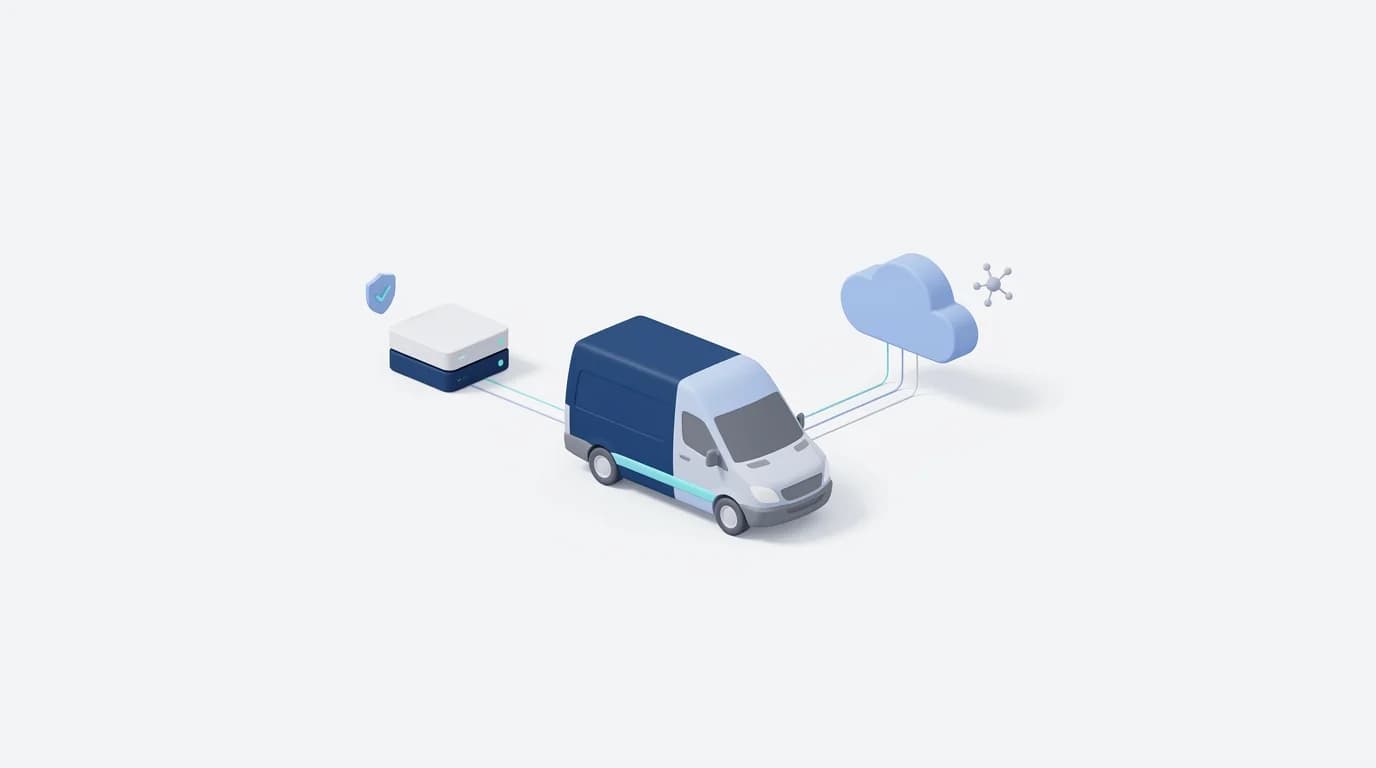
Cloud fleet management software is hosted by the vendor, and you access it via the internet while self-hosted (on-premise) fleet management software runs on your own servers and your data is on your own network. Cloud is best for fleets, who wish for low upfront cost, automatic updates, and no IT burden. Self-hosting is best for fleets that value data ownership, long-term cost control and customisation and have, or can access, the technical know-how to run it. There is no universal answer to which one is “better”, the right answer will depend on your priorities of which this guide will walk you through.
Key takeaways
- Cloud = low upfront cost, subscription based, hosted by the vendor, zero maintenance. Self-hosted = your servers, your data, more control, more responsibility.
- Cloud turns out to be the easier, lower-cost-to-start option and for most fleets in 2026, this isn't a compromise.
- The benefits of self-hosting are: data ownership, predictable long term cost (no per-vehicle fee), customisation, and reduced shared-cloud attack surface.
- The actual compromise is control vs convenience - when you self-host you have complete control and take responsibility for security, updates and uptime.
- Make your decision based on your actual constraint (budget, shape, data-sensitivity, fleet, compliance and in-house IT), not on which model is more “modern”.
What is cloud fleet management software?
Cloud fleet management software is a program that runs on the vendor's servers and is accessed via an Internet-connected web browser or application. It is a monthly (or recurring) subscription fee - typically per car per month - and the service provider takes care of hosting, updating, security and uptime. With the exception of Samsara, most commercial platforms (Verizon Connect, Geotab and others) are cloud only.
The beauty of it is that it's simple: you're up and running in no time, no expensive hardware is required, updates are automatic, and you can log in from anywhere. For the majority of fleets in 2026, that is precisely the reason for the 'cloud-first' decision and for some, the correct one.
What is self-hosted fleet management software?
On-premise" or self-hosted fleet management software is installed on your own infrastructure, whether it be your own servers, a private cloud, or a data centre you control. Depending on the deployment and any additional integrations, your GPS, driver and operational data can stay within your infrastructure. Additionally, the pricing structure for Self-hosted GPS tracking software differs from cloud-based GPS tracking systems, as there is no recurring per-vehicle cost, but instead a licence or infrastructure-based pricing.
Ownership and control: Your data is your data, your software cost doesn't increase with each additional vehicle, it's your to update when you like, and you can go deep in customisation. The trade is responsibility; you (or your own IT staff or a help contract) are responsible for operating the system. This is the model Fleet Scanner is based on and is explained in detail on the fleet management platform page.
Self-hosted vs cloud: side-by-side comparison
The two models compared on the factors that actually decide the choice:
| Factor | Cloud | Self-hosted |
| Hosting | Vendor's servers | Your own infrastructure |
| Pricing model | Per-vehicle subscription | Licence (no per-vehicle fee) |
| Upfront cost | Low | Higher (setup + infra) |
| Long-term cost | Rises with fleet size | Predictable; flat |
| Data location | Vendor's shared cloud | Your network |
| Maintenance | Vendor handles it | You handle it |
| Updates | Automatic | On your schedule |
| Customisation | Limited to vendor options | Deep / full control |
| Setup speed | Fast | Slower |
| IT capacity needed | Minimal | Required |
| Best-suited fleet | Most SMB & general fleets | Data-sensitive, large, regulated |
Compiled from 2026 deployment-model analyses (Fleetbase, EZLOGZ, SpecTec, AllRideApps) as of July 2026. Fleet Scanner is a self-hosted platform and is disclosed as such.
Cost: subscription vs ownership
It is not just about size, but about shape: the cost question. Cloud is an ongoing expense that doesn't stop, and grows commensurate with your fleet size — OPEX. Self-hosting has more investment in the beginning — capital expenditure — which then becomes relatively flat.
Cloud fleet software is priced between $3 and $50+, per vehicle, per month for 2026 roundups, based on features. This is simple to begin and compound. If a 30-vehicle fleet pays $18 per vehicle per month (just an example; not necessarily the average price), that's approximately $6,480 per year (more than $32,000 for five years) — and more if the fleet expands! Self-hosting up-front has a cost (hardware, setup, DevOps staff and resources to run it) but eliminates the need for the per-vehicle meter, so the total cost over a multi-year period is more predictable and is not linearly dependent on the number of vehicles.
The honest cost summary
Cloud is usually much cheaper to get started; self-hosting is usually much cheaper to run at scale over a number of years. Whether you will cross over or not is dependent upon fleet size, the length of time you are considering operating the system and your existing IT capacity. Know the total multiple-year expenses of both — for a breakdown,GPS fleet tracking solutions pricing comparison.
Data security and ownership
That's the biggest distinction between the two models, and the one area where there's no easy answer — this is the area that needs to be addressed. With cloud, the vendor takes care of security, which is a true plus if they have the right security teams in place and are continually patching and certifying for compliance and security measures, which most fleets don't do themselves. The downside is that your data is stored on common hardware, and if the vendor is hacked, then they can potentially expose numerous customers in a single hack.
Self-hosting means the data remains on your network and is accessible only to you — and that minimizes your risk of exposure to the problems that can arise in a shared vendor-cloud environment. This is more important in 2026 than ever before: a significant portion of fleet cyberattacks are directed at cloud and telematics infrastructure, as discussed in our fleet management security Guide.
However — and to be honest — self-hosting doesn't necessarily mean more security and it doesn't take away cyber risk. In security, you get control and you get responsibility – the security is only as good as the team that maintains it. If it is done right, self hosting can offer more control over the security architecture and access to the data; if it's done wrong, it can introduce more security risks.
Pros and cons of each model
Cloud fleet management — pros and cons
Pros:
- Low initial price and quick installation.
- No maintenance – vendor takes care of hosting, updates, security
- Available on any device, automatic updates
- Security teams and compliance certifications provided by vendors
Cons:
- Cost that continues to increase with the size of the fleet, indefinitely
- No vendor control over data on shared infrastructure.
- Limited customisation, you will be locked into the vendor's roadmap and pricing.
- The use of multi-year contracts and lock-ins is common.
Self-hosted fleet management — pros and cons
Pros:
- 100% data ownership (data remains on your network)
- Predictable flat long-term fee, no per vehicle fee
- Deep customization and complete updates and scaling control
- Eliminates Attack Surface of Data stored in the Shared-Cloud
Cons:
- More initial investment and slower initial setup.
- You are accountable for upkeeping, security, and uptime.
- It requires information technology resources or a contract of support.
- It is your responsibility to update and scale, not the vendor's
Which is right for your fleet?
Match the model to your actual situation rather than the trend:
| Choose CLOUD if… | Choose SELF-HOSTED if… |
| You want the lowest upfront cost | You want the lowest long-term cost at scale |
| You have little or no in-house IT | You have IT capacity (or a support partner) |
| You want zero maintenance burden | Data ownership is a priority or requirement |
| You need to be running this week | You operate under strict compliance/security rules |
| Your fleet is small or stable in size | You're scaling and want to avoid per-vehicle cost creep |
| You prefer the vendor to own security | You want deep customisation and control |
At a glance, by priority:
| Your top priority | Likely better fit |
| Lowest upfront cost | Cloud |
| Minimal IT requirement | Cloud |
| Fastest deployment | Cloud |
| Limited IT resources | Cloud |
| Data ownership and control | Self-hosted |
| Deep customisation | Self-hosted |
| Predictable cost at scale | Self-hosted |
| Strict infrastructure control | Self-hosted |
What about hybrid fleet management?
There is a third choice in between the two. A hybrid solution involves a mix of your core system and sensitive data stored on your own infrastructure, and then selectively implementing a cloud service or integration for certain functions—such as controlling the platform but connecting to a cloud mapping, weather or analytics service. It can provide a lot of self-hosting's data location benefit, and some of the cloud's convenience for individual features. The downside is increasing complexity; you are operating in two environments and relationships between the two. It isn't an either/or proposition for fleets with specific data-control needs but also have a couple of functions best handled from the cloud.
Where Fleet Scanner fits
Fleet Scanner is a self hosted solution designed for fleets who wish to be in control, without sacrificing capability. With no licence fee per vehicle, it means your data never leaves your network and your costs don't skyrocket as your fleet expands, and it still provides you with complete fleet management: GPS tracking, maintenance, fuel monitoring and much more. If you've read this far and the self-hosted column is describing your priorities, then that's the fleet for which it's written. If you prefer cloud, we'd love you to know that as well.
Frequently Asked Questions About Cloud Fleet Management
What is the difference between cloud and self-hosted fleet management?
Cloud fleet management is hosted by the vendor and accessed online per vehicle (subscription-based); On-premise (self-hosted) is managed on the vendor's servers with the data stored on their network (licence-based). Cloud trades control for convenience; Self hosting trades convenience for control and ownership.
Is self-hosted fleet management cheaper than cloud?
It will vary, depending on the time frame. Cloud has low initial investment but can grow as fleet size increases with no limit. Self-hosting may require an upfront cost but does not require a per-vehicle fee, and is therefore more cost of ownership over multiple years – particularly for larger and growing fleets.
Is cloud or self-hosted more secure?
There is no inherent security advantage to either. Cloud provides you with the vendor's security team and certifications, but also places your data on shared infrastructure. By keeping the data on infrastructure you control, you can minimize potential risks from a shared-cloud environment and minimize your exposure to those risks, but you are also accountable for maintaining such security and there is still room for cyber risk. If it's done well, it provides more control, if it's done poorly, it is a risk.
What does self-hosted (on-premise) fleet software mean?
That is, the software is installed on infrastructure that you manage, such as your own servers, private cloud or data center, and not on the vendor's cloud. You control the operational data (based on deployment and integrations) and you select when to update and how to scale.
Which fleets should choose self-hosted fleet management?
Fleets that have an IT team or partner to support the fleet, require data ownership, require a predictable long term cost structure (no per-vehicle fees), must operate in a compliance or security environment, desire deep customization, or are scaling and don't want to experience cost creep.
Can I switch from cloud to self-hosted fleet management?
Yes. The key factors are getting data out of the current cloud provider, setting up a local cloud platform, and building the local IT capacity, or signing a contract to support it. As self-hosting is hardware agnostic on platforms such as Fleet Scanner, most GPS trackers can be transferred.
Is self-hosted fleet management better than cloud?
Not necessarily — it's better for certain priorities. Self-hosting is ideal when data ownership, heavy customization or tight control of infrastructure and predictable long-term costs are of paramount importance and when you have the IT resources to support it. Cloud is typically the better option when it comes to lowest upfront cost, fastest deployment and minimal IT burden.
What is the main disadvantage of self-hosted fleet management?
The downside is that of responsibility. Maintenance, security, updates, and uptime are your responsibility, and it will need in-house IT resources or a support contract and a higher initial investment. However, cloud's managed model is typically the more realistic option for fleets that don't have that kind of resource.
Want to see what self-hosted fleet management looks like for your operation? Book a free demo →
Keep reading

How Can Fleet Maintenance Software Cut Costs And Downtime?
Fleet maintenance software is a digital system for fleet maintenance management that centralizes preventive maintenance schedules, work orders, inspections, parts inventory and service history in one place and tracks and schedules them. By reducing downtime and the cost of repairs, it eliminates...
How Can Fleet Management Security Protect Your Vehicles?
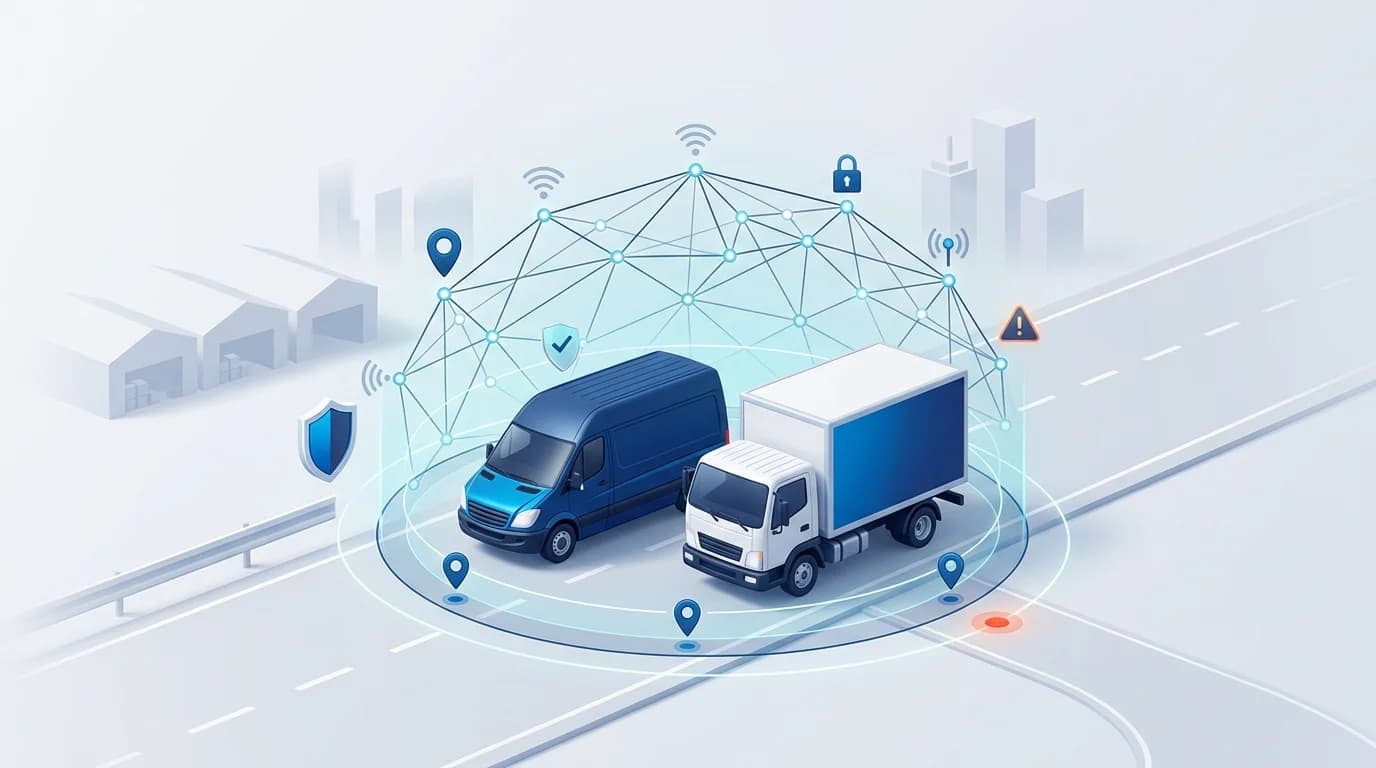
Fleet management security protects your vehicles by combining physical protection (GPS tracking, geofencing, immobilisation and theft alerts) with data security (encryption, access controls and secure infrastructure) into one system. These two halves have been joined in 2026 and the digital theft...
Fleet Automation in 2026: What You Can Actually Automate
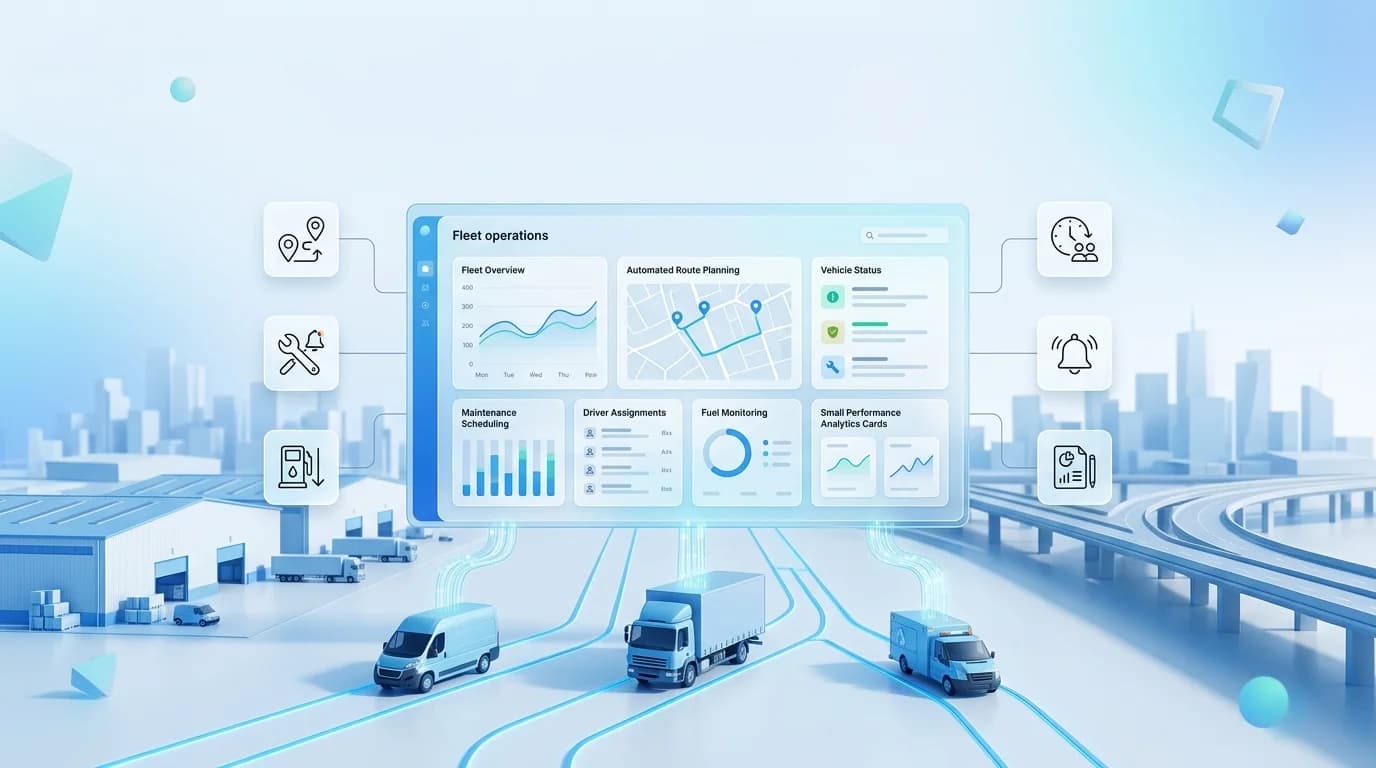
Fleet automation in 2026 is software that performs routine operational tasks end-to-end – not only digitizing a form but eliminating the manual coordination around it. What is automated today are dispatch and routing, maintenance work order, compliance logging, and alerts and reporting. But what a...