
Best GPS Fleet Tracking Systems in 2026
The global fleet management software market is expected to be worth tens of billions of dollars by 2028—and it all comes down to the fact that the need for such software is just that great. Fuel, labor and downtime costs are on the rise and fleet managers have to reduce costs, but not services. At...

The global fleet management software market is expected to be worth tens of billions of dollars by 2028—and it all comes down to the fact that the need for such software is just that great. Fuel, labor and downtime costs are on the rise and fleet managers have to reduce costs, but not services. At its heart of that battle is GPS fleet tracking. The right system means reduced fuel costs, increased safety and vehicles on the road. The wrong one wastes your money on features that you don't use.
All vendors say that they are the best. One thing that has become clear after years of comparing these systems for US fleets is that there is no one right answer—it's just the best GPS tracking system for your fleet. Find the right fleet vehicle tracking system in no time at all with this guide, which details the best systems currently available in 2026, with their features, benefits and actual costs. Another trend we see is from anonymized Fleet Scanner deployments where several different tools are used by the same fleet can see a reduction in total software cost of 30 to 60 percent when they move to a single tool.
Quick answer: The best GPS fleet tracking system will rely on what is most important to you. For large fleets with extensive functionality, Verizon Connect and Samsara are top contenders. There is a good reason to be motivated to comply with ELDs and to be safe. Azuga has published, affordable pricing. FleetScanner is ideal for fleets looking for a one-time deployment cost rather than per-vehicle fees. The cost to most systems is $20 to $45 per vehicle per month.
Key Takeaways
- There are no winners or losers, just the best system for your fleet, fleet size and primary objective.
- The typical price of GPS tracking software is $20 to $45 a month for each vehicle.
- Platforms such as Samsara and Verizon Connect are enterprise-based and offer a quote.
- Prices from Azuga start around $25 / vehicle / month.
- Fleet Scanner does not charge per-vehicle per month for usage.
- A Fleet Scanner Customer Insight: TCO Reduction.
Fleet Scanner Customer Insight: Reducing Total Cost of Ownership
One thing that we see over and over again when we deploy Fleet Scanner is fleet operators use multiple software solutions simultaneously, one for every aspect of their fleet - vehicle tracking, maintenance, fuel management, driver monitoring, trip management, reporting, etc. This increases software expenses, causes data duplication and increases administration.
Organizations that integrate these functions into a single solution can dramatically lower their total cost of ownership (TCO) for fleet software based on Fleet Scanner customer deployments. In addition to saving on the number of licenses, savings are realized in simplified user management, maintenance of software, software training, software vendor administration, and integration costs.
| Fleet Size | Typical Commercial Software Cost (Annual) | Estimated Annual Savings | Estimated TCO Reduction |
| 25 vehicles | $6,000 to $10,000 | $3,000 to $5,000 | 30 to 50% |
| 50 vehicles | $12,000 to $20,000 | $5,000 to $8,000 | 35 to 50% |
| 100 vehicles | $24,000 to $40,000 | $10,000 to $18,000 | 40 to 55% |
| 250 vehicles | $60,000 to $100,000 | $20,000 to $35,000 | 40 to 55% |
| 500 vehicles | $120,000 to $200,000 | $40,000 to $70,000 | 45 to 60% |
| 1,000 vehicles | $240,000 to $400,000 | $80,000 to $140,000 | 45 to 60% |
The estimates are based on deployments where multiple commercial tools were substituted with a single platform. Actual savings will vary by fleet size, number of products replaced, licensing and scope.
Fleet Scanner Customer Spotlight
The client: Logistics and distribution company | Fleet size: 320 vehicles
The challenge. Multiple commercial platforms were relied upon by the customer for GPS tracking, maintenance, fuel reporting, trip management and compliance. The complexity and licensing cost of managing multiple systems increased.
The solution. FleetScanner eliminated these disjointed applications and replaced them with a single platform.
| Before Fleet Scanner | After Fleet Scanner |
| 6 separate software applications | 1 unified platform |
| Multiple vendor contracts | Single software platform |
| Manual reporting across systems | Centralized reporting dashboard |
| Duplicate vehicle and driver records | Single source of operational data |
| Higher annual software costs | Approximately $24,800 in annual savings |
In this case, for the 320 vehicles on the road, they've streamlined six tools into one, which resulted in a $24,800 annual software savings, and cleaner data and less admin. This is indicative of the consolidation trend of all fleet deployments using Fleet Scanner, although results may differ from fleet to fleet.
How to Choose a GPS Fleet Tracking System
Begin with the most significant issue you're facing in your operation, rather than the number of features. There are four things most fleets require before they can get better: improved live tracking, safer driving, more stringent compliance or more transparent cost control. The best system will address your primary issue and will not require that you invest in tools that you will not use.
Then consider the practicalities: pricing structure, contract terms, hardware & install costs, API integration, and the availability of Must Have tools – free or for an additional cost. To see the full list of considerations, check out our blog on how to choose fleet tracking software.
The Best GPS Fleet Tracking Systems in 2026
Price figures are estimated to be 2026, and cannot be guaranteed as most enterprise pricing is quoted.
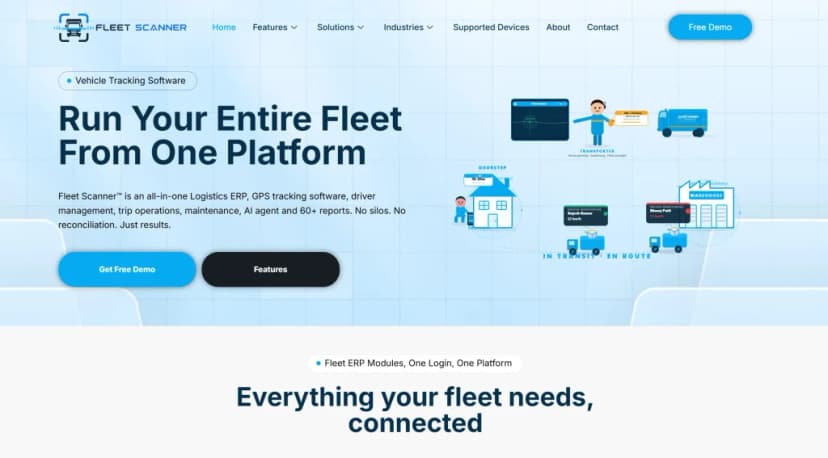
1. Fleet Scanner: Best for One-Time Deployment Cost
Unlike continually charged per-vehicle software, Fleet Scanner comes with a one-time deployment cost, potentially reducing the total cost of ownership over time. It provides GPS tracking, fuel, maintenance, driver management and US compliance all in a single platform.
- Cons: Hardware is an added expense, best value in the long term.
- Best for: Fleets that don't want to deal with recurring per-vehicle software costs.
- Pricing : One-time deployment fee (hardware is separate). Refer to pricing guide.
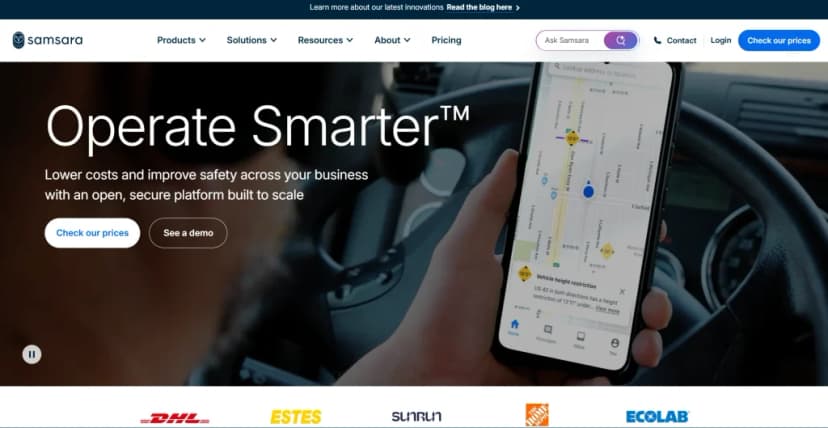
2. Samsara: Best for AI-Led Safety
A single system for complex operations that includes deep telematics, AI dash cams, maintenance tools and driver workflows.
- Cons: Limited database and add-on security, few features for database security or add-on maintenance.
- Pros: Quotes are available, complex for small teams, premium price.
- Best for: Large fleets looking for safety cameras or safety-focused fleets investing in cameras.
- Pricing: Quote based around $27-$40 per month per vehicle, plus hardware costs.
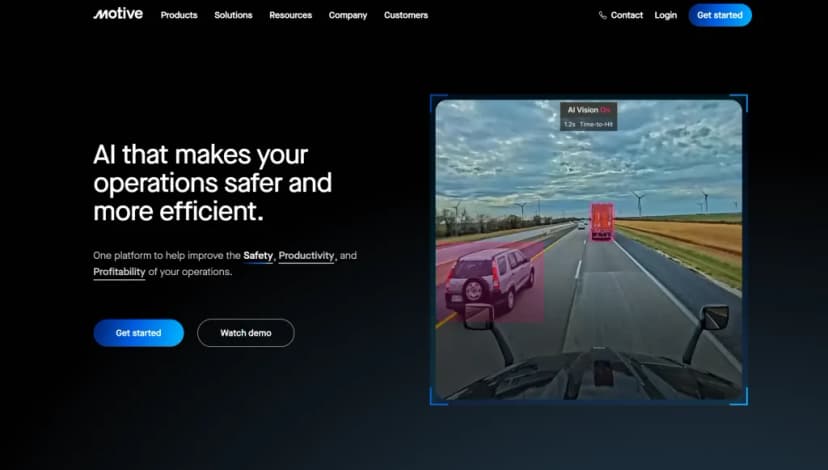
3. Motive: Best for Compliance and Safety
In a clean interface, it is a popular choice for trucking fleets for ELD compliance and AI safety. Pros: Strong ELD and FMCSA compliance, good AI dash cams, easy to use.
- Cons: Prices are quoted and some features are extra.
- Best suited to: Trucking fleets subject to ELD rules and HOS rules.
- Pricing : Quote based, approximately $25 to $35 per vehicle per month.
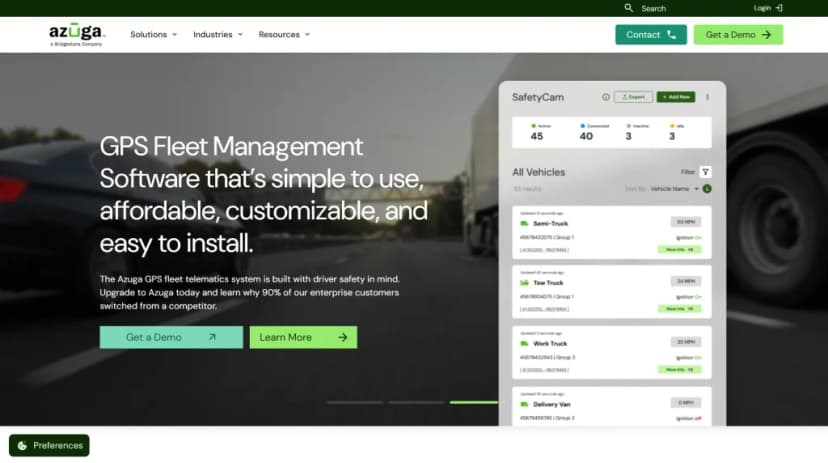
4. Azuga: Best for Published, Budget-Friendly Pricing
Combines core GPS tracking with route optimization and a driver rewards model, with rare price transparency.
- Pros: Transparent Pricing
- Cons: Longer contracts are common; additional cost for cameras.
- Best for: Small and mid-size fleets looking for transparent pricing.
- Pricing: Starts at $25 per vehicle per month (Basic), $30 per vehicle per month (Safe) and $35 per vehicle per month (Complete).
5. Geotab: Best for Customization and Scale
An open marketplace, flexible platform, and strong API integration that gives access to a wealth of data.

- Pros: Highly customizable, open API, scales well, strong data.
- Cons: Setup may be complicated, requires technical skills. Ideal for: Medium to large size or technical fleet that requires extensive modification.
- Price quoted based and approximate $25 to $40 per car/month plus hardware.
6. Verizon Connect: Best for All-Around Control
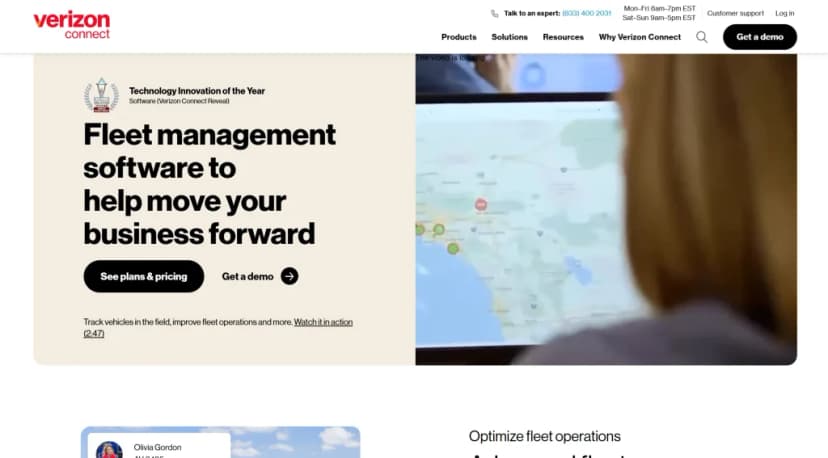
It's Reveal provides regular updates of locations and integrates live tracking with dispatch, fuel reporting, and compliance in a single location.
- Pros: Costs based on quotes, excessive system for smaller fleets.
- Cons: Relatively clunky, somewhat outdated UI, limited device support.
- Ideal for: Mid-to-large fleets looking for a single platform for tracking, dispatching and compliance.
- Service: "Quote based" about $23 to $40/month per vehicle.
GPS Fleet Tracking Feature Matrix
Confirm current features with each vendor, as products change often.
| System | Live Tracking | AI Dashcam | Fuel | Maintenance | Route Optimization | Open API | ELD |
| Verizon Connect | Yes | Yes | Yes | Yes | Yes | Yes | Yes |
| Samsara | Yes | Yes | Yes | Yes | Yes | Yes | Yes |
| Motive | Yes | Yes | Yes | Limited | Yes | Yes | Yes |
| Azuga | Yes | Add-on | Yes | Yes | Yes | Limited | Yes |
| Geotab | Yes | Marketplace | Yes | Yes | Yes | Yes | Yes |
| FleetScanner | Yes | Yes | Yes | Yes | Yes | Yes | Yes |
GPS Fleet Tracking Pricing Comparison
| System | Best For | Pricing Model | Estimated Cost |
| Verizon Connect | All-around control | Quote-based | ~$23 to $40/vehicle/mo |
| Samsara | AI safety and operations | Quote-based | ~$27 to $40/vehicle/mo |
| Motive | Compliance and safety | Quote-based | ~$25 to $35/vehicle/mo |
| Azuga | Published pricing | Published | $25 to $35/vehicle/mo |
| Geotab | Customization and scale | Quote-based | ~$25 to $40/vehicle/mo |
| FleetScanner | One-time cost model | One-time fee | One-time deployment fee |
Don't focus on the monthly payment, look at the total cost over the next 3-5 years. That's where an all-in-one model and platform is the solution to the numbers.
Which GPS System Fits Your Fleet Size?
Up to 25 vehicles (small fleets). Keep it simple and at a cost. Neither is Azuga's published pricing nor is Fleet Scanner's one-time model as a surprise.
Mid-Size Fleets (25-150 vehicles). Better reporting, maintenance scheduling, and driver management is required. Fleet Scanner, Geotab, and Verizon Connect are all perfect fits.
Large fleets (150 to 1,000+ vehicles). There is a need for scale, integration, and sophistication of safety. Verizon Connect, Samsara, and Geotab are designed for this and API integration with ERP and dispatch becomes necessary.
Which GPS System Fits Your Industry?
Trucking and long-haul. Key areas of focus: ELD, HOS, DVIR and IFTA reporting. Motive and Samsara are strong indeed.
Delivery and last-mile. route optimization and proof of delivery is most important. FleetScanner, Azuga or Verizon Connect fit nicely.
Construction and heavy equipment.
The three most important aspect are asset tracking, geofencing, and maintenance. Look for rugged tracking and equipment monitoring.
Field service. Focused on multi-stop routing, scheduling and live ETAs, route-strong systems and a good mobile app work best.
Taxi and passenger transport.
It's these high mileage fleets that care about live tracking, driver behavior scoring and safety tools.
What Features Matter Most?
The backbone of it is live GPS tracking. Geofencing notifies you when vehicles enter and exit pre-established areas. Speeding and driving aggressively are flagged by driver behavior scoring. In addition to these features, consider fuel monitoring, predictive maintenance, route optimization, API integration and compliance features such as ELD, HOS, DVIR, if operating under FMCSA regulations. Modern systems integrate GPS and GNSS location data, OBD-II and CAN bus engine data. A full GPS tracking platform brings these together, alongside fuel management, maintenance scheduling, and driver management.
Buying Advice and Common Mistakes
The biggest error that people make is purchasing a feature, rather than a fit. The most extensive list of features is not necessarily the best. Use the tool to solve the big issue, otherwise you're paying for tools you won't use. The second is that you're comparing a headline, not the total cost: the monthly per-vehicle fees accumulate over the years, and hardware, contract length and add-ons should all be taken into account. The third one is avoiding the contract details, and long contracts or auto-renewals can be a nightmare.
How We Selected These Systems
The comparison is based on public product information, common fleet usage in the U.S. and on personal experience with these systems in actual deployments. We rated the following factors for tracking: Quality of tracking, Driver and vehicle management, Compliance, Pricing transparency, API integration and fit by fleet size and industry. In most cases, enterprise vendors don't provide standard pricing in the U.S. and quote-based pricing is an approximation. Check the current prices, terms, and hardware costs with each vendor prior to purchase.
FAQs About GPS Fleet Tracking System
What is the best GPS fleet tracking system?
For large fleets, Verizon Connect and Samsara reign supreme. There is a strong motive for compliance. Azuga has published pricing. Fleet Scanner is designed for fleets that are looking for a single cost. The optimal option will depend on the size of your fleet and primary mission.
How much does GPS fleet tracking cost?
The average price of most software ranges from $20 to $45 per car, per month. Azuga offers rates that start at $25. Samsara and Verizon Connect are quote-based. Fleet Scanner is a one-time deployment fee rather than one per vehicle per month.
Which GPS tracking system is best for small fleets?
Small fleets tend to prefer an easy-to-configure solution with transparent pricing, such as Azuga, or a one-time solution that does not require paying on a per-vehicle basis. Don't buy enterprise functionality that you don't need.
Which GPS tracking system is best for trucking?
Under ELD and HOS rules, the two are solid, strong safety AI and compliance. Check for ELD, HOS, DVIR and IFTA reporting integrated.
Is GPS fleet tracking worth it?
Yes, for the majority of fleets. Typically fuel, safety and downtime benefits make up for the investment within a year. The higher the fleet size, and the more consistently you act on the data, the higher the return.
Is GPS tracker installation difficult?
Plug-in OBD-II trackers are installed in just minutes. Hardwired units require a technician, and offer a more secure, cleaner fit. For larger fleets, most vendors will support the rollout.
Can GPS trackers work without internet?
Cellular networks are used by trackers.Trackers use cellular networks. On most devices, there is no signal and the data is saved; you don't lose the trip record.
Conclusion
A GPS fleet tracking system is best not by the volume of features available, but by how it can best serve your fleet. For large fleets, the leaders are Samsara and Verizon Connect. There's strong reason to play by the rules with trucking. Among the advantages of using Azuga is its affordability. Fleet Scanner is an option for fleets looking to reduce unnecessary fees for each vehicle or integrate multiple tools into a single solution. Use the most serious issue, perform a cost comparison over multiple years, and implement a small pilot test prior to committing.
Want to compare pricing models for your fleet? Read the fleet tracking pricing guide or explore Fleet Scanner GPS tracking.
Related Reading
- GPS Fleet Tracking Systems for Fleet Management - the complete pillar guide.
- How to Choose the Right Fleet Tracking Software - a step-by-step framework.
- Fleet Tracking Software Pricing Guide - how pricing models compare.
- Route Optimization Software - the routing lever for lower costs.
Keep reading
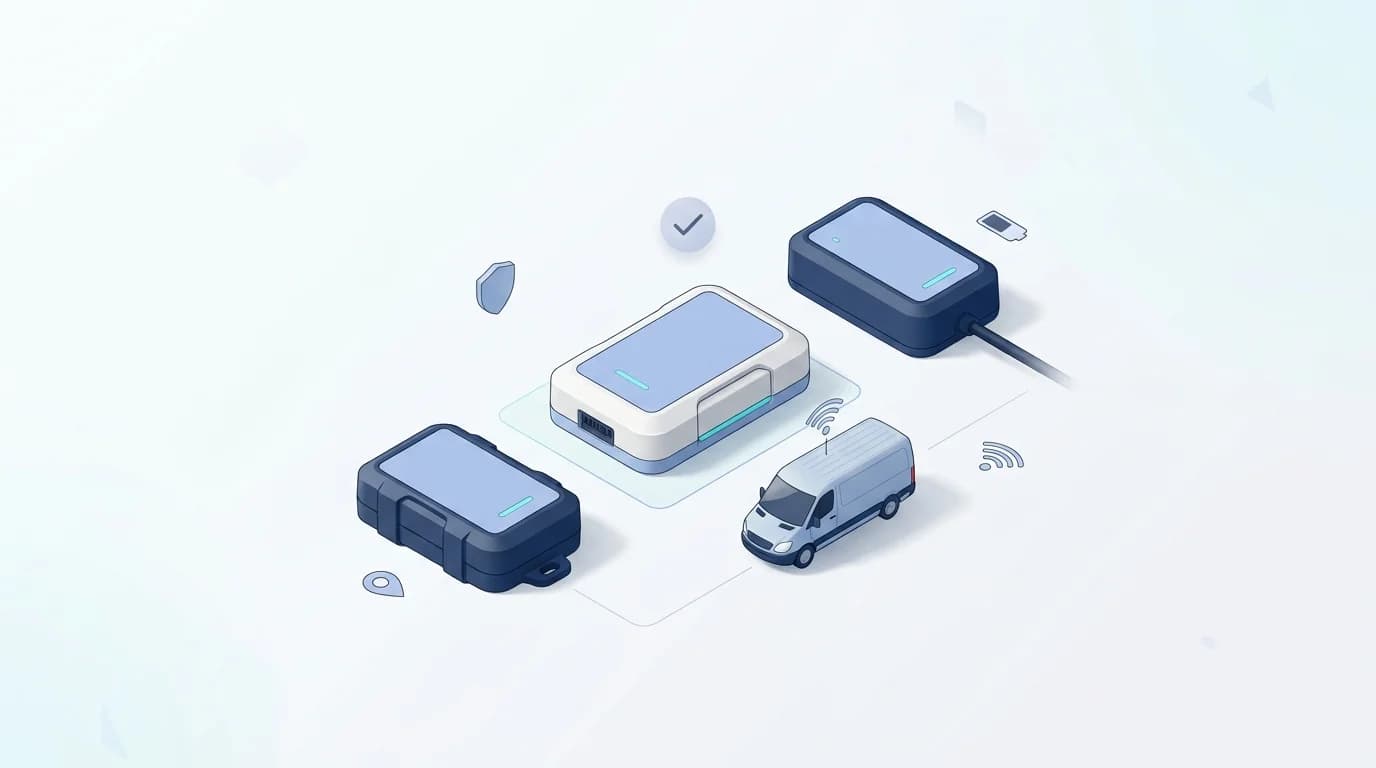
GPS Tracking Hardware: How to Choose the Right Trackers
When selecting GPS tracking hardware, consider the type that is compatible with your tracking business and your customers' needs, determine if the trackers are compatible with the protocols of your platform (which helps prevent vendor lock-in), assess network capabilities for the areas you serve...
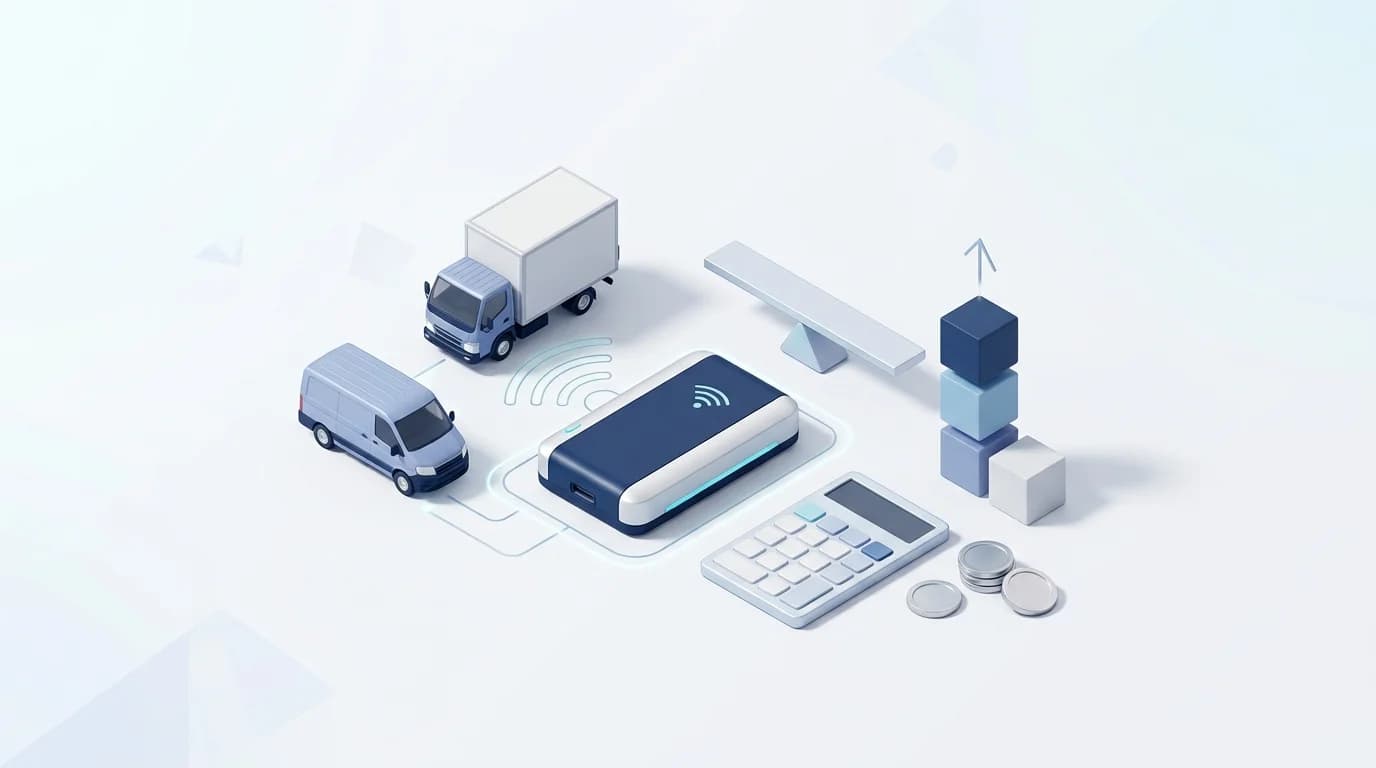
How to Price GPS Tracking Services: Formula & Pricing Tips
Track the price of a GPS system on a per-vehicle, per-month basis, and add your own per-vehicle cost (platform + SIM/data + support) plus your desired margin, and then select pricing model (flat, tiered, or hardware-bundled) based on the market you're operating in . There is no set price; the...
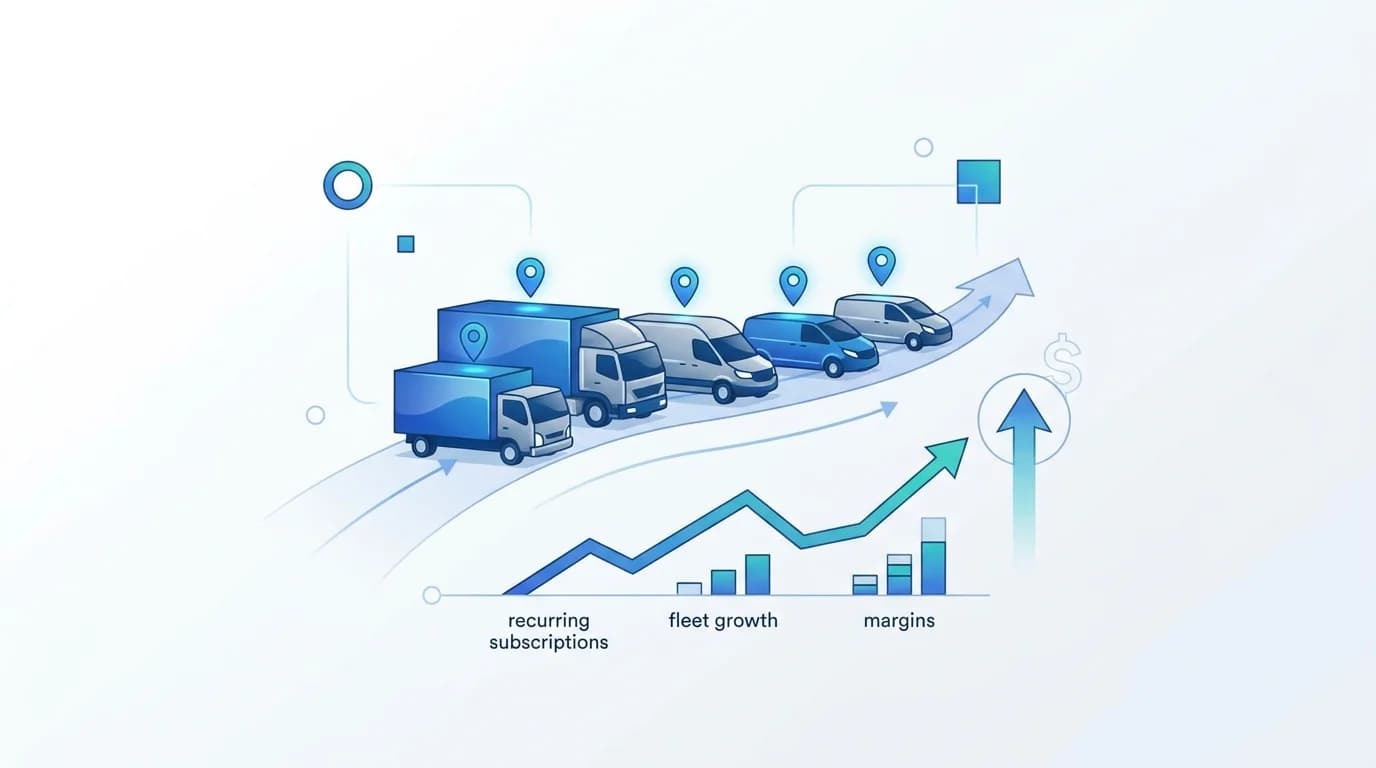
GPS Tracking Business Profitability: How Much Can You Make?
Yes, you can make money with a GPS tracking company, but only if it is profitable. The model works because the model has recurring revenue —you have a number of base vehicles that your customers pay you monthly for to track, and the more base vehicles you have and the more you get paid per month...