
How Does AI Fleet Management Software Work? Use Cases and AI Agents
AI fleet management software reads your GPS, engine and driver data, learns what normal looks like and warns you before something goes wrong. Here is how it works, the six real machine learning use cases, what a fleet AI assistant does and how to test a vendor's AI claims.
 Prerit Khera17 min read
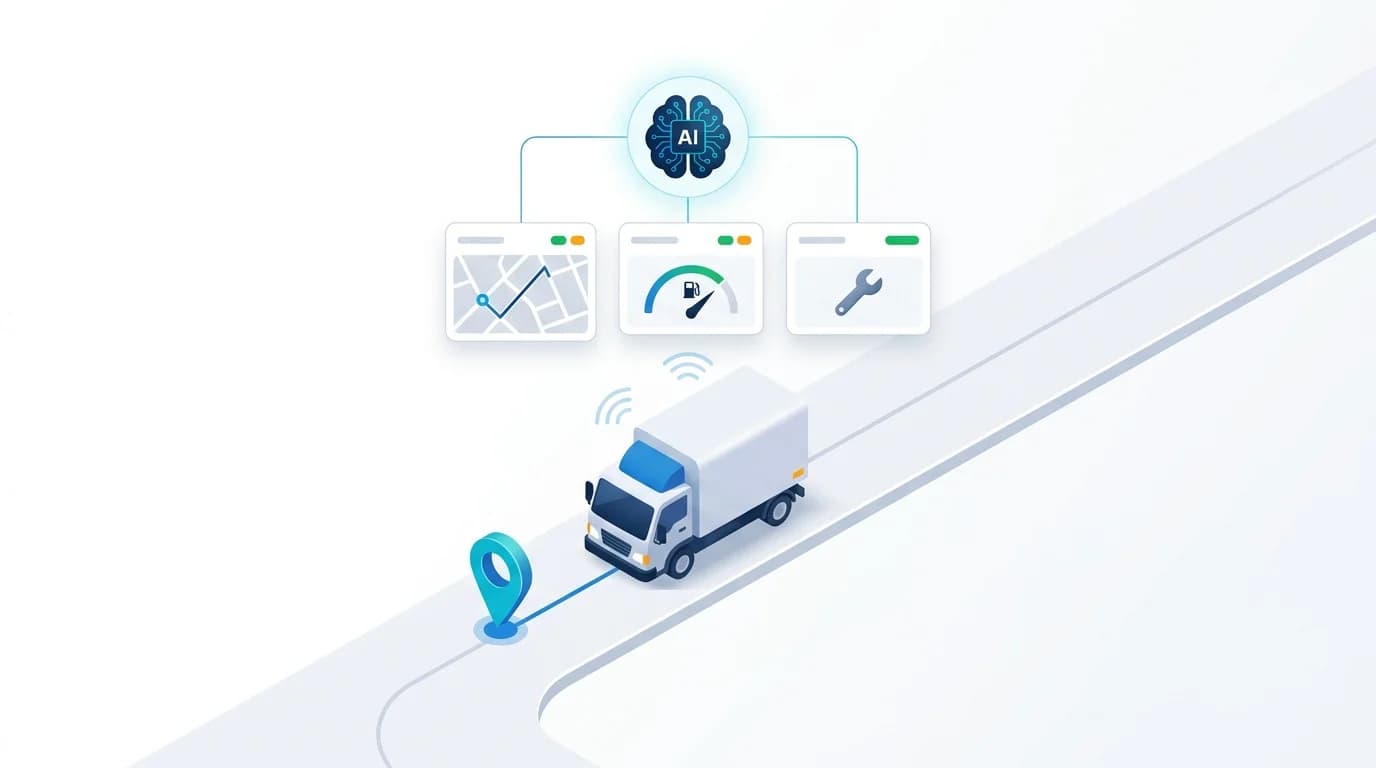
AI fleet management software reads the data your vehicles already send, such as GPS location, engine readings and driver events. It learns what normal looks like. Then it warns you before something goes wrong, and in some cases it takes the first step to fix it. Old fleet software told you what already happened. AI fleet management software tells you what is coming.
For example, it can spot a part that is starting to fail weeks before it breaks. It can then raise a work order and reserve the spare part. This guide explains how that works in plain words, the six real machine learning use cases, what a fleet AI assistant does, and how to judge a vendor's AI claims.
What is AI fleet management software?
AI fleet management software is fleet software that uses machine learning and automation to make decisions from your data. It watches your vehicles, predicts maintenance needs, plans better routes, scores driver safety and handles routine admin. The big change is the direction it looks. Normal software looks back. AI looks forward.
Take a simple case. A truck breaks down. Old software records the tow and the repair bill. AI software reads the live engine, fuel and location data, sees the pattern that comes before that breakdown, and tells you to book a repair first.
AI, machine learning and telematics: what is the difference?
Vendors often use these three words as if they mean the same thing. They do not, and the difference matters when you compare products.
- Telematics is data collection. The GPS unit and sensors report where the vehicle is, how fast it is going and what the engine is doing. Telematics gathers. It does not predict.
- Machine learning (ML) is a set of methods that find patterns in that data and make forecasts. Which part will fail? Which route is fastest? Which driver is getting more aggressive? The more data the model sees, the better it gets.
- Artificial intelligence (AI), in fleet software, usually means ML plus automation. The automation turns a prediction into an alert, a route change or a report.
So telematics is the raw material. ML is the engine that turns it into foresight. "AI" is the label on the box. One product can have good telematics and no real ML. Another can add a chatbot and call itself AI. The question to ask any vendor is simple: which model, trained on what data, making what decisions?
How does AI fleet management software work?
Every AI use case in a fleet runs on the same basic pipeline. Once you know it, you will see why clean data matters more than a clever algorithm.
- Collect. GPS trackers send location and trip data. Engine sensors and CAN bus data (the vehicle's internal data network) report temperature, fuel use, RPM, battery health and fault codes. Driver events such as speeding, hard braking and idling are logged. Dashcams, fuel records, traffic and weather can be added.
- Clean and label. Duplicate signals are removed and gaps are handled. Past outcomes are attached to the data, for example "this vibration pattern ended in a bearing failure". Most projects succeed or fail at this step.
- Train. A model learns the link between the inputs and the outcome from months or years of history.
- Predict. The trained model scores live data. It gives a failure risk, an arrival time, a driver risk score or an anomaly flag.
- Act. The prediction becomes a maintenance ticket, a new route, a coaching alert or a dashboard flag. In more advanced systems, the software books the job or messages the customer by itself.
Each result is fed back into the model, so the next prediction is a little better. The hard part is rarely the model. It is getting clean, consistent, well-labelled data out of mixed hardware and years of records. A simple model on good data beats a clever model on messy data almost every time.
Traditional fleet management vs AI fleet management software
Traditional systems make you check reports and react after a problem. AI systems watch vehicle, driver and job data all the time. They flag problems early, suggest fixes and can automate the response.
| Area | Traditional fleet management | AI fleet management software |
|---|---|---|
| Maintenance | Fixed service dates, or repair after a failure | Predicts part failures and suggests service before they happen |
| Vehicle tracking | Shows where a vehicle is now | Predicts delays, spots unusual behaviour and suggests other routes |
| Route planning | Static routes planned by hand | Changes routes using live traffic, weather and delivery priorities |
| Driver safety | Reviews incidents after the trip | Spots risky driving and coaches in real time |
| Fuel | Shows past fuel use | Flags fuel theft, wasteful driving and ways to cut fuel cost |
| Dispatching | Manual vehicle assignment | Picks the best vehicle by location, workload and availability |
| Compliance | Manual reminders and paperwork | Tracks inspections, permits, licences and deadlines automatically |
| Reporting | Past reports and dashboards | Predictions with a recommended action, and automatic reports |
| Problems | Reacts after issues occur | Predicts, prevents and often automates the response |
Machine learning in fleet management: 6 real use cases
"AI in fleet management" is not one feature. It is a group of methods, each solving one problem, each with its own data needs. Here are the six use cases that are actually working in 2026, the method behind each, and what the evidence says.
1. Predictive maintenance AI
This is the most mature use case and usually the first place AI pays off. Maintenance is one of a fleet manager's biggest costs. Instead of servicing on a fixed date, the model reads sensor data like engine temperature, vibration, oil pressure and brake wear. It predicts when a part is likely to fail and schedules service just before that. You get fewer roadside breakdowns and less over-servicing. Good systems also raise the work order and reserve the part. That is why fleet maintenance software is a logical place to start.
Method: supervised classification and regression (for example random forests and gradient boosting), plus anomaly detection on time-series sensor data.
Evidence: vendor case studies report predicting over 90% of failures within 14 days. Treat that as a vendor figure to test in a pilot, not a promise.
2. AI route optimisation and fleet scheduling
Basic routing software has existed for years. ML-based routing learns from your own fleet's trips and adjusts on the fly. The model weighs traffic, weather, delivery windows, vehicle capacity and driver hours. It orders the stops and reroutes around incidents for the whole fleet, not one vehicle at a time. An AI agent for fleet routing goes one step further. When a route will run late, it can update the schedule and tell the driver. You can see how this works in route planning software.
Method: optimisation algorithms plus travel-time prediction. Reinforcement learning (learning by trial and feedback) is getting more use for multi-stop, multi-vehicle planning.
Evidence: our source cites an MIT study finding route optimisation can cut fuel use by about 18% and CO2 emissions by about 25%. Your gain depends on your routes and where you start from.
3. Driver behaviour and safety scoring
Telematics logs harsh braking, fast acceleration, sharp cornering, speeding and idling. ML turns those raw events into a risk score for each driver. It separates a real pattern from a one-off event, and it can spot signs of fatigue or distraction. The AI then coaches the driver in real time, instead of a manager reviewing incidents weeks later.
Method: classification and clustering of event data, plus pattern recognition.
Evidence: in a Webfleet survey of 1,800 fleet managers, 56% said AI had improved driver safety.
4. Anomaly detection (fuel theft, leaks and odd readings)
Anomaly detection does not predict a failure. It learns what normal looks like for each vehicle and flags anything that is not normal. That could be a sudden fuel drop, a leak, or an engine reading outside the usual range for that truck. It is how a fleet can watch thousands of vehicles without a person reading every gauge.
Method: unsupervised anomaly detection. The model builds a baseline per vehicle and scores how far each reading moves from it. It does not need labelled examples of past failures.
Evidence: published case studies describe refrigerated fleets finding leaks within days of them starting. The bigger the fleet, the bigger the value.
5. Demand and fuel forecasting
Forecasting answers planning questions. When will demand be high or low, so you can size the fleet? How much fuel will each route and driving style use? When will vehicles be off the road, so you can plan spare capacity? These tools move decisions from "react" to "plan ahead".
Method: time-series forecasting and regression on past demand, fuel and usage data, with seasonal signals added.
Evidence: in the same Webfleet survey, cost reduction was the top benefit fleets named for investing in AI (52%). Forecast accuracy depends on how much history you have and how stable your demand is.
6. Computer vision dashcams
AI dashcams use computer vision (software that understands images) to spot distracted or drowsy driving, tailgating and road hazards. They alert the driver in the cab and save the clip for incident review and insurance. This is the use case drivers notice most. See video telematics with AI dashcams for how it fits into fleet software.
Method: object and event detection with deep neural networks, often run on the camera itself so alerts are instant.
Use cases compared: method, data and maturity
"Maturity" here is our own editorial view of how proven and widely used each use case is in 2026. It is not a vendor claim.
| Use case | Core ML method | Data it needs | Maturity |
|---|---|---|---|
| Predictive maintenance | Classification and regression on time-series | Engine and sensor history plus labelled failures | Proven |
| Route optimisation | Optimisation plus travel-time prediction | Trip history, traffic, weather | Proven |
| Driver behaviour scoring | Classification and clustering | Telematics event data | Proven |
| Anomaly detection | Unsupervised anomaly detection | Per-vehicle baselines (no labels) | Maturing |
| Demand and fuel forecasting | Time-series forecasting | Past demand, fuel and usage | Maturing |
| Computer vision dashcams | Deep learning on video | Labelled video and camera feed | Proven |
Whatever algorithm a vendor uses, the deciding factor is whether your fleet has enough clean, consistent history to train it. Check the data needs before you compare features.
What is a fleet AI assistant (or fleet AI agent)?
A fleet AI assistant is the part of the software you can talk to and that can act for you. You ask a question in plain words, like "which vans idled the most last week?", and it answers from your live data. A fleet AI agent goes further. It does not just send an alert. It takes the next step on its own, inside rules you set.
Here is what that looks like in different parts of the fleet:
- Real-time fleet tracking. The agent watches live positions. When a vehicle will miss its time window, it warns the dispatcher before the customer calls.
- Delivery fleets. On a delay, it can message the driver, update the schedule and tell the customer the new arrival time, without waiting for a manager.
- Proof of delivery. It can check that each drop has its photo, signature and time, and flag the ones that do not. That data comes from electronic proof of delivery software.
- Compliance. It tracks inspections, permits and licence renewals, and creates the reminder or task before a deadline passes.
- Maintenance. When a part looks likely to fail, it raises the work order and asks a supervisor to approve it.
Be careful with the word "agentic". Many tools use it but only send an alert. Ask the vendor what their AI does without a person involved. Fleet Scanner's fleet AI agent works across tracking, maintenance, fuel and driver data in one system, so it can act on the whole picture instead of one module.
Genuine AI analytics vs reporting dashboards
Many platforms that say "AI" only offer reporting dashboards. A dashboard shows what happened. Genuine AI analytics, sometimes sold as a fleet intelligence platform, predicts what will happen and suggests what to do about it.
Use these questions to tell them apart:
- Does it predict, or only summarise? "Fuel use was 8% higher last month" is reporting. "Van 14 is likely losing fuel to a leak, check it this week" is AI.
- Does it learn from your fleet? Real ML builds a baseline for each of your vehicles and drivers. A fixed rule like "alert above 80 km/h" is not ML.
- Does it recommend an action? Good AI analytics ends with a next step, not just a chart.
- Can it act? The most advanced tools can raise the work order or send the message for you.
- Is the data in one place? AI cannot connect fuel, maintenance and driver behaviour if they live in three different tools.
If you want to see what AI analytics looks like on top of tracking data, see AI fleet analytics and intelligence.
Which fleet software really has AI?
Every vendor uses the word AI. Here is what the AI in some major platforms is mainly known for.
| Platform | What its AI mainly does | Best at |
|---|---|---|
| Samsara | AI dashcams and driver safety coaching | Safety |
| Geotab | Deep engine and fuel data analysis | Data |
| Motive | Dashcams plus compliance and ELD | Compliance |
| Fleetio | An AI maintenance advisor (no GPS tracking of its own) | Maintenance |
| Fleet Scanner | One AI agent across tracking, maintenance, fuel and drivers | All in one |
The pattern is clear. Most tools are strong at one type of AI. The bigger benefit comes from AI that can see the whole operation, and that only works when all the data sits in one system. We look at this trade-off in our guide to Fleetio alternatives.
What AI fleet management looks like in practice
Picture a construction company with 180 machines: dump trucks, excavators and mixers. In the middle of the monsoon, one excavator starts running hot and shows odd hydraulic pressure. In the old way, it breaks down on site and work stops.
With AI, the system spots the pattern early and predicts the pump will fail in about 10 days. It plans the repair for the weekend, reserves the part and asks the supervisor to approve. The fix happens when the machine is not needed. There is no surprise breakdown and no delayed project. Each repair also teaches the system something, so the next prediction is better.
The same approach works in logistics, mining, school buses, oil and gas, public transport, waste management, courier and field service fleets.
What AI in fleet management cannot do yet
AI is not magic. Know its limits before you buy.
- It will not fix bad data. Mixed hardware, missing readings and patchy records limit any model. Most disappointing AI projects fail on data, not on the model.
- It cannot predict something truly new. A model learns from your history. A failure type or demand shock it has never seen will not be caught.
- Accuracy figures do not transfer. A 90% result on another fleet, route and climate may not match yours. Use vendor numbers as a starting point for a pilot.
- Full autonomy is not here for most fleets. Self-driving trucks make the news. The day-to-day value in 2026 comes from prediction and alerts.
- It raises privacy and compliance questions. Driver-facing cameras and location data have different legal rules in different places. Sort these out before you roll out, not after.
There is also the part nobody sells you. If maintenance lives in one app, tracking in another and fuel in a spreadsheet, the AI gets a pile of numbers it cannot connect. The boring first step, getting everything into one system, is what makes the clever step possible.
How to choose and adopt AI fleet management software
Do not buy an "AI platform" before your data is ready for it. Follow these steps instead.
- Start with one problem, not a platform. Pick the use case with the clearest cost. That is usually predictive maintenance or driver safety, because both are easy to measure.
- Check your data first. Look at what your trackers collect, how consistent it is across the fleet and how much history you keep. This decides what is possible.
- Run a short pilot. Measure against your own baseline, the numbers from before the pilot, not the vendor's figures.
- Keep a person in the loop. Use predictions to rank decisions, not to make them unattended, until you trust the model on your data.
- Plan where the output goes. If a prediction never reaches a dispatcher, a mechanic or a driver's app, it is useless.
When you compare products, check for these features:
- Predictive maintenance with automatic work orders
- Live GPS tracking from GPS tracking software that works with your devices
- Driver behaviour scoring and coaching
- Fuel monitoring and theft alerts
- AI route optimisation and scheduling
- Automated compliance reminders
- Reports and dashboards, plus predictions with recommended actions
- An AI assistant or agent that can act, not just alert
- Mobile apps for drivers and managers
- API access to connect other systems
- Cloud or self-hosted deployment, and room to grow
Where Fleet Scanner fits
Every step up in AI needs the same thing: clean, connected data. Fleet Scanner puts tracking, maintenance, fuel, drivers and reports in one system, with a built-in AI agent that works across all of it. It has 18+ modules and 60+ ready reports, and works with 1,000+ GPS devices from brands like Teltonika, Concox, Queclink and Ruptela. It is an on-premise GPS tracking platform, so it runs on your own server and your fleet data stays with you. There are web, Android and iOS apps.
Want to see it on your own fleet data? Book a demo with our team.
Frequently asked questions
What is AI in fleet management?
It is software that learns from your vehicle data to predict maintenance, plan routes, score driver safety and handle admin. It uses machine learning plus automation. Instead of only showing charts, it suggests or takes the next action.
How does AI predict maintenance?
It reads live engine and sensor data and learns the patterns that come before a failure. When it sees that pattern again, it warns you which part is likely to fail and roughly when. Good systems then raise a work order and reserve the part.
What is the difference between AI, machine learning and telematics?
Telematics collects the data: GPS position and sensor readings. Machine learning finds patterns in that data and makes predictions. AI is the umbrella term, usually meaning ML plus an automatic follow-up such as an alert or an action.
What does a fleet AI assistant do?
It answers questions about your fleet in plain words, using your live data. A fleet AI agent can also act inside rules you set. For example, it can reschedule a delayed job and tell the customer the new time.
Which machine learning use case should a fleet start with?
Start with predictive maintenance or driver safety. Both are proven and easy to measure, and both have a clear cost. Solve one problem first and measure it against your own baseline.
Does machine learning in fleets actually save money?
It can, through fewer breakdowns, less over-servicing, lower fuel use and safer driving. Surveys often name cost reduction as the top benefit. Published percentages come from other fleets or vendors, so the only way to know your return is a short pilot against your own numbers.
Can small fleets benefit from AI fleet management software?
Yes. AI is no longer only for large enterprise fleets. Smaller fleets can use predictive maintenance, route optimisation, driver scoring and automatic reports too. The key is having your data in one system.
What is the biggest mistake with fleet AI?
Buying AI before fixing your data. If your records are spread across several tools, the AI has nothing clean to learn from. Get everything into one place first.
Keep reading
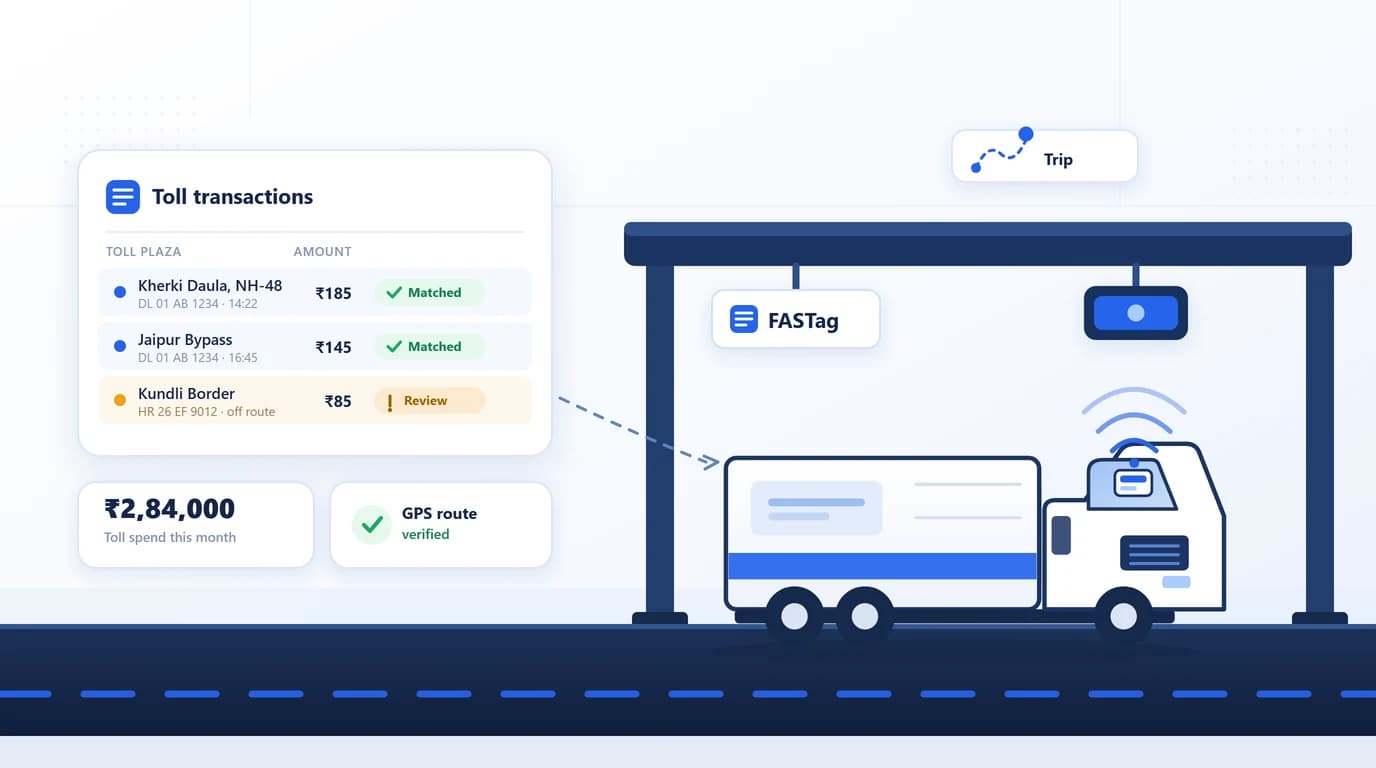
FASTag Management Software for Fleets: How to Choose
FASTag management software explained for fleets: how toll reconciliation works, the features to compare, what it costs and what to test in a vendor demo.

Preventive vs Reactive Fleet Maintenance: Which Costs Less?
Preventive maintenance services vehicles on a plan; reactive maintenance fixes them after they break. Here is what each really costs and how to switch to a planned schedule.
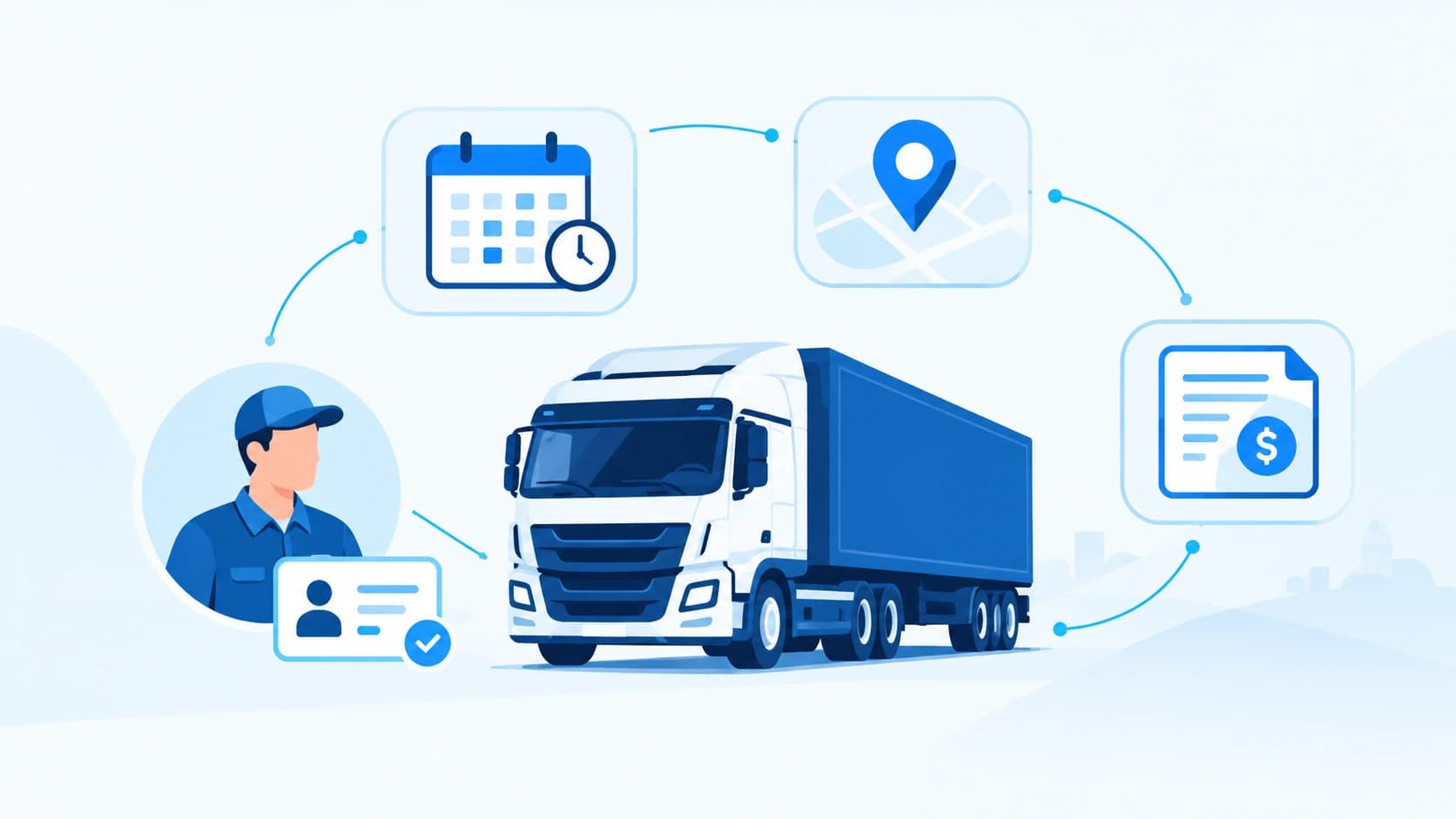
Fleet Workforce Management: Drivers, Shifts & Payroll
Learn how fleet workforce management connects driver scheduling, GPS attendance, shift planning, payroll, trip-based payments, and expense tracking.