
Fleet Maintenance Checklist: Daily, Weekly, Monthly and Yearly Checks
A fleet maintenance checklist tells drivers and the workshop what to check on every vehicle and when. Here is a ready list of daily, weekly, monthly and yearly checks you can copy and use this week.
 Prerit Khera8 min read
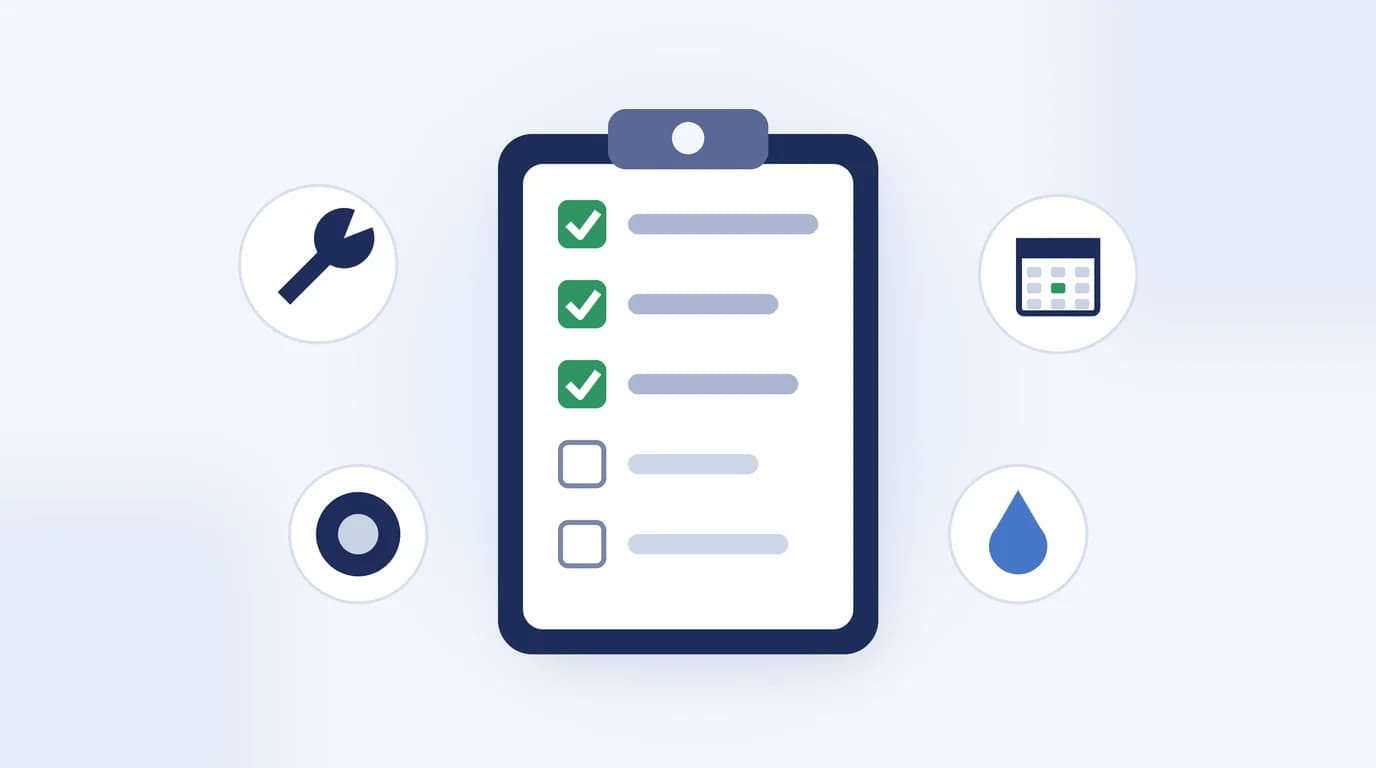
A fleet maintenance checklist is a list of the checks your drivers and workshop do on every vehicle, at set times, so small faults are found before they turn into breakdowns. It tells each person what to look at, how often, and what to do when something is wrong.
This guide gives you a ready checklist split into daily, weekly, monthly, every few months and yearly checks. You can copy it, change it for your own vehicles and start using it this week.
Quick answer: Drivers check tyres, lights, brakes, fluids and warning lights before every trip. Once a week, look closer at tyre pressure, wipers, battery and the body. Once a month, check belts, hoses, fluid levels and the paperwork. Every few months and once a year, the workshop does the deeper service the vehicle maker asks for. Write every check down, and fix any fault before the vehicle goes back on the road.
Why every fleet needs a maintenance checklist
Without a checklist, maintenance depends on memory. One driver checks the tyres every morning, another never does. One workshop manager remembers the brake service, the next one forgets. A checklist makes the same checks happen on every vehicle, every time.
A good checklist helps you:
- Find faults early. A worn tyre or a small oil leak is cheap to fix today and costly after it causes a breakdown.
- Keep drivers safe. Brakes, tyres, lights and mirrors are checked before the vehicle leaves.
- Keep a record. Written checks show inspectors, insurers and customers that your vehicles are looked after.
- Plan workshop time. When you know what is due, you can book jobs on quiet days instead of losing a vehicle on a busy one.
If you are still deciding between fixing things when they break and servicing on a plan, read our guide to preventive vs reactive maintenance first. A checklist is the simplest way to start planned maintenance.
Daily checks before every trip
The driver does these checks at the start of the shift, before driving. They take a few minutes and catch the faults that are most likely to cause a crash or a roadside stop.
| Check | What to look for |
|---|---|
| Tyres | Flat or low tyres, cuts, bulges, objects stuck in the tread, loose wheel nuts. |
| Lights | Headlights, brake lights, indicators, hazard lights and reversing lights all work. |
| Brakes | The pedal feels firm, the parking brake holds, and there is no warning light. |
| Fluids | No puddles under the vehicle. Engine oil, coolant and washer fluid are not low. |
| Dashboard | No warning lights stay on after the engine starts. |
| Mirrors and glass | Mirrors are clean and set, the windscreen has no new cracks, wipers work. |
| Horn and seat belts | The horn works and every seat belt clicks in and pulls out freely. |
| Load and doors | The load is secure, doors and shutters close and lock. |
| Safety kit | Fire extinguisher, first aid kit and warning triangle are in the vehicle. |
The driver should also report anything that felt wrong on the last trip: a strange noise, a pull to one side, a smell of burning or a vibration. These reports are often the first sign of a fault.
Weekly checks
Once a week, the driver or a workshop team member takes a closer look. These checks need a little more time and sometimes a simple tool such as a tyre gauge.
- Tyre pressure: measure every tyre, including the spare, and set it to the pressure in the vehicle's handbook. Check the tread depth too.
- Battery: look for loose or rusty terminals and cracks in the case.
- Wipers and washers: replace wiper blades that smear or skip.
- Body and lights: look for new damage, broken light covers and loose parts.
- Cab: clean the cab, check the seats, and make sure nothing loose can roll under the pedals.
- Trailer links: for trucks with trailers, check the coupling, air lines and electrical plug.
Monthly checks
Once a month, the workshop or a trained person checks the parts that wear more slowly.
- Belts and hoses: look for cracks, fraying, soft spots and leaks.
- Fluid levels: brake fluid, power steering fluid, coolant and transmission fluid where it can be checked.
- Air filter: check it and change it if it is dirty, especially on dusty routes.
- Lights and wiring: look for damaged cables and loose plugs.
- Exhaust: listen for new noise and look for loose brackets or smoke.
- Paperwork: check that registration, insurance, permits and inspection papers are valid and not close to expiry.
Checks every few months
These jobs depend on how far each vehicle drives and how it is used. The right interval for your vehicles is in the maker's service handbook, so use that instead of a general number from the internet.
- Engine oil and oil filter change at the distance or time the maker sets.
- Brake inspection: pads, discs, drums and brake lines.
- Tyre rotation and wheel alignment, if the handbook asks for it, or sooner if tyres wear unevenly.
- Suspension and steering: look for worn parts, leaks from shock absorbers and play in the steering.
- Battery test: test how well it holds a charge, especially before cold weather.
- Fuel filter and other filters the handbook lists.
Yearly checks
Once a year, give every vehicle a full inspection in the workshop. This is also the time to look at the whole year's records for that vehicle.
- A full service as set out in the maker's handbook.
- Coolant and brake fluid change if the handbook asks for it.
- A full check of the air conditioning and heating.
- Any official roadworthiness or fitness test your country or state requires.
- A cost review: how much did this vehicle cost to run and repair this year? If repair costs keep rising, it may be time to plan a replacement.
What to do when a check fails
A checklist only helps if failed checks lead to repairs. Set a simple rule for every fault:
- Safety faults stop the vehicle. If brakes, tyres, steering or lights fail a check, the vehicle does not leave until it is fixed.
- Other faults get a work order. Write down what is wrong, which vehicle it is and who will fix it.
- The fix is checked and signed off. The person who fixed it, or a manager, confirms it is done.
- The record is kept. Keep the check, the repair and the cost with that vehicle's history.
Paper checklist or software?
A paper checklist is a fine way to start. It costs nothing and every driver understands it. The problems start as the fleet grows: sheets get lost, nobody adds up the faults, and service dates live in one person's diary.
Fleet maintenance software moves the same checklist into an app. In Fleet Scanner:
- Drivers fill in an inspection checklist, and a failed check can create a work order automatically.
- Preventive services are scheduled on time and mileage, and the counters update from real GPS distance, so a vehicle that drives more is serviced sooner.
- Service reminders tell the right person before each job is due.
- Tyre management and spare parts inventory sit in the same system, so the workshop knows what is in stock before the vehicle arrives.
- Every check, repair and cost is kept in each vehicle's history, ready for your fleet management KPIs such as cost per kilometre.
Fleet Scanner runs on your own server, with unlimited vehicles and users, so adding more vehicles to your checklist does not add a per vehicle fee.
How to start using this checklist
- Copy the lists above and remove anything that does not apply to your vehicles.
- Add the intervals from each maker's handbook for oil, brakes, filters and other services.
- Give each check an owner: the driver for daily checks, the workshop for the rest.
- Agree the rule for failed checks and tell every driver.
- Review the results every month. Look for vehicles that fail the same check again and again.
Frequently asked questions
What should be on a daily vehicle checklist?
Tyres, lights, brakes, fluid leaks, dashboard warning lights, mirrors, windscreen, wipers, horn, seat belts, the load and the safety kit. The driver checks these before the first trip of the day.
How often should fleet vehicles be serviced?
Follow the service intervals in each vehicle maker's handbook. Vehicles that work hard, such as those on dusty roads, in heavy traffic or towing heavy loads, may need some jobs sooner. Tracking real distance and engine hours helps you service each vehicle at the right time.
Who should do fleet maintenance checks?
Drivers do the quick daily and weekly checks because they use the vehicle every day. Trained workshop staff do the monthly, few-monthly and yearly work, and any repair.
What is the difference between a maintenance checklist and a maintenance schedule?
A checklist says what to inspect. A schedule says when each service is due for each vehicle. You need both: the checklist finds faults, and the schedule makes sure planned work happens on time.
Can fleet software replace a paper checklist?
Yes. Fleet maintenance software turns the checklist into a form on the driver's phone, raises work orders for failed checks, reminds you when services are due and keeps every record in one place.
Keep reading
FASTag Management Software for Fleets: How to Choose
FASTag management software explained for fleets: how toll reconciliation works, the features to compare, what it costs and what to test in a vendor demo.

Preventive vs Reactive Fleet Maintenance: Which Costs Less?
Preventive maintenance services vehicles on a plan; reactive maintenance fixes them after they break. Here is what each really costs and how to switch to a planned schedule.

Fleet Workforce Management: Drivers, Shifts & Payroll
Learn how fleet workforce management connects driver scheduling, GPS attendance, shift planning, payroll, trip-based payments, and expense tracking.