Skip to content
Fleet Scanner
Hardware integration · Teltonika FMB125

Teltonika FMB125 tracker, working inside Fleet Scanner

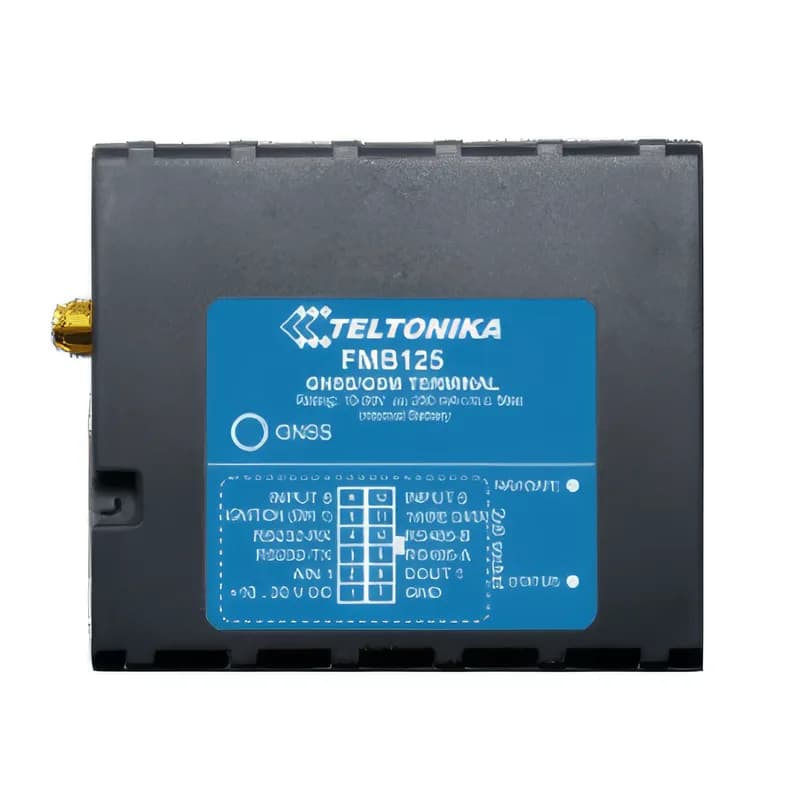
The Teltonika FMB125 GPS tracker is Teltonika’s 2G tracker for add-on devices. It has RS232 and RS485 ports, which are wired data ports for extra devices. It also has 1-Wire, Bluetooth and a CAN adapter input. So one box can read up to five LLS fuel probes, an RFID reader or a Garmin navigator. Fleet Scanner turns every reading into fuel graphs, driver records, alerts and reports.

RS232 + RS485 accessory portsUp to 5 LLS fuel probesDual SIM 2G GSM1-Wire iButton + Dallas
Teltonika FMB125 GNSS/GSM terminal with RS232 and RS485 connections
1 + 1RS232 and RS485 ports
5LLS fuel probes on RS485
14firmware scenarios
128 MBflash, about 422,000 records
2SIM cards
fuel · LLS over RS485
Tank 1 412 LDrop -47 LTheft flag
01 · LLS fuel probes · RS232 / RS485

Up to five capacitive fuel probes that catch fuel theft

An LLS probe is a fuel sensor that sits inside the tank. You can connect one on RS232 and up to five on RS485. Each one reports the fuel level and temperature for its tank. Fleet Scanner draws a clear fuel graph for each tank. It tells refuels apart from stolen fuel (siphoning) and flags sudden drops. This is the most accurate way to watch fuel on trucks and generators.

201/202 LLS 1 level / temp203/204 LLS 2 level / temp210–215 LLS 3–512/13 Fuel used / rate (GPS)
Fuel monitoring system →
rs232 · accessoriesDIN1 Ignition ONAIN1 12.4 VDOUT1 Relay OFF
RFID readGarmin linked
02 · RS232 accessories · RS232

RFID readers, Garmin navigation and pass-through data

The RS232 port can run several add-ons. An RFID reader tells you who is driving. A Garmin navigator, linked over FMI, gets messages and jobs to the driver’s cab. You can also connect an LCD screen. Or you can use TCP pass-through, which sends data from other serial devices straight on. Fleet Scanner saves each RFID read with the driver and the trip.

207 RFID Garmin FMI LCD TCP ASCII / Binary NMEA
Driver management software →
live_position
Speed 64 km/hIgnition ON
03 · Live tracking · Permanent I/O

Live position with an outside GNSS antenna

The FMB125 uses an outside GNSS (satellite) antenna. So you can hide the box deep in the vehicle and still get a clear position. It uses GPS, GLONASS, Galileo and BeiDou. Fleet Scanner shows each vehicle live and keeps every trip so you can play it back. Dual SIM (two SIM cards) keeps it connected across networks.

24 Speed239 Ignition240 Movement69 GNSS status16/199 Odometer / trip
GPS fleet tracking software →
driver_auth · 1-WireA3 41 9F 00
AuthorisedImmobiliser RELEASED
04 · iButton and immobiliser · 1-Wire

iButton driver ID with an immobiliser

An iButton is a small driver key that the driver touches to a reader. It connects through 1-Wire, a simple wired connection. The key tells you who is driving. The Immobilizer feature keeps the engine blocked until an approved key is used. Fleet Scanner links every trip, fuel event and harsh driving alert to that driver.

78 iButton ID248 Immobilizer
Driver scorecards →
temperature · 1-Wire + BLE
Zone 1 -18.4 °CHumidity 62 %
05 · Temperature · 1-Wire + BLE

Dallas probes and EYE sensors for cold loads

Wired Dallas 1-Wire probes and wireless Teltonika EYE sensors report temperature and humidity for each zone. Fleet Scanner saves each reading with the trip. It alerts you when a load goes outside its range.

72–75 Dallas temp 1–476/77 Dallas IDs10800 EYE temp10804 EYE humidity
Cold chain tracking →
can_bus · adapter
RPM 1,310Fuel 71 %
06 · CAN data through an adapter · LV-CAN200 / ALL-CAN300

Vehicle data from a CAN adapter or OBD dongle

The CAN bus is the vehicle’s own data network. An LV-CAN200, ALL-CAN300 or CAN-CONTROL adapter reads it for you. You get dashboard fuel, fuel used, RPM, speed and mileage. On cars and vans, a Bluetooth OBD-II dongle does the same job. Fleet Scanner uses these real numbers for fuel and cost per mile.

81–85 CAN speed, pedal, fuel, RPM87 Total mileage89 Fuel level %30–36 OBD engine data
Preventive maintenance scheduling →
driving_events · accelerometerX -612Y 180Z 990
Harsh cornering
07 · Driving behaviour and safety · Eventual I/O

Green driving, speeding, crash, towing and jamming

The FMB125 sends driving events as they happen. These include harsh acceleration, braking and cornering, speeding and idling. It also sends crash, towing, unplug and GSM jamming events. Jamming is when someone blocks the mobile signal. Fleet Scanner puts them into driver scores and instant alerts.

253/254 Green driving255 Over speeding251 Idling247 Crash246 Towing249 Jamming
Real-time fleet alerts →
device_health · power12.6V
Ext 26.8 VSIM 1
08 · Power and diagnostics · Permanent I/O

Voltage, battery and signal health

Every record has the vehicle’s power voltage, the backup battery, the GSM signal, the mobile operator and sleep mode. Fleet Scanner alerts you when a tracker loses power or goes silent.

66 External voltage67/68 Battery V / current113 Battery level21 GSM signal241 Operator200 Sleep mode
Fleet reports and dashboards →

FMB125 specifications

Network2G GSM quad-band 850/900/1800/1900 MHz, GPRS class 12, dual SIM
GNSSGPS, GLONASS, Galileo, BeiDou, SBAS, QZSS, AGPS; external GNSS antenna (SMA)
Power supply10 to 30 V DC with overvoltage protection
Backup battery170 mAh Li-Ion
Inputs / outputsDigital input, analog input, open-collector digital output
InterfacesRS232, RS485, 1-Wire, CAN adapter input, Bluetooth 4.0 + LE
RS232 / RS485 modesLLS fuel probes, RFID, Garmin FMI, LCD, NMEA, TCP ASCII/Binary
Memory128 MB flash
Size / weight65 x 56.6 x 20.6 mm, about 52 g, IP41
Fleet Scanner port11922 (TCP)

Specifications can differ between hardware revisions. Check the manufacturer’s datasheet for your exact unit.

How to connect the FMB125 to Fleet Scanner

  1. Fit the FMB125 and its outside GNSS antenna. Then connect power, ground, ignition and the RS232/RS485 add-ons you use.
  2. Open the Teltonika Configurator. Set the RS232/RS485 mode, for example LLS or RFID. Set the APN (your SIM’s internet settings). Then enter your Fleet Scanner server’s domain or IP, port 11922 and protocol TCP.
  3. In Fleet Scanner, add the device by its IMEI number and assign it to a vehicle.
  4. Calibrate (set up) each fuel tank in Fleet Scanner. Then check the fuel levels and the first trip on the live map.

Teltonika FMB125 FAQ

Does Fleet Scanner support the Teltonika FMB125?

Yes. Fleet Scanner reads the FMB125’s position, ignition, LLS fuel probes and RFID reads. It also reads 1-Wire iButton and temperature data, CAN adapter data and driving events. It reports on port 11922.

How many fuel sensors can the FMB125 read?

One LLS probe on RS232 and up to five on RS485. So most trucks and tankers can watch every tank with one tracker.

What is the difference between the FMB125 and the FMB120?

The FMB125 adds RS232 and RS485 ports. These are for LLS fuel probes, RFID readers and Garmin navigators. It also has dual SIM and an outside GNSS antenna. The FMB120 has no serial ports.

Is the FMB125 4G?

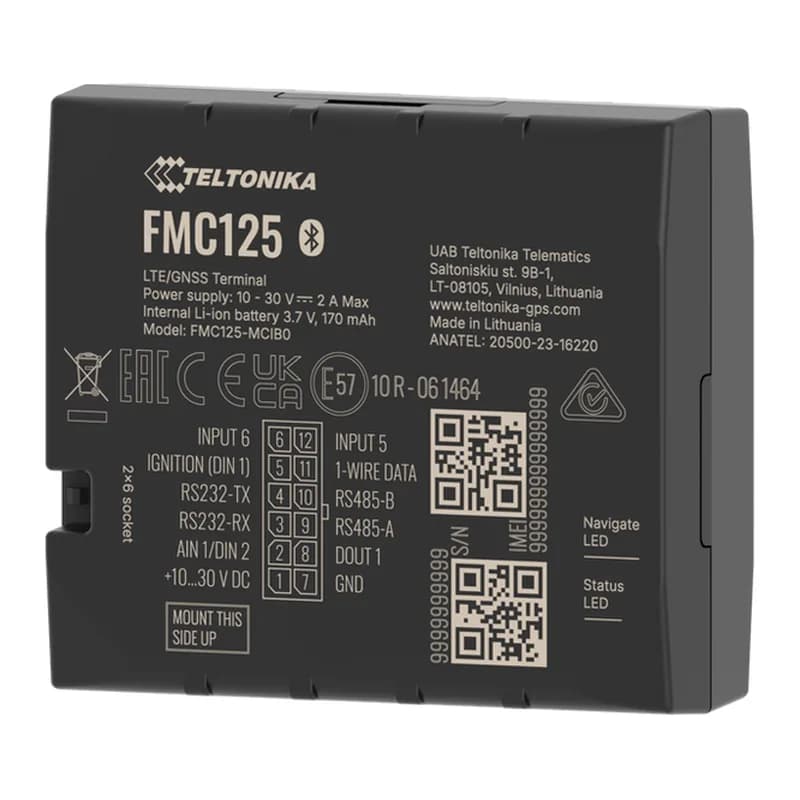
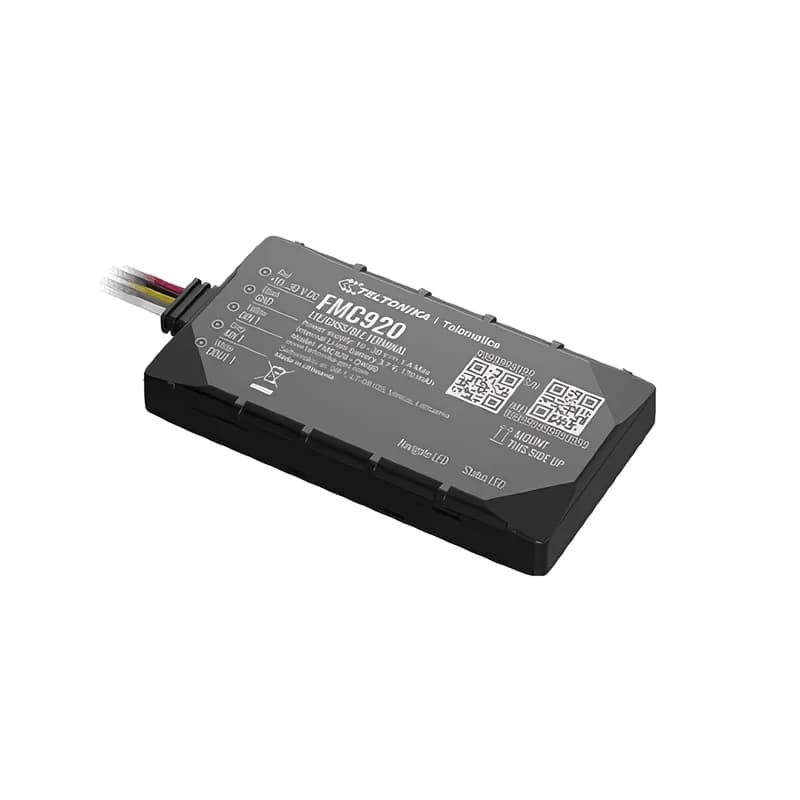
No, it is 2G. The FMC125 is Teltonika’s 4G version of the same design. Fleet Scanner supports it too.

FMB125 plugged in. Every tank on one platform.

From a single tracker to a mixed fleet across 1,000+ device models: live tracking, alerts, fuel, drivers, maintenance and reports in one self-hosted platform. See it with your own hardware.

Get a free demo

More supported GPS trackers

Parameter IDs are Teltonika AVL IDs listed for the FMB125; LLS, RFID and CAN IDs need the matching accessory. Teltonika and FMB125 are trademarks of Teltonika Telematics. Specifications from the Teltonika FMB125 datasheet v2.2.

Take Control with
Fleet Tracking

Track vehicles in real time, optimize routes, and take full control of your fleet operations.

Free Demo